Work, Life, and Bathtime…

About 2 years ago I had an epiphany while soaking in my bathtub—seemingly my favorite place for epiphanies. I was 30, had a high paying job, a beautiful house, a supportive husband, good friends, an idyllic place to live, contemplating children, and yet, alas…I was fizzling, tired, and burnt out. A classic case of perfectionism hitting the wall. My body, my mind, and soul had been aching for change, but guilt sprinkled with denial and social expectations kept me stuck. Yet that evening in the bathtub, I finally gave myself permission to feel the dichotomy, to sit with the discomfort, and to plot a plan of action.

bnb1

Our cottage now…

10635929_10101040014853950_618410011367402375_n

The house that was with the great bathtub…



blog1 work

Presenting She Soars Psychiatry, LLC


Fast-forward to the present day. I got rid of my 4-bedroom house, moved into a cottage of sorts,  got rid of my job, started a business aligned with my passions, decided my parental energy was best spent on dogs, did hold on to my husband, but ultimately began a process of sorting and shedding the layers of ‘shoulds’ and put a question mark after the social expectations that seemed so important. I even parted with my bathtub for a standup shower…this was a BIG DEAL.

jacob tub

My husband also enjoyed the tub…permission was not obtained to post this photo…

I realize my shift is a privilege. I was able to leave my bureaucratic workplace and carve out my own niche. I had a supportive family, I was able to ‘follow my heart’, I had resources, and I recognize my ability do so is an impossibility for many. How can we then maintain a level of sanity, contentment, and balance in the midst of work, deadlines, pressure, interpersonal stress, preserving our reputation, relationships, and oh yes, going to the gym, meditating, and drinking our green smoothie?

Maintaining a work-life balance and emotional wellness is not an accomplishment that is one day reached and completed, but a daily, intentional endeavor. The following principles are what I both strive for and teach my many clients navigating this tricky proposition and trust me, I am in no way on a pedestal…

  • Prioritize non-negotiables:  What are those things that must take place of be present for you to feel grounded? Is it your morning run? Your 5-minute meditation? Scribing in your journal? Your favorite tunes? Prayer? Become familiar with your non-negotiables, share them with your family members, schedule them, make them habits. Horses, running, and nature happen to be personal faves.
  • Find a tribe: We are social beings and as much as you feel like you thrive as an introvert, the need for socialization is etched into your genetic code. Perhaps your tribe is small, perhaps large, but do not try to go at life’s peaks and valleys alone!friends
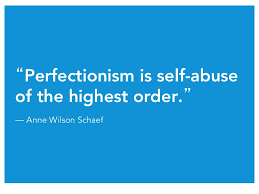
  • Goodbye perfectionism: Perfectionism is the fast track to burn out. The perfectionist in me still loves to try to resurface especially in the face of uncertainty or doubt. All or nothing, black and white, I must do X, Y, and Z to be successful…all classic perfectionistic mindsets. You run a race where the finish line keeps moving. You operate in hypervigilance and competition. Contentment is fleeting if ever perfectionismpresent. You are often exhausted. Your work may prosper, but your health, family, relationships, and contentment will almost surely suffer. Recognize that perfectionism is energy-depleting and not completing. Question your version of success.
  • Become mindful: We live in a world of noise, chaos, and distraction. Many of us are more comfortable in noise than we are in silence. Many of us fear solitude without distraction as it forces us to confront our own thoughts. We do not heal by avoidance, but by awareness. Take 5 minutes of your mindfulnessbusy day to focus on your breath, take a sensory inventory (what are you seeing, smelling, tasting, hearing?), practice gratitude, be present.

  • Be open and stay flexible: In my opinion the idea of ‘finding your true self’ as if that self were a stagnant being waiting for you over the horizon is overrated. You do not have to live to work…working to live is just fine, too. There may not be a perfect job or a perfect path. Life happens and inevitably, we will go through change, transformation, epiphanies, and growth. It is okay that a once upon a time passion becomes less exciting, or your beliefs evolve, or your relationships change. Be open to this change and recognize that decisions you make today may seem silly in retrospect. Such is life. Embrace the gray when the tendency may be compartmentalize life to black and white. Be gentle with yourself.black and white

Ultimately, emotional wellness and maintaining balance is a spectrum complicated by the unpredictability of life. Regardless of where you are on the spectrum, do not be afraid to feel, to love, and to give yourself permission to take action. I look forward to hearing about your bathtub epiphanies.

As always thanks for listening.

With gratitude, 2017-09-09-audry-vanhouweling-headshots-2-of-2.jpg

Audry Van Houweling, Owner & Founder, She Soars Psychiatry, LLC located in Sisters & Silverton, Oregon www.shesoarspsych.com


Breaking the cycle of negative self-talk

How often do you seek out silence? Solitude? Are you afraid of it? Does it make you uncomfortable to be alone? Silence has become an anomaly in our high speed, digitalized world and we have become accustomed to distractibility that drowns out our own thoughts. Escapism via screen time, substances, spending money, pornography, food, and other means has become commonplace and has made embracing the present moment more and more elusive.

bighorns1

My recent attempt at solitude in the middle of the Bighorn Mountains, Wyoming

Many of us struggle with negative self-talk. Many of us avoid silence, being alone, and continually seek out ways to distract and temporarily pacify our negativity. We become accustomed to “noise”, chaos, and obsession, which are all often a means to avoid confronting deeper roots of discontent. The noise, chaos, and obsessive thinking is named as the problem; however, addressing underlying core beliefs, trauma, and the “inner child” may feel even more problematic and thus the pattern of diversion continues. Many of us have also been told the cowboy lie to pull ourselves up from our bootstraps. Healing is not accomplished by running from our feelings. The medicine for pain is allowing ourselves to feel the pain.

Perfectionistic attitudes, the superman/woman complex, and the belief that the means somehow justify the end can go hand in hand with this unrest. We believe that if we just push ourselves enough, endure an amount of suffering, deprive ourselves for long enough, then perhaps we will meet an end that finally makes us feel “worthy”. This is not to say there is not value in hard work but being attached to an outcome that somehow dictates our self-worth is problematic. Many of us are convinced that we must somehow punish ourselves to feel a sense of accomplishment. Sounds absurd, right? Well yes, it is.

When we reach societal milestones of success, we reach them with the same self-deprecating, punitive mindset that led us there in the first place. Frustrated, we often find another obsession or distraction to latch onto. We find convenient scapegoats…our weight, our job, relationships, as the source of our discontent, yet we are many times afraid to recognize ourselves as the common denominator. And by the way, this takes a lot of insight and humility.

Negative self-talk is learned, rooted often in childhood, and perpetuated through various life experiences, relationships, and socioeconomic circumstances among other factors. Confronting what can be traumatic is difficult and may demand professional help. It necessitates time to process, which means, yes, quiet, stillness, and space to be mindful.

Bighorns2

Cloud Peak Wilderness, Wyoming

Negative self-talk does not simply go away. We are all bombarded with constant comparison, societal expectations, and judgments that can make even the most self-assured insecure. We can however strengthen our “inner observer”- that voice or conscience that questions the value or necessity of a thought or feeling. It is this observer that can acknowledge a feeling- not run from it, not distract it away- but see it for what it is and question the value of identifying with it or not. The inner observer invites curiosity about our feelings as we look to ask why the negativity is there in the first place.

kiger gorge

Kiger Gorge, Steens Mountains

Your inner observer may be akin to faith or the divine. It can become an internal compass allowing us to see toxicities with greater clarity and emboldens us to seek that which grounds us. This may lead to crossroads as you contemplate old patterns that kept you stuck versus new possibilities.

Ultimately, connecting to your inner observer means becoming comfortable with “you” again and questioning the stories we tell ourselves about our feelings. It means recognizing the present moment and embracing the belief that perhaps simply because you are alive, able to breathe the air, and have the capacity to love and be loved might just mean that for right now in this moment life is OK and perhaps even beautiful.

With gratitude,

2017-09-09 Audry VanHouweling Headshots (2 of 2)

Audry Van Houweling, PMHNP-BC, Owner

She Soars Psychiatry, LLC

Sisters & Silverton, Oregon

The loneliness behind our success…

How do you define success? Who or what shaped your ideas of what success is? Has this definition served you not only financially, but so too spiritually, and emotionally?

Our vision of success has likely been dictated by past experiences, relationships, education, opportunity, culture, and the society in which we live. In our society success is often defined by external accomplishments- our bank accounts, our home, our cars, our clothing, how many letters we have after our name, and how many followers we have on our social media accounts. Many of us know there are shortcomings to this model of success, yet we nevertheless embrace the facade day after day.

facade1

Putting on a bit of a masquerade is human nature. We all like to flaunt our stuff once in a while or feel impressive from time to time. Our quest for belonging and acceptance is part of the human experience that has roots in survival, emotional, and physical well-being.

What worries me is that we have set the bar too high and this has had significant ramifications on our well-being. We are bombarded by expectations that are both unrealistic and often impossible all the time every day. We have bought into the idea that our value is connected to fleeting affirmations of worth and we compare ourselves to filtered, edited, and false portrayals. Have you ever followed somebody on social media and then met up with them in person only to realize their life is nowhere near as effortless as their virtual portrayal may seem? And have you been guilty of trying to portray your own “effortless” existence? My answer is yes and YES.

Former Facebook executive, Chamath Palihapitiya, in an interview with the Washington Post (2017) emphasized this dynamic:

“…We curate our lives around the perceived sense of perfection, because we get rewarded in these short-term signals—hearts, likes, thumbs up—and we conflate that with value and we conflate it with truth. And instead, what it is is a fake, brittle popularity that’s short-term and leaves you even more, admit it, vacant and empty…”

Some of us are afraid to portray anything but an edited version of who we are. Aside from social media we may rely on our fancy labels, titles, career, makeup, or substances to distract from vulnerability and authenticity. Ultimately, this can be pretty lonely. We realize our connections to others are built on a facade that can be exhausting to maintain and that few if any persons have been allowed access to what’s behind the mask. Maintaining prestige, fame, and status can ultimately be emotionally depleting as well as isolating.

facade3

Genuine social connection and space to be simply “real” is central to our health and I might argue, success. Loneliness and isolation have been associated with cardiovascular disease, inflammation, diabetes, depression, anxiety, and suicide. Our largely individualistic society loves to give pats on the back to those who have apparently forged life by their own willpower. We become afraid to ask for help fearing it is a sign of weakness. We convince ourselves that virtual followers and connections can replace face to face encounters.

In my opinion the loss of genuine human connection is central to the rising depression and suicide rates plaguing our country. It is why wealth does not always buy health and why those who appear to “have it all together” may be experiencing deep personal struggle. So in addition to your yoga class, green smoothie, eco-friendly home, and meditation make sure that you also call a friend, meet a neighbor, plan a coffee date, and just maybe let your guard down a bit.

Thanks for listening everyone.

With gratitude,

Audry Van Houweling, Owner & Founder, She Soars Psychiatry, LLCheadshot4

www.shesoarspsych.com
Sisters & Silverton, Oregon

541-595-8337

A Woman’s Desire for Control: Origins and Ramifications

One of my goals in my practice is to heighten insight and self-awareness among my clients. Many of my female clients come to me with complaints of feeling overwhelmed, exhausted, and underappreciated. These symptoms are often married to perfectionistic tendencies and attempts to control the external to compensate for internal chaos.

Now for some controversy. When it comes to control and gender, it does seem that a double standard exists. Men are often chastised for seeking control in a relationship as it seems akin to emotional abuse and patriarchy. In my opinion this sense of disapproval is warranted; however, I question whether women are judged by the same standard. It also seems more acceptable for a woman to voice emotional distress over a controlling man, yet if a man were to voice his emotional distress it seems he would need to overcome a societally reinforced barrier of embarrassment and defeat. A man may feel pressure to acquiesce in order to not “rock the boat” and consequently, similar to a woman in the same position, resentment can flourish.

control1

When I ask women- many of whom laud equality as a core value- to put themselves in the shoes of their partner or children or inquire whether they would tolerate the same level of control from their partner, a good healthy pause and then reflection ensues. Ironically, these same women often voice that their partner is too passive, yet simultaneously insist on “doing it all” and have difficulty delegating even simple tasks.

A woman’s desire for control certainly in not born in a vacuum. Often the origins of her controlling tendencies are rooted in trauma. Trauma is an insidious and almost universal experience among women. Taking control and maintaining order may have been critical to emotional and physical survival at times, which can be a hard pattern to shake even when emotional and physical safety are secured. This can leave well-meaning spouses, children, coworkers, and others in the path of the “control storm”, so to speak. Putting aside individual experiences, our society alone perpetuates the persistent unease among women that “we are not yet good enough until…”. This by itself can cause a strong fear of disapproval and ongoing attempts to control partners, children, coworkers, food, appearances, and money, among other things.

A woman may have experienced times of chaos or abuse or dysfunction that left her feeling desperate for a sense of control. Micromanaging, demands, and persistent critique are often secondary to a sense of emptiness or internal turmoil that fuels uncertainly, self-doubt, and the need for external validation, praise, or a sense of order. In some cases, a woman experiencing abuse from a spouse or partner may seek to regain a sense of power or control by displacing her anger and resentment onto her children. It comes as no surprise that the children who have absorbed emotional impacts from their mother and father then also start displaying concerning behaviors. Children may then be chastised given that they are not fulfilling desired outcomes and yet in trying to correct the be

control3

havior, it is only further reinforced.

Control is about being attached to an outcome that will somehow, per our perception, dissipate fear of the unknown. Yet despite our best efforts to plan, manage, and control, the unknown will always exist a minute from now, an hour from now, tomorrow, and so on. Letting go of outcomes is not giving up, but rather trusting yourself enough to navigate the unknown…whatever may come your way.

With gratitude,

Audry Van Houweling, PMHNP-BC, Owner She Soars Psychiatry

www.shesoarspsych.co2017-09-09 Audry VanHouweling Headshots (2 of 2)m

Sisters & Silverton Oregon***541-595-8337


Thyroid Function & Your Mood

Logo- real (1) (1)

In my office I practice functional medicine. Functional medicine aims to identify root causes of health concerns and in doing so, supports treatment solutions that are long-lasting and sustainable. Given my specialty in mental health, the intersection between your hormones and emotional is a “root” that cannot be dismissed. Your hormones are intimately connected with your mood in a bidirectional, dynamic relationship and one of the major players in this relationship is your thyroid.

thyroid1

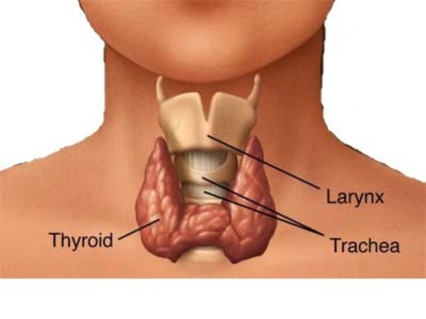
Your thyroid is a butterfly shaped gland that sits in the lower part of your neck. It has many important roles including growth & development, metabolism, temperature regulation, and neurotransmitter production among others.

Thyroid dysfunction is on the rise these days. This may be due to the thyroid being particularly susceptible to potentially damaging effects of synthetic, hormone disrupting chemicals that have increased exponentially the past 40-50 years finding their way into the air, water, and food supply. It is estimated that worldwide up to 25 percent of the population have some degree of thyroid dysfunction. Therefore, when I evaluate someone for depression, anxiety, poor motivation, and poor focus among other symptoms, it is imperative that thyroid function be assessed.

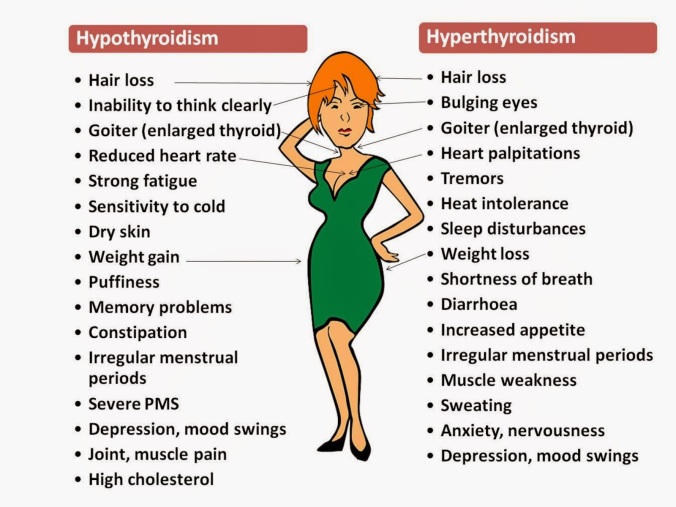
Thyroid imbalances can trend in two directions. Most commonly, thyroid function and hormones associated with the thyroid create a state of hypothyroidism. Symptoms associated with hypothyroidism may include fatigue, depression, brain fog, memory loss, cold intolerance, weight gain, muscle pain, and dry skin. Alternatively, hyperthyroidism can be associated with restlessness, anxiety, weight loss, insomnia, rapid heart rate, irritability, and heat intolerance.

Thyroid dysfunction may be the consequence of an autoimmune disorder. Hashimoto’s disease is the autoimmune state more commonly associated with hypothyroidism while Grave’s disease is more commonly associated with hyperthyroidism.

Women have seen the highest increases in thyroid dysfunction especially during pregnancy, postpartum, and postmenopausal states. In fact, it is estimated that up to 80 percent of postpartum depression may be associated with thyroid dysfunction.

thyroid2

It is important to recognize that somebody with undiagnosed thyroid dysfunction may present to a mental health clinician and meet criteria for a number of psychiatric diagnoses such as major depression, generalized anxiety, panic, or attention deficit disorder. Therefore, while your symptoms may qualify you for a psychiatric diagnosis, the foundation of these symptoms may be hormonal, which often demands treatment approaches beyond psychotropic medications.

In my opinion, truly assessing thyroid function necessitates looking at multiple pieces of the puzzle. Too often many of these pieces are neglected leaving an incomplete picture of what your thyroid is doing or not doing. At a minimum I recommend the following lab tests to assess thyroid function:

  1. TSH (Thyroid Stimulating Hormone, regulates secretion of T3 & T4)
  2. Free T3 (active form of thyroid hormone)
  3. Free T4 (inactive thyroid hormone, requires conversion to T3)
  4. Thyroid Antibody Test (this is important to rule out an autoimmune disease)
  5. Liver Function Test (your liver is very important for activating thyroid hormone)
  6. Ferritin (required for T3, your active thyroid hormone to work at the cellular level)

 Stress, diet, nutrient deficiency, lack of physical activity, oral contraceptives, heavy metals, pesticide exposure, chronic illness, and compromised liver or kidney function can all be contributors to thyroid dysfunction. Thus, treating thyroid dysfunction demands a personalized approach that considers these multiple factors. There is not a one-size fits all solution. The good news that with a combination of hormonal support, lifestyle changes, and close monitoring, significant improvement is possible.

Ultimately, it is important that mental health symptoms are not seen in a box and that we take a broad approach in investigating what their origins may be. Acknowledging the power of your thyroid and other possible root causes is paramount to finding sustainable solutions.

Stay healthy everyone.

2017-09-09 Audry VanHouweling Headshots (2 of 2)

With gratitude,

Audry Van Houweling, PMHNP-BC, Owner She Soars Psychiatry, LLC

www.shesoarspsych.com

Confronting Body Shame

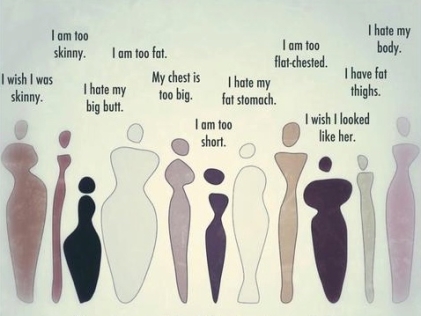
I always ask my clients to rate their self-esteem 0-10. The vast majority of my clients rate themselves below 5. If my client happens to be female, complaints about her body almost always dominate the list of why. Intellect, character, performance, and achievement are often never mentioned.

It is altogether disheartening how many of us associate value and worth with size, the number on the scale, and measurements that are idealized by a social concept that is both unrealistic and, in many cases, impossible.

body image3

Every woman has her own story about body shame. Like most women, memories of my own body shame are all too vivid. I remember the early days of elementary school playing follow the leader on the playground and not being able to fit through small spaces that seemed so effortless for my peers. I remember my portions and food choices being scrutinized by family members. I remember seeing the school counselor and being told I eat too much. I remember starting at my young body in the mirror- loathing what I saw and wishing I could switch bodies with the Disney princesses or Barbies I idolized. In dismay I would compare the size of my legs, my arms, my stomach compared to my peers…and this was all before middle school.

Rather quickly my body seemed to lengthen rather than widen. I stretched to nearly 5’10” by the seventh grade and the dynamic of attention and commentary shifted. Yet seemingly too tall for pre-pubescent boys my own age, suddenly there were comments from men- sometimes much older men. Cat calls, innuendos, and crass remarks on my physical form that still seemed so new and foreign to my budding mind. Soaking in what seemed to be validation, I aimed to maintain the streak of physical affirmation sometimes by means of extremes. Food restriction and excessive exercise became a pattern. Negative self-talk was the driver. I could not let myself be satisfied. I was terrified of regressing.body image2


Our society promotes a sustained hypervigilance around body image and while I have made progress, I am not out of the woods. Most of us are actually still pretty deep in the woods so to speak. Women & girls are often ridden with trauma regarding their bodies. Whether it be a collection of accumulated comments and encounters or events of blatant harassment or abuse, we are taught from a very young age that the form of our bodies defines our worth and, in some cases, even our survival. Other elements of our being and soul are minimized, disregarded, and suppressed. As the inevitable shifting and ultimate decline of our physical bodies occurs, we are confronted by shame and guilt as the form of our body may drift farther away from the social ideal. Social media further reinforces our shame as edited and filtered comparisons are only one click away.

So make a point to praise your daughter, partner, spouse, or family member on attributes other than her physicality. Support her in creating a legacy of inner beauty and confidence. Ladies- we can be our own worst enemies. Let’s try to refrain from objectifying one another. Let’s honor each other’s accomplishments outside of what happens in the gym or on a scale. Modest or immodest, let’s realize we are all marvelously complex despite our exterior. Let’s celebrate our diversity and be unafraid to call out unrealistic and harmful stereotypes and ideals.

Character, compassion, intellectualism, humor, empathy, and mindfulness resonate far more than the number on a scale. After all, I have yet to see anything about weight loss or dress size on somebody’s tombstone. On that note, give your body grace. It will fail standards again and again, but your value is far more unconditional.

Be kind to yourself.

With gratitude,

2017-09-09 Audry VanHouweling Headshots (2 of 2)

Audry Van Houweling, PMHNP-BC, Owner She Soars Psychiatry, LLC

www.shesoarspsych.com

Embracing Grey in a Black & White World

We all like to feel safe. When chaos and uncertainty surround us, it is common to fall back on rigid thinking in order to create the sense of control, predictability, and make sense out of the inexplicable. Reducing a complex world into right and wrong, good and bad, successful and unsuccessful, and so on might seem to give us security until we have to confront the endless variables that suddenly make our black and white thinking so grey.

black and white

A lot of us are experiencing fear and heightened stress these days. Many of us live in a state of adrenaline, fight or flight, and hypervigilance. When we are afraid we often resort to primitive ways of thinking that include language such as “always”, “never”, and “must”. We tell ourselves to “never” associate with certain people, to “always” present a certain way, and that we “must” adhere to societally driven formulas to succeed. These rules for ourselves and others leave little room for flexibility and a lot of room for disappointment. An all or nothing experience emerges…
We either succeed or we fail, someone is a good guy or a bad guy, something is either right or it is wrong.

black and white2

Black and white thinking limits both our grace for ourselves and others in addition to robbing potential connection, self-discovery, and empathy. Because the world is not static and ultimately nuanced with a whole lot of grey, holding tight to such rigidity can perpetuate pessimism, perfectionistic thinking, depression, and anxiety. We may feel like we are running a race and the finish line keeps on moving.

Seeing the world as grey can be uncomfortable especially when we may feel threatened or when we have been hurt. We categorize, we stereotype, and we generalize. We let labels and assumptions take over. We hesitate to let go of our way of sorting the world due to fear we may get hurt. To defend our black and white thinking we find ways to validate our worldview perhaps through the media we choose to consume, the people we surround ourselves with, or the spiritual beliefs we adhere to. Essentially, we often find what we are looking for.

Because black and white thinking is often kept alive by fear, we must defend the fear to defend our thought processes and thus, in many ways, it creates a fear-based existence. It turns out spending so much time and energy defending ourselves and seeking validation can also be quite exhausting.

When we let go of the black and white in exchange for the grey, we open doors for kindness and understanding for ourselves and others. We can more readily “step into someone else’s shoes”. The pressures that we put on ourselves are not as burdensome, and compassion comes easier.

It is important to question how we categorize ourselves- what labels, roles, and rules have we tried to adhere to? Are these restorative or draining to our being and those around us? Do they allow for growth and self-exploration or do they keep us confined?

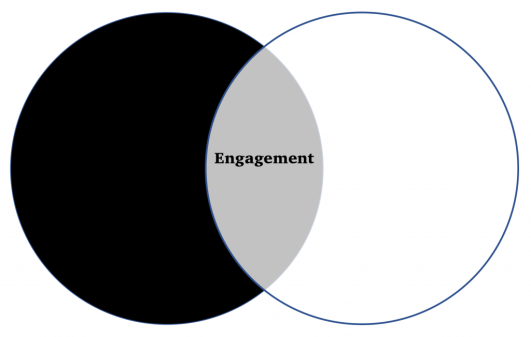
As we consider the world of yes and no, good and bad, right and wrong, successful and unsuccessful, we must recognize that these are all on a spectrum nuanced by numerous variables unique to each of us. Putting aside black and white thinking and embracing the grey takes courage but can also be pretty darn liberating. In the words of Deepak Chopra, “Instead of thinking outside the box, get rid of the box”.

Thanks for listening everyone.

With Gratitude,

Audry Van Houweling, PMHNP-BC, Owner of She Soars Psychiatry, LLC

www.shesoarspsych.com

2017-09-09 Audry VanHouweling Headshots (2 of 2)

Sisters & Silverton, Oregon


Compassion Fatigue & Vicarious Trauma

In my job I hear a lot of stories. I hear stories of enormous tragedy and loss, but also stories of great strength and resilience. I have and always will consider it a great privilege to be witness to these stories and the vulnerability intertwined within the ups and downs of life. Like most helpers and healers, I would consider myself an empathetic person capable of appreciating what it might be like in someone else’s shoes.

It seems empathy is in high demand these days. Helping professionals, healers, or simply those with caring personalities may feel overwhelmed and even exhausted trying to meet this demand. Having a caring heart and a tendency to put others ahead of ourselves makes us especially vulnerable to compassion fatigue. ‘Compassion fatigue’ a term coined by Dr Charles Figley, is a “state of tension and preoccupation with the suffering of those being helped to the degree that it can create a secondary traumatic stress for the helper”. Compassion fatigue occurs hand in hand with vicarious trauma, which is when ‘the helper’ is exposed to the traumatic experience of another and experiences a personal transformation resulting in a multitude of possible symptoms including anxiety, panic, sleep changes, depression, hypervigilance, and social isolation among others.

compassion fatigue2

Vicarious trauma and compassion fatigue may lead to feelings of being unsupported and underappreciated. We may also be a tendency to roll up our sleeves and become workaholics- in a search to find control and distractibility when we may feel powerless in other aspects of our lives. We may also find ourselves justifying maladaptive coping mechanisms because of the good and hard work we do. It may be easy to blame our struggles on circumstance and others, but ultimately we need to look within ourselves to find answers and solutions.

Vicarious trauma and compassion fatigue can occur among educators at a loss of how to comfort students fearful of tragedy, or healthcare professionals struggling to provide adequate care to desperate patients, or parents trying to nurture their children in a world that can seem so chaotic, or parents trying to nurture their parents, or leaders of faith trying to restore hope in the hopeless, or first responders repeatedly encountering the aftermath of trauma, or the countless unpaid volunteers and nurturers in our communities working hard to uplift others with often little recognition.

I have learned to be aware of my own vulnerabilities to vicarious trauma and compassion fatigue—and it has not always been easy. I have learned it is critical to have what I call “non-negotiables” or ways of coping that help keep me grounded, present, and emotionally resilient. I have learned it is best not to sacrifice these non-negotiables and if I do, it is not only a disservice to myself, but takes away from my loved ones, clients, and yes, ultimately the communities that I serve. I am not overstating my importance, but have simply grown an appreciation and awareness how my energy and actions reverberate to everyone I come in contact with—and it is the same for you.

compassion fatigue

It is easy to feel hypervigilant about all the woes and fears that may seem so imminent, which makes vigilance about our own well-being so much more important.

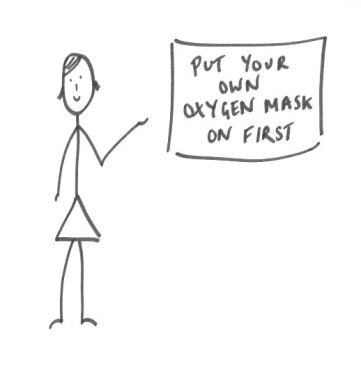
Many of us believe that prioritizing our own well-being aligns with selfishness. In my humble opinion, self-care is a matter of self-responsibility and has nothing to do with being selfish. Importantly, self-care and self-responsibility may also mean asking for help when we feel at a loss. We can only give what we have. It is ultimately not sustainable to be so focused on giving and not restoring. So, in the midst of widespread fear, taking inventory of what we need to keep ourselves grounded and creating dialogue is a necessity.

It is easy to feel lost, on edge, and powerless. Our reality is our perception and perception can change. So let’s help ourselves and one another see the light in the darkness. Take care everyone.

With gratitude,

Audry Van Houweling, PMHNP-BC, Owner She Soars Psychiatry, LLC.

Sisters & Silverton, Oregon2017-09-09 Audry VanHouweling Headshots (2 of 2)

www.shesoarspsych.com
Is Marijuana Harmless? No. But Let’s Get our Priorities Straight.

I have lived most of my life ‘by the books’. I think I tried marijuana once…okay maybe twice. Curiosity I suppose mixed with a bit of peer pressure back in my younger years. Despite my anticipation of some wild trip, I think I just ended up eating more potato chips and falling asleep on the couch. Underwhelming you could say.

Years later, I am now a psychiatric nurse practitioner. Having worked throughout the Northwest, you would have to be living under a rock to avoid the chatter marijuana has incited throughout our region. There has been both celebrations and staunch opposition. I have been asked many times what side I stand on and I generally give the same neutral answer: “Marijuana is not harmless. There are potential consequences and possible benefits. In most cases, there has not been enough research to allow for definitive answers. There are substances that have proven to be far more dangerous than marijuana.”

At the end of the day, thinking about my clients using marijuana quite frankly, does not haunt me.

I am haunted by clients prescribed dangerous cocktails of potentially addictive and dangerous medications.

am haunted by the ongoing laissez faire attitude still taken with alcohol and tobacco consumption- legal substances that kill far more people than all other illicit substances combined.

am haunted by the ease with which youth can procure potentially lethal doses of opioids, methamphetamines, cocaine, and alcohol.

am haunted by parents who are desperate to save their child trapped by the opioid epidemic or worse yet, devastated by a recent loss. Conversely, I am haunted by the children struggling to understand their parent’s addiction.

am haunted by the weeks, months, or even years clients in crisis will have to wait to get access to mental health care or substance abuse treatment.

Some believe marijuana to be a gateway drug and that may certainly be the case is some scenarios. For some of my clients however, marijuana has been reported to be instrumental in allowing them to give up opioids, alcohol, or methamphetamines. I am not in a place to give a verdict either way; however, it is interesting to consider recent research conducted by Livingston and colleagues (2017) via the American Journal of Public Health noting that opioid deaths declined in Colorado during the years of marijuana legalization.

The marijuana debate has been widespread and somewhat consuming, but in my humble opinion by exhausting so much time on the topic, we are neglecting priorities.

MJ2MJ

Yes, marijuana can be associated with cognitive changes. Yes, there has been an increase in non-life-threatening marijuana related visits to the emergency rooms nationwide. Yes, marijuana (depending on some variables) may induce serious psychiatric symptoms. Are these consequences serious? Potentially, yes. Do we need more research into potential implications and side effects? Absolutely.

Have there been any recorded deaths directly related to a marijuana overdose? According to the Drug Enforcement Administration, the answer is no. None.

In regards to other statistics…

As of 2015, Oregon had the third most alcohol related-deaths in the country behind Wyoming and New Mexico.

As of 2017, Oregon had the highest number of seniors hospitalized for opioid-related issues in the country.

As of 2013, Oregon topped all other states for the non-medical use of pain relievers.

As of 2017, Oregon was ranked dead last in the country by Mental Health America for rates of mental illness and access to mental health care.

As of 2016, Oregon’s suicide rate was greater than 30 percent the national average.

In 2016 alone, more people died nationwide (64, 070) from drug overdoses compared to total lives lost in the Vietnam War (58,200).

Numbers do not lie. I am neither celebrating or condemning the legalization of marijuana. Ultimately, given priorities and our country’s hierarchy of needs, marijuana is quite simply not scary enough compared to vastly more dangerous problems currently impacting so many. My hope is that we can regroup, step down from our pedestals, and take a step back from what has become such a deeply politicized topic. We have plenty of work to do otherwise.

Thanks for listening everyone.

With gratitude,2017-09-09 Audry VanHouweling Headshots (2 of 2)

Audry Van Houweling, Owner & Founder, She Soars Psychiatry

Sisters & Silverton, Oregon 541-595-8337 www.shesoarspsych.com

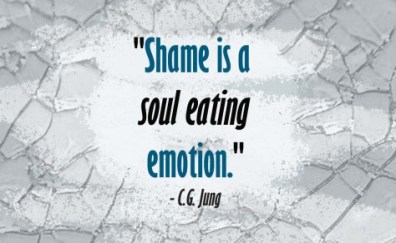
Mental Illness & Places of Worship: Confronting Shame & Providing Refuge

It is estimated that one in four Americans suffers from some sort of mental illness. A good number of these individuals may lean on their faith and place of worship in times of distress. While a place of worship may provide needed refuge, in other instances our place of worship can also cause shame.shame3

There have been noteworthy efforts among some places of worship to recognize the prevalence and impact of mental illness; however, in too many others, there continues to be a stigma and/or discomfort that perpetuates silence and isolation among its members. Even more harmful, some places of worship may continue to believe notions that mental illness is a spiritual affliction, punishment, or simply a sign of weak faith. When faced with a mental health condition, individuals may feel ashamed, spiritually inadequate, and pressured to put on a façade of strength when possible. Sunday mornings may be a joyous time of social gathering and worship, but it may also a time of social angst, fear of judgment, and high standards.shame1

And then there are times when despite our best efforts a façade is simply not possible. Be it serious mental illness such as schizophrenia or bipolar disorder, major depression, grief, or trauma, displaying ‘spiritual resolve and strength’ can at times, be all too difficult.

A lack of support from a place of worship or the insinuation of shame to the individual may not only perpetuate an emotional crisis, but may also trigger a spiritual crisis, which together feed one another in a bi-directional struggle. Throughout my work I have witnessed this struggle not only in church members, but also among church leaders who are expected even more so to prevail and remain spiritually resolute in times of emotional distress.

shame2

As has long been the case, mental illness is often seen as separate or different than what may be considered the ‘physical body’. Places of worship may not hesitate to rally around a member battling so-called physical afflictions such as cancer through prayer, visits to the hospital, flowers, notes of encouragement, etc. Yet, when confronted with suicide or a mental health crisis, there may be reluctance or discomfort.

There may also be a hesitation to seek treatment and trust mental health professionals as they may not be adhering to the teachings of a particular faith however, the same may not be true when being treated for a ruptured appendix, diabetes, or taking pharmaceuticals.

It is important to recognize that many places of worship have good intentions, but may lack the understanding, training, and language necessary to empower and support members suffering with mental illness. Leaders of faith are often on the front lines when it comes to emotional distress, but may feel overwhelmed with knowing how to respond in a way that both promotes the faith, but also recognizes the need for professional assistance. Ultimately, there is a need for enhanced dialogue about mental illness among church leaders, congregation members, and community professionals. Places of worship need not be afraid of the reality of mental illness and ideally would feel emboldened to speak out and provide refuge and understanding.

Undoubtedly, spirituality and a person’s core beliefs are central to overall wellness and vitality. Regardless of our spiritual devotion however, we are all vulnerable to the ups and downs of life and are likely to encounter situations that transcend our spiritual understanding. Places of worship are in a unique position to provide refuge- which can begin with the simple acknowledgement that having ‘faith’ does not have to demand that we feel well, stable, or even optimistic.  And that is okay. Here’s to giving each other grace. Take care everyone.

With gratitude,

2017-09-09 Audry VanHouweling Headshots (2 of 2)

Audry Van Houweling, Owner & Founder, She Soars Psychiatry, LLC Sisters & Silverton, Oregon, www.shesoarspsych.com