Withstanding the Ripples

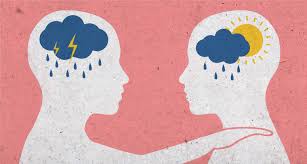
Work the last few weeks has been interesting to say the least. The impact of COVID-19 has created a ripple effect for all of us. For those of us who are privileged, the greatest adjustment may be an unfamiliar boredom as we sift through Netflix, learn how to prepare meals again, and try meditating. Those of us used to a full plate, multitasking, and accessible distraction, may find discomfort in the stillness. Unresolved trauma and grief tend to surface in quiet times and if support is unavailable, the quietness can be traumatic in itself. In contrast, others are getting to rest, reflect, and perhaps heal for the first time. And then there are those of us with legitimate panic married with immense grief and adjustment. Incomes that dissipated in an instant, support systems that dissolved, hopes that were not realized, family members that fell ill, and death. For some, COVID-19 has meant a few ripples easily withstood akin to the impacts of a small pebble. For others, it may well have been an asteroid.

There is no Guidebook…

I have had many clients ask, “How should I be coping with this?”

There is little to be said for should’s and should not’s in this uncharted situation. There is no guidebook.

COVID-19 has not been the popularized romanticized slow down for many while for others, it has allowed for unexpected silver linings. There can be guilt and discomfort on both sides of the fence. Guilt for feeling positive while others are struggling and guilt for feeling angry and afraid instead of mindful and grateful. Both sides of the fence are valid, are acceptable, and can coexist.

While there is much solidarity and collectivism in the COVID-19 human experience, how we are each navigating this virigin territory is uniquely informed by our social position, privilege, background, past experiences, and core beliefs. This demands grace and patience for ourselves as well as for others. Accepting the ambiguity, the awkwardness, and the uncertainty is central to our resilience as we let go of the tension between perceptions of right and wrong.

Returning to basics…

Ultimately my suggestions in this pandemic are not so different than what I might encourage amid other situations involving grief or trauma.

Do your best to stay on a routine. The power of a schedule is that it allows for some predictability during very unpredictable times. Try to uphold what I have deemed ‘the four foundations of wellness’. Essentially, these are the necessities that can help keep our head above water:

  • Sleep: Have a wind down routine. Do your best to go to bed on a schedule and wake up on a schedule. Staying out of bed during the day helps you have better sleep at night so do yourself a favor and watch Netflix anywhere other than in your bed.
  • Nutrition: I know this is easier said than done these days. Do your best to eat whole foods and lots of plants. Try to stay away from processed foods and sugars. Your immune system will be happier too.
  • Physical movement: Whether you stream yoga on YouTube or get outside while being conscious of distancing for your daily run, please find a way to stay active.
  • Connection: To people. To spirituality. To nature. This has been more challenging, but in this time it is so very important. Zoom coffee dates, scheduled phone sessions, spiritual practices, and when safe, enjoy nature.

Gaining Perspective…

The last few weeks I find myself scouring quotes from wartime leaders—Lincoln, Churchill, Roosevelt, Kennedy, and more who faced immense adversity and had to rally resilience and some form of hope in times of such bleakness. I have been thinking a lot about my late grandmother, a Holocaust survivor, the trials and resilience exemplified by my parents and other family members, the grit of the “lost generation” of folks born between 1883-1900 who had to endure the Spanish Flu,  two world wars, the Great Depression, and maybe even the Cold War…And finally, I have been reflecting a lot on the resilience of my clients who have faced adversity far greater than the threat of a virus.

pererverance

While it is perhaps easy for me to say having been thus far lucky amid current circumstances, our country and our world has seen dark days before and will see dark days again. There is a solidarity to be gained in collective grief and struggle. My hope is that out of such we can salvage lessons of humility, resilience, collectivism, and innovation.

Kindness, The Other Ripple Effect…
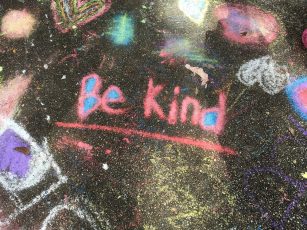
kindness

Social media has historically been a hotbed for filtered comparison. It has been a platform to present a desired image and good or bad, COVID-19 has quickly reorganized priorities. Suddenly, it seems a bit removed to be posting diet plans, filtered selfies, a new car, or relationship woes. What does seem to be trending however…kindness. And kindness has created its own ripple effect. The generous and philanthropic acts of others popularized and made public have led us to question how we can ourselves contribute.

For those of us who are privileged, this is our opportunity to support our neighbors. It is our responsibility as Americans (and global citizens) to do what we can to uphold our values of life, liberty, and happiness. And personally, I believe the grass-root efforts among our communities are likely to do more for instilling hope and healing than the policies of our governments.

So to conclude, words from Winston Churchill…

We make a living by what we get, we make a life by what we give.”

In solidarity,
IMG-7478

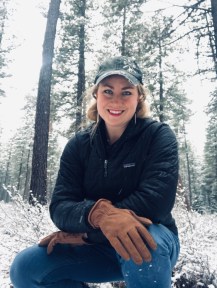
Audry Van Houweling, Owner & Founder, She Soars Psychiatry, LLC

www.shesoarspsych.com

Sisters & Silverton, Oregon


As I write this I am sitting in a cabin with six inches of snow on the ground aside the Metolius river in Camp Sherman, Oregon. Trees bending with white on their branches surround me and the only sound is the trickling of water just beyond the back porch. I am writing on a note pad because there is no phone or internet and my laptop is dead. There is a fire, food in the antiquated fridge, and a claw-foot tub where I plan on spending a good portion of my evening reading a book about survival in Alaska. I am theoretically supposed to depart tomorrow, but my introvert self is pondering how I might negotiate a longer stay.

metolius

Not far from my cabin…

Part of my job as a mental health professional is navigating crisis. To some extent, I encounter crises of varying severity on a near daily basis. Domestic violence, suicide, bankruptcy, psychosis, homelessness, and addiction to name a few. Not much surprises me anymore and I like to think I have become equipped at confronting crisis with concern while not letting the emotion of a situation overcome my judgement.

These other crises have not stopped being relevant, but the attention they receive, which is often too little, has been eclipsed by the demands of COVID 19. This is not to say that COVID 19 does not deserve the spotlight, but many people are facing struggles more immediate than the threat of a virus. And what’s worse, is that those struggles existing before we knew about COVID 19 may be even more amplified amid the widespread disruption.

And that leads me back to my present comforts of the cabin. It is not lost to me how so very privileged my position is. Crises tend to illuminate privilege and inequities. As much as I want to find solace in this place where denial comes easy, I thank my upbringing for making me question the ethics of my indulgence. There is little room for empathy in denial and I am reminded that self-preservation can coexist with compassion.

The disruption has given us all challenges. Some of us are used to dysfunction and chaos…COVID 19 might be just adding to the plate. Some of us resent canceled conferences, fundraisers, vacations, and sport games. Some of us are wondering how the bills will be paid. Some of us have to work even harder to find a meal, shelter, and warmth. It has triggered grief reactions for a lot of us- whether it was the game we didn’t get to watch, the trip we didn’t get to take, the family members we cannot see, or the support we can no longer access.

Beauty blooms when we can redirect our fear to gratitude, recognize our privilege, and even in a place of social distancing find ways to connect and reach out to our community.

empathy

If you have a job that allows for remote work, a living wage, a healthy body, a younger body, supports at home, a safe home, and insurance you are in the minority and yes, you are privileged. Those of us that are lucky enough to be in such a position ought to be giving what we can, doing what we can, and advocating when we can.

Here are 10 things to consider: 

  1. Reach out to older neighbors. Offer to buy groceries. Offer to help them with technology. 
  2. Buy gift cards to your favorite restaurants you might not want to physically visit. 
  3. Share toilet paper- got lucky at Costco? Some folks are too afraid to walk out their door. And please, don’t TP my yard…or anybody else’s for that matter.   
  4. Give to local food banks. Don’t want to give up food? Give money. 
  5. Like babysitting? A whole lot of parents are wondering what the heck to do with their kids. Offer your help. 
  6.  Send a word of encouragement to healthcare workers and first responders. They are on the front lines and we owe them a lot of thanks. 
  7. Please only share information that is factually based. If you don’t know, do more due diligence and stop the spread of inaccuracies. 
  8. Please remember non-profits. Many non-profits have had to forego annual fundraising events. Give more now if you can. 
  9. Need a break? Hit the woods, go to the beach, get out in nature.  
  10. Acknowledge your privilege.  

community2

There are undoubtedly unknowns as we all navigate the complexities and challenges COVID 19 is forcing us to confront. What is for certain is that denial will not allow for progress. Self-preservation without empathy is letting fear win the day and progress born from fear is not nearly as sustainable as progress born from compassion. So please keep remembering to wash your hands…but please also remember your neighbor. And despite a bit of stubborn reluctance, I will depart from the cabin tomorrow. Stay safe everyone.

Thank you for listening everyone. Wishing you wellness.

With gratitude,

IMG-7774


Audry Van Houweling, Owner, She Soars Psychiatry, LLC

www.shesoarspsych.com

Sisters & Silverton, Oregon

Holding on to empathy in a time of self-preservation

One could name a lot of reasons to be stressed these days. Putting aside personal concerns, simply turning on the news can raise anybody’s blood pressure. Much of our social economy thrives on fear-based messaging that adds to unease and uncertainty. Finances, family stress, job woes, academic pressure, stable housing, and social isolation are among many anxieties we might be facing.  Feelings of overwhelm, worry, and pessimism can be hard to dodge. Even worse, can be feelings of powerlessness and hopelessness.

When such negativity gains a tight grip, we can lose sight of our own agency and may feel that the powers that be have ultimately failed us. Certainly, there is something to be said for very real systemic oppression that makes stability for some near impossible. That is another soap box for another day, but for many of us, our feelings cannot be purely blamed on circumstance, but are very much the product of the story we tell ourselves about our circumstances.

own your story2

The story we tell ourselves and what we choose to do with our story plays a significant role in how we interact with the world and most definitely how we operate and relate in the context of relationships.

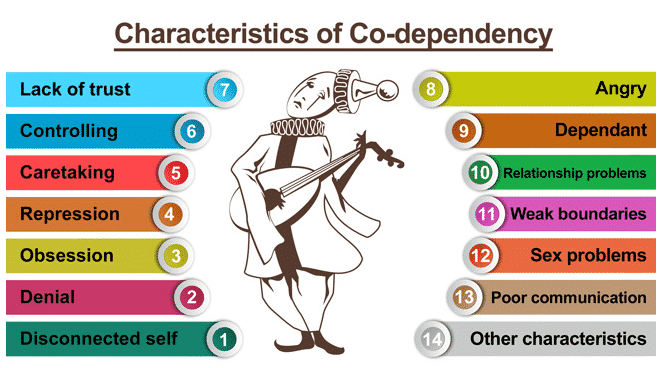
Some of us have been long familiar with dysfunction. Throughout our lives, adrenaline, fighting, flighting, and freezing may have been common companions. Chaos can become more comfortable than order and stability. We may have been caregivers in such situations, which can reinforce beliefs of people pleasing and perfectionism where our validation comes from being “needed”. We may also have been acclimated to be perpetrators of instability- to create chaos, to seek confrontation, and more comfortable with expressing anger than calmness. Lastly, we may depend too much on another to care for us. In all cases, codependency in relationships can be a common outcome.

Codependency is an excessive emotional or psychological reliance on a partner. While appreciating and desiring certain qualities from a partner is central to a healthy relationship, problems arise when we place too much of our well-being on the shoulders of another. Not only can codependency cause resentment and stagnation, but the bottom line is that the people we may be too dependent upon will ultimately fail to meet our expectations or validate us the way we were hoping. This may cause us to feel lost, uncertain, or stuck.

codependency

We may also become too reliant on extrinsic factors for validation- money, appearance, job performance, athletic performance or other measures that often shift and lack permanence. Is it okay to have goals and standards? Absolutely. If you fail to meet these goals and standards, do you lack value? No.

How to Own Your Wellness

Owning your wellness does not mean relying purely on self-sufficiency and hoping you can follow the cowboy model and find your bootstraps. Owning your wellness means accepting responsibility for the story you are telling yourself and being open to editing this story either by your own processing or via the assistance of others. Editing your story-line and maintaining a narrative that allows for forward momentum takes time and energy. It also takes self-trust and direction. These are a few things I find useful:

  • MAKE ENERGY AND TIME SAVING HABITS…
    • Shoot for 8 hours each night.
    • Get moving. You don’t have to push yourself. Just go on a walk. Try to get in 30-60 minutes of movement most days.
    • Eat real foods. I am not going to get too technical here. Just eat foods that are “real” that your body knows what to do with. Avoid processed foods.
    • Minimize the booze. Minimize the caffeine.
    • Limit social media. It is an all too common robber of time.
  • CHECK IN WITH YOURSELF…
    • If we have lived a life revolving around and dependent upon others, it is likely we have yet to get to know ourselves that well. Take time for quiet. Meditate. Pray. Get out in nature. Take time for stillness. Ask yourself how you are feeling. Learn to appreciate your voice. Try new things (on your own) and take some risks- this is how you ultimately learn to trust yourself again. Get to know what keeps you grounded, what gives you joy, and what may be depleting.own your story
  • ESTABLISH BOUNDARIES…
    • As we reclaim our wellness, we need to learn how to say “NO”. We need to become familiar with assertiveness and resist being too passive or too aggressive. We may need to have tough conversations with our significant other who we share codependency with. Sometimes the most loving thing to do is to say no and let go.
  • GET SPIRITUAL…
    • In my opinion, spirituality is simply connecting to what gives you meaning. Finding meaning outside our relationships and circumstance allows us to have more resilience when there are bumps in the road. The bumps that may have been jolts can be softened as spirituality can allow for perspective, empathy, and hope. Don’t have a sense of meaning? It might be worth exploring.
  • FOR GOODNESS SAKE, ASK FOR HELP…
    • Again, editing your story is not necessarily easy. Some of the elements of our story may be completely sub-conscious- hard wired responses to trauma that may be lodged in primitive parts of our brain and body. Some of our story elements may be very strong defense mechanisms that are no longer so necessary. Some of us are very bonded to our defenses and it takes gentle questioning and encouragement to let go. And, sometimes our ability to edit the story can be inhibited by very real physiological processes that may require treatment and intervention.

While our significant other can add to our wellness (and sometimes subtract), our stack of love wooden blocksresponse is ultimately our responsibility. When we own our wellness, our connection with ourselves and significant other is more whole, authentic, empathetic, and forgiving. In the end, owning our wellness, means more room for love…Happy Valentine’s Day.


Thanks for listening everyone.

With gratitude, 

IMG-7286 (1)

Audry Van Houweling, Owner & Founder,

She Soars Psychiatry, LLC

www.shesoarspsych.com

Sisters & Silverton, Oregon


Owning my wellness to love you more…A Valentine’s Day promise.

Let’s talk about sex. Let’s talk about spirituality. Let’s talk about shame. The interplay between the three are powerful, complex, and deserve honest discussion.

Sex, shame, and spirituality undoubtedly come up a lot in my office. The connections are not always consciously known, but as we explore the human needs of relationship, intimacy, and love the enmeshment of these powerful life forces is enlightened.

When we talk about the need to feel known, the freedom to be vulnerable, the drive to connect with and understand, to give and to receive, are we talking about sexuality or are we talking about spirituality? When we lie naked with another versus baring our soul to a greater power is the implied vulnerability and trust really so different? Could it be that sexuality is one of the most powerful means of expressing spirituality and that spirituality is a primary means of bringing meaning to sexuality?

Unfortunately, our society and in particular, popular culture and religious institutions do not always acknowledge and many times, deny the implicit correlations between sexuality and spirituality. Sexuality and spirituality are too often in opposition to each other rather than allowed to coexist and feed each other in the symbiotic relationship they ought to. This socially driven divorce allows too much room for tension, shame, hiding, and perversion.

Popular culture too often portrays sex as a physical transaction with the primary goal being pleasure versus intimacy. Thoughtfulness and respect can at times be lost as there may be a refusal or denial to acknowledge the meaning behind such vulnerability. Popular culture also generally prioritizes and favors the pleasure and pursuits of men versus women. By depicting sex as a too often masculine-driven, hedonistic venture, our society diminishes the value of true intimacy, which can so too fracture the connections to soul and spirit. A person can have a lot of sex with very little intimacy and despite so many physical interactions, it can be altogether lonely.

sexshame3

Religious institutions too often go to far in denouncing sexual expression or feelings of pleasure. The emphasis on modesty can too often be married with shame as (especially women and girls) are made to feel that the universal urge to physically connect with somebody must be suppressed and unseen. Implied in this belief is the notion that suppression of sexuality is somehow associated with an exalted spiritual state and that pleasure is an impediment to devotion. Sadly, this has at times created a culture of hiding that only bolsters feelings of shame. Particular harm can come when persons of authority representing a faith or set of spiritual beliefs exploit their power and abuse another. Too often has this happened, too many stories where simultaneously the beauty of sexuality and spirituality are tarnished amid trauma.

In other words, popular culture too often exalts the body’s pleasure to the point of denying the spirit while religious institutions too often exalt the spirit to the point of denying the physical body. There can be severe consequences with both.

quotesex

The majority of my clients are women and girls. Both popular culture and religious institutions historically also objectify the female body. Too often, whether a woman is wearing a string bikini or head to toe cloak, her virtue and desirability are still reduced to her external appearance, and either the expression, or suppression of her sexuality. She may wrestle with modesty being associated with virtue while the display of her body is associated with desirability. When it comes to sexual expression, women and girls frequently feel damned if they do damned if they don’t. A woman’s appearance should never be the sole gauge to measure either virtue or desirability. She is ultimately far more complex. I will celebrate the day when women universally are given room to be desirable, sexual, and yes, virtuous all together.

Too often our experience with sexuality and/or spirituality is fractured by trauma, abuse, or corruption and we can be left struggling to truly connect, find intimacy, and meaning. In extremes, we might try to deny these needs or trivialize them. Trauma can be complex and so too can be responses to trauma. Sexual trauma can cause some to isolate and withdraw from physical intimacy, while others may seek some level of control or pleasure amid so much pain by allowing risky or dangerous situations to repeat themselves. Spiritual trauma can similarly lead to isolation, fear of closeness, mistrust, poor self-value, and lack of meaning. Sexual trauma and spiritual trauma may happen apart from one another, but the impact is very often bidirectional, and shame can encapsulate each.

spiritual abuse

Rather than trying so hard to buttress the unsustainable barrier of shame our society often wedges between spirituality and sexuality, perhaps we can do a better job of acknowledging the beauty that can come when they are allowed to coexist and support one another. By continuing to divide sexuality and spirituality we are doing ourselves (men and women) no favors as we may feel pressure to fulfill unrealistic roles that leave too much room for judgement against ourselves and others.

Thank you for listening.

With gratitude,

Audry Van Houweling, Nurse Practitioner, Author, Speaker IMG-6251

Owner & Founder, She Soars Psychiatry, LLC www.shesoarspsych.com

Sisters & Silverton, Oregon


Sex, Spirit, and Shame

This is always a very busy time of year to be a mental health provider. Amid the twinkling lights, snowflakes, and seasonal cheer, feelings of loss and loneliness often can permeate and subdue holiday merriment.

Loneliness is pervasive anyway and its grasp can tighten on too many hearts this time of year. And despite ever-growing, media-driven platforms offering fleeting hits of validation and connection, it seems the feelings of loneliness are only on the rise. Depression, anxiety, and trauma can all be both perpetuated by and exacerbated by loneliness.

lonely

Loneliness is not always married to social isolation. A person can be desperately lonely when also surrounded by people. It is not uncommon that some of the most likeable and giving among us are also very lonely. Loneliness is a feeling of being alone despite not actually being alone. It is often reinforced by the walls we put up with the belief that we are somehow keeping ourselves safer behind our fortress when in actuality we repeatedly diminish our authenticity and self-trust. It is a feeling of not being truly ‘known’. Yet, we have become experts at crafting filtered personas of success and wellness and we have also been duped to believe the filtered portrayals of others. Our social media profiles may allow for more ‘connections’, but don’t be fooled to believe that the currency of ‘likes’, comments, and follows can take the place of true connection let alone intimacy.

intimacy

We have become masters of small talk- of keeping things surface level. We can fear exploring our own depths and often assume it would be burdensome or too time consuming to explore the depths of others. Many of us crave moments where we can let down our walls and loosen the reins, but we can convince ourselves that the risks of vulnerability outweigh the benefits. This can all be a bit heavy and we may find ourselves seeking moments of perceived relief through distraction and numbing.

Intimacy is the antidote to loneliness. Intimacy is the merging of true vulnerability and connection and it demands we have true interactions soul to soul, face to face, flesh to flesh. It is not simply broadcasting our feelings on a virtual interface. It requires reciprocity. It requires time, energy, and intention. It is the art of allowing our hearts to be both loved and broken, to give and receive, to have dreams realized and interrupted, to expose our whole self and to seek the wholeness of another. It is the acceptance of the pain that will inevitably come with full disclosure, but the knowledge that it is only within the fundamental disclosure of intimacy that we truly find acceptance.

Intimacy demands that we question the pride we take in rugged individualism and solo venturing and that we allow for the sharing of our suffering, talents, joy, sadness, and success. Humans are meant to have a tribe as part of our emotional and physical survival. Non-conformity has its merits and sometimes it is worth being lonely for while if it means standing against harm or hate, but to stay lonely is only so sustainable.

So this holiday season let’s try to have meaningful moments of true connection, of intimacy. Let’s take a moment to verbalize our love for each other, to say thank you, to say sorry, to forgive, to ask for, and to receive. Let’s help others let their walls down by letting our walls down bit by bit. Let’s acknowledge and share the sadness rather than run from it. Let’s acknowledge the joy rather than convincing ourselves that the other shoe will drop. Let’s move closer despite the fear.

Wishing you an intimate holiday season full of meaningful connection.

With gratitude,

IMG-6803

Audry Van Houweling, Owner & Founder, She Soars Psychiatry

Sisters & Silverton, Oregon

www.shesoarspsych.com

Dear Santa…Make me less lonely: Unwrapping the gift of intimacy.

I have always been drawn to human emotion. The process of how one ‘becomes’ has forever been fascinating. I was the middle schooler curling up on the couch after school with my cinnamon toast crunch to Dr Phil and Oprah foregoing MTV and Nickelodeon. I enjoyed playing ‘therapist’ and psychoanalyzing my friends (not sure if they always appreciated this), and I was (with pride) most definitely a playground conflict manager in fifth grade. In my opinion, the term ‘empath’ is becoming a but too trendy, but whatever the case, my curiosity to the human experience of emotion in all its breadth is the foundation of my professional and in many ways, personal life. My intrigue has led to strength and foresight, but is not without challenges.

dr phil

Dr. Phil…

I hear a lot of stories in my office. Stories of trauma and loss, stories of heartbreak and despair, but also stories of  resilience, compassion and connection. Over the years, I have learned to hold on to the beauty in the struggle and to embrace gratitude amid the stories that are most challenging. You learn to transform the darkness into bits of light…to find the silver linings. You celebrate small successes and seek out opportunities for laughter and lightness. You learn also to compartmentalize and recognize that despite your best efforts, a client’s transformation is ultimately their own journey.

My inner strategies are not however foolproof. On occasion, the gravity of emotion, the heaviness, and the fear can creep in…and I ruminate, Am I doing enough?

Working in small towns, it is inevitable that you will cross paths with your clients— like all the time. Despite professional boundaries, maintaining emotional distance is not always easy. You appreciate the impacts of a client’s suffering or progress as far more palpable and immediate. One person’s loss, suffering, or triumph can have community-wide implications. There is vulnerability and fragility implicit in each and every client’s session. I like to think I do my best each day. I strive to operate by the values of integrity, diligence, and compassion. Much of the time my work evokes feelings of great privilege and gratitude, but the rabbit hole of fear can, every once in a while, be haunting.

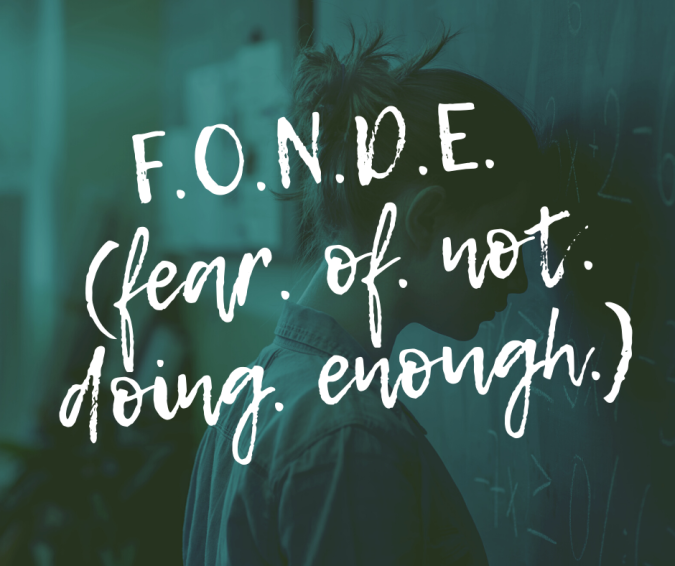
My teenage clients help keep me current on the popular lingo. I learned just a few months ago about ‘F.O.M.O.’ (fear of missing out) and while I appreciate the relevance, I find myself much more wrapped up in ‘F.O.N.D.E’ (fear of not doing enough) and I know I am not alone.

F.O.N.D.E. (fear. of. not. doing. enough.

Our world has become increasingly smaller. The emotional struggles, stressors, and fears shared by humanity worldwide are at our fingertips, shared in real time, and more immediate than ever before. There is little respite from the hardships and there can also be guilt in wanting to detach from it. We are more aware of suffering than ever before, and, at least on a personal level, the needs seem more urgent than ever before.

As a privileged human lucky with my basic needs met, human connection, general stability, financial resources, and opportunity, I can find myself vacillating between knowing I technically ‘can’ do more while knowing I should also take my own advice for self-care, boundaries, and the knowledge that just because I ‘can’ does not always mean I always ‘should’. Amid the perceived urgency and need, the risks versus benefit of it all can become a bit blurry sometimes. It the risk greater to rest and withhold energy for another or to extend myself further for another and risk exhaustion? Despite preaching the value of self-care to client after client, sometimes I wrestle with the guilt of self-care in itself being such a first-world luxury.


Much of our culture is driven by a scarcity mindset whereby a perceived fear, the concept of ‘enough’ is questioned. Am I successful enough? Am I attractive enough? Am I smart enough? Am I making enough? Am I doing enough? When taking a bird’s eye view, our scarcity mindset begs the question, what per se does ‘enough’ even mean? What finish line are we striving for? Is it a standard that can ever actually be met? We end up postponing joy, satisfaction, and contentment for an imaginary concept.

There is so much need out there. So much desperation. And yes, there is an urgency for help and innovation. It can be easy to fear. It can be easy to feel guilt. Yet, we must ask ourselves in this space, ‘how can I best show up for the world?’ Martyrdom is only so sustainable. We need endurance and resilience, which cannot be achieved without allowing for rest, reflection, and the quiet trust, that perhaps in this moment, and future moments I am ‘enough’ regardless.

Thank you for listening everyone.

With gratitude,

IMG-6251


Audry Van Houweling, Owner & Founder,

She Soars Psychiatry, LLC

www.shesoarspsych.com, Sisters & Silverton, Oregon


F.O.N.D.E. (Fear of Not Doing Enough)

TOUGH.

“I told myself I was tough”, she said.

“I told myself I was strong enough to stand by him”, she went on. “He has a troubled past and I understand why he might…”

She was no doubt tough. She had come into my office with her boots authentically worn from long days and dust. She placed her wide brimmed cowboy hat on the side table revealing her face with lines etched by the sun. Her long sleeve button down shirt was tucked into pressed dark denim Wranglers adorned by a silver belt buckle. She told me about her horse who had been her companion for the past fifteen years, her cow dog, and her days counting cattle and mending fence. She said she preferred solitude and despised being the subject of pity. “I have never been to anybody like you before”, she said. “It just never felt right to complain”, she continued while she shook her head and stared at the office floor.

At the time, as a bonafide ‘beginner’ in my profession, I couldn’t help feeling intimidation, respect, admiration, and curiosity all at once. She exuded an old-fashioned wisdom and grit softened by humility.

She told me about her anxiety. She told me that she could generally escape the worry amid daily demands on the ranch and with the freedom she felt on her horse’s back navigating endless acres of high desert and sage.

Inevitable aging and the toll of ranch life had forced a slow-down. She told me two much younger ranch hands were hired and the herd was downsized, which offered a reprieve, but also more moments of stillness seldom available in the past. Distractions became fewer and God help her, she was not going to get one of those “darn smartphones”. The opportunities to bury the day’s worries in hard work became scarcer.

For a long time, the story she told was not being able to overcome the tightness in her chest, the pit she felt in her gut, the lost “pep in her step”. She avoided using words like ‘sad’ and ‘afraid’ and often apologized for “bombarding me” with so many problems despite my repeated reassurance.

At times, she exuded suspicion and stubbornness when we discussed strategies and ways to cope. Nevertheless, her attendance week after week did not waiver.

One week, nearly six months into our work together, she sat down on the couch as always, put her hat on the side table as always, and then tears fell. Most always armed with stoicism and a ‘safe’ emotional distance, her tears caught me off guard. I attempted to gently inquire knowing that this was a pivotal moment…

“Can I show you something?” she said. I nodded with equal parts encouragement and concern.

She unbuttoned the cuffs on her shirt and with tears still falling rolled up her sleeves.

She held out her bare forearms discolored with visible shades of blues, reds, and purples and then stated, “there’s more”, and she slowly removed her shirt. Trying to hold back the intensity of my own emotions, I stood up from my chair, put a hand on her shoulder and could only think to say, “you are safe here”.

I scanned her upper body etched in bruises and redness- up and down her arms, the contours of her back, the base of her neck, along her ribs. Amid the damage, I couldn’t also help but notice her physical strength and stature that seemed to be in such stark contrast to the violence forcefully inscribed all over her body.

He had been described as an “old cowboy who liked whiskey”. He had been a Vietnam veteran almost certainly haunted by the trauma of war. She told me his rages would come without warning and she would become his target. Sometimes months would go by without incident. Accusations of infidelity, belittling, and name calling would escalate into punching, pushing, kicking, and hair pulling.

Afterwards there was usually an apology and sometimes a letter with promises never realized. Enduring the fear of staying was somehow lesser for her than facing the fear of pity and a future unknown. She tried her best to see her tolerance as toughness and in the lonely moments, found bits of reassurance riding out to her favorite viewpoint and taking in the beauty of the land when all else seemed so ugly.

I was the first person she told. Amid her desperation, I withheld my temptation to respond with a directive to ‘leave’ as it is almost never that simple. As she stood in my office exposed, vulnerable to the core, and overwhelmed with uncertainty, I struggled to find words. So instead, I could only say to her what was most evident to me… “I have never seen you so tough” and this I repeated week after week as we navigated the journey ahead.

DV

This story is in honor to all the men, women, and children who have experienced or have been witness to domestic violence. 

Details of this story and names have been withheld due to confidentiality. Client consent was granted prior to publication.

Thank you for listening.

With gratitude,

kiger gorge

Audry Van Houweling, Owner & Founder, She Soars Psychiatry, LLC

Sisters & Silverton, Oregon, www.shesoarspsych.com

My Attempt at Seasonal Cheer and Why it is Worth it.

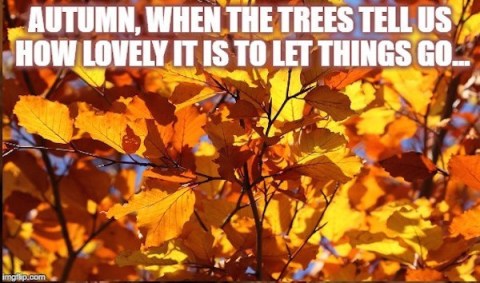
Despite a bit of denial after what seemed to be an abbreviated summer, seeing snowflakes on my weekly commute over the Cascades, digging out my mittens, and the sudden necessity of hot coffee in the morning rather than my typical iced latte, has forced me to accept that indeed, Autumn is upon us.

autumn meme2

Autumn is a perfect opportunity to practice optimism- to embrace the glass half full so to speak- especially when half full with pumpkin spice goodness. It is an opportunity to witness the beauty of letting go as golden and bronzed leaves drift to rest on forest floors and to welcome contemplation and change amid nature’s inevitable transition. For some of us, Autumn can represent the beginning of wintertime and holiday trepidations, which makes it more difficult to cozy up to the idea of warm sweaters, fireside cuddles, and flavors from the harvest. Creating physical space to welcome nature’s fated changeover can help lessen anxiety and enhance feelings of acceptance, joy, and contentment.

When it comes to seasonal home décor, I certainly am not on a pedestal. Somehow between work demands, commutes, and proximity to family and friends who are far more inclined to bestow seasonal delights, my efforts at seasonal décor are negligible. I took much pride in taking the time to hang the one strand of lights that donned my front door for the holidays last year. Somehow that seemed like a lot. Oh yes, I must also mention the single bundle of tinsel tossed hastily along my mantle and the wreath bought on impulse from some cute, convincing child raising money outside the grocery store. It did actually make it to my front door a couple weeks later…

fall meme1.jpg

While my efforts are a work in progress, there is undoubtedly emotional benefits to creating traditions dedicated to welcoming seasonal change. My mother is a master at this and I, in all my adult glory, still have a child-like excitement to holidays at my childhood home. Myself and my siblings who are all bonafide adults and out of the house can still count on the predictable delectableness of spiced breads, holiday cookies, cobblers, and pies. My mother is also extraordinarily organized. She keeps carefully planned lists  for when decorations should emerge and has labeled bins thoughtfully arranged for holiday décor, ornaments, cookie cutters, tabletop platters, and the like, which gives me something to strive for as a I clumsily shuffle through my garage attempting to find my one strand of Christmas lights. The music is always the same. A homage to holidays past of the 1970’s with James Taylor, Linda Ronstadt, and the drawn-out tones of Aaron Neville that drive me a bit batty, but nevertheless cannot be spared. The same holiday figurines and adornments from my early childhood days still make their appearance all these years later. My mother is even thoughtful enough to still grace the Christmas tree with the truly unfortunate childhood craft experiments/ornaments created by myself and siblings that she still says, “are sweet”. My mother holds the torch for seasonal cheer, but she has inspired me to light some small candles.

While the nostalgia my mother has created (and father when he, at the persistence of my mother, finally puts the Christmas lights up) can never be matched, I have taken it upon myself to be a bit more intentional to  bring seasonal cheer to the confines of my own home and offices. This week for example, I bought a single pumpkin that while not carved, is sitting on my front porch. This is a win. I also recently gave into the discount bins at Target compelling me to invest in an assortment of random plastic gourds, a garland with fake Autumn leaves, and a bag of seemingly nonsensical blue pumpkins that seemed frivolous if it were not for the fact that the colors matched my office scheme. I somehow felt a sense of camaraderie with the other several women carrying an assortment of Autumn embellishments in the checkout line sharing comments with such as, “I couldn’t resist”…and “can you believe how cute?!” I smiled and nodded as if it all came natural. Ultimately, let’s just say I am a work in progress.

autumn1

There is much to be said about the psychology of décor and how your physical space can alter your emotions. Research suggests that adorning your home, office, or place of business with seasonal décor makes you appear more hospitable and sociable. Decorating early for the holidays (we are talking before Thanksgiving) can reportedly help lower stress, elicit nostalgia, and can reconnect us to positive childhood memories. Basically, you can get the “warm fuzzies” even earlier. It can be the little things that do not have to be costly like a warm blanket, unpacking your cozy sweaters, the smell of seasonal fare, a burning candle, or a new novel that can go far in creating lightness and seasonal ambiance.

So, whether you are on par with Martha Stewart or a work in progress such as myself, there is room for us all to welcome nature’s golden hour in our own unique ways. Here’s to your glass of Autumn splendor remaining half-full.

Thanks for listening everyone.

With gratitude, IMG-6148

Audry Van Houweling, Owner & Founder, She Soars Psychiatry, LLC

Sisters & Silverton, Oregon
www.shesoarspsych.com


Aging Gracefully in an Anti-Aging World

The undertaking of aging gracefully is a lot to ask for in a society that fights so hard against what is unavoidable. As a millennial myself, I may be a bit removed from the post-65 generation defined as ‘senior citizens’; yet, I find myself already critiquing my emerging laugh lines, scavenging for the arrival of gray hairs, and recently spent far more than I care to admit on a ‘magic’ (per the sales associate) brew for my face promising to ward off the inevitable.

age5

We frequently go to extremes to seek out the elusive fountain of youth. We go under the knife to stretch, contort, and implant our bodies, purchase supplements touted on late-night infomercials with promises too good to be true, douse ourselves with the latest and greatest potions to erase our wrinkles or restore our hairlines, and spend our hard earned money in all sorts of ways in hopes that we can maintain a version of youthfulness. The pressure to partake in the massive and manipulative multi-billion-dollar anti-aging industry is especially understandable in our society that frankly, is pretty pitiful when it comes to honoring the relevance and value of our older generations. Ultimately, it boils down to holding onto respect, being seen, and being acknowledged.

This quest for youth can all be a bit exhausting and ultimately when despite our best efforts, our body, our appearance, and our abilities inevitably change, it can be difficult to maintain a sense of optimism. Furthermore, as the aging process continues, a person may feel their world shrinking as family and friends may move or pass away, mobility declines, and recognition previously gained in the workplace may lessen. Finding connection and combatting feelings of isolation and loneliness can be insidious and a huge contributor to depression, anxiety, and fear. Adults aged 85 and older have the highest suicide rates nationwide while those aged 75-84 have the second highest.

age4

Convincing older adults who may have grown up with considerable stigma that their mental health is important can be an obstacle on its own. Older adults may fear judgment and/or that their independence may be jeopardized. Additionally, our healthcare system needs to work harder on dismantling the notion that depression and anxiety are ‘normal’ in aging populations, which further dissuades aging adults from seeking help and may prevent the implementation of potentially effective treatment strategies. It is thought that up to 50% of cases of major depression go undiagnosed in older populations- often attributed to the ‘aging process’ or also commonly, dementia.

Specialist care is hard to come by and let’s not forget the issues of Medicare, poor reimbursement for mental health care, and the red tape that discourages too many providers from even accepting Medicare. I could rant about this alone… another soapbox for another time perhaps. The numbers of geriatricians or physicians trained specifically in caring for aging populations fall far short of the demand. There are fewer than 7,000 geriatricians nationwide- a significant shortage when considering the demand of the 14 million older adults living today. Ideally, there would be 20,000 or more geriatric providers assuming each provider carried a panel of 700 patients. And so, finding providers that appreciate physical and psychological complexities, potential drug interactions, and psychosocial needs can be also very difficult.

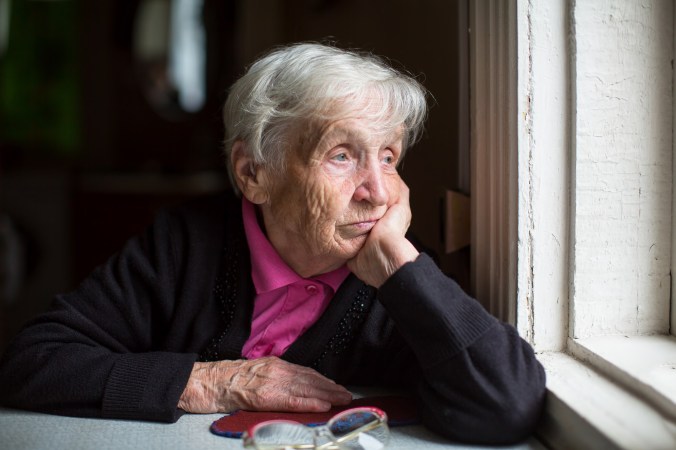
An elderly woman sadly looking out the window. Melancholy and depressed.

While the obstacles and warped social ideals of aging deserve mention, there can also be much to gain and much joy to be had. Many older adults enjoy freedoms with their time and resources that may not have been present before. For some, it can be a chance to pursue hobbies, seek new social connections, travel, and grow in self-discovery. While perceived feelings of being ‘insignificant’ can come with grief, it can also be a kind of liberation as it allows an opportunity to shed inhibitions and insecurities of being so consumed with the opinions of others.

age2

As a society and certainly for millennials like myself, we need to take pause and rethink how we navigate our own aging journey and also honor generations preceding us. We need to recognize how such fears of aging and yes, death contribute to higher levels of anxiety, depression, and despair. In our relentless fight to stop aging, we can lose out on the wisdom, value, and growth aging can offer and discredit the significance of the older adults that paved the way for us. As Betty Friedan so eloquently voices, “Aging is not lost youth, but a new stage of opportunity and strength.”


Thanks for listening everyone. Here’s to embracing the present, not dwelling on the past, and not fearing the future.

With gratitude,

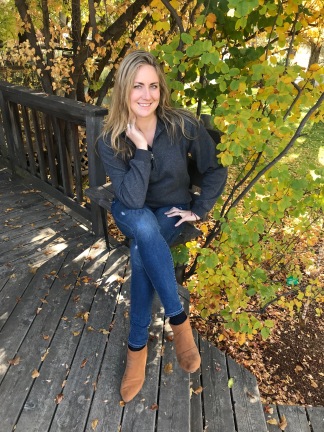
me

Audry Van Houweling, Owner & Founder, She Soars Psychiatry, LLC

www.shesoarspsych.com

Sisters & Silverton, Oregon

The Costs of Exclusion

A few weeks ago, along with millions of other Americans, I sat on a blanket, ate my pie, and watched the fireworks light up the sky. Patriotism is a loaded term- what it means is particular to the individual. For some it is a sentiment that comes with great pride, for others ambivalence, and for others skepticism and shame. We have all had our own unique American story- some of us have been prosperous and graced with opportunity while others have a story of struggle.

My mind went all sorts of places during the fifteen minutes of bright booms above me. As I surveyed the near-idyllic small town gathering surrounding me gasping and cheering, I felt a deep sense of privilege that somehow life afforded me to be in that moment cozied up to people I care about, safe as can be, without worry. I ruminated on the ‘unalienable’ rights- life, liberty, and the pursuit of happiness. A powerful standard still not guaranteed for some. I thought of my own roots, my generational story, and the hardship and resilience that made possible my own citizenship and opportunity. And in the flashes of illumination above came the images of children caged on the border – some only infants- sleeping on concrete floors, often without parental care, many without minimal physical comfort, and amidst my gratitude and patriotism was a mix of shame, anger, and sadness.

girls on concrete

Two young girls sleeping on concrete at a Texas detention center.

Movement and nomadism are a part of human nature. Whether we are moving across town or across borders, the reasons we do so are varied, but most often involve seeking a greater sense of stability, acceptance, importance, or security. If we are lucky, we may move for simply aesthetic reasons wanting more space, more modernity, more grandeur. Yet much of humanity moves out of necessity- perhaps for financial reasons or eviction, but also for safety and survival.

My maternal grandmother was born in Warsaw, Poland. Her father was a physician and professor at the local university while her mother stayed at home. She was raised Roman Catholic, was afforded a top-notch education, enjoyed the arts, and traveled often.

On September 1st, 1939, the Nazis invaded Poland. My grandmother was 15. While not Jewish, her father was targeted as being part of the intelligentsia and so, my grandmother was relegated to the Warsaw ghetto, then separated from her parents who were never seen again. Then, given her vitality, she was chosen for forced labor rather than execution. While details remain a bit of a mystery, my grandmother escaped the forced labor camp, but while working for the underground in France where, she was captured again by the Germans and imprisoned in Frankfurt for two years until the end of the war when she was finally liberated. There was not much left for her at home in Poland and so, my grandmother who spoke no English (despite speaking at least four other languages) made the journey to Ellis Island along with so many others seeking something better and the promise of Lady Liberty.

Jewish kids

Jewish refugee children catching sight of Lady Liberty.

Somehow out of such horror, my grandmother managed to make a life for herself in the United States. She married, had two children, settled in Long Island in comfortable suburbia, and later retired to a gated community in Palm Beach, Florida. Despite her unwavering resilience, it was not always pretty. The stain of the Holocaust brought nightmares and flashbacks, memories that compelled a quest to numb or distract with alcohol, pills, and risky behavior. Her traumas became also her children’s traumas and while her reasons for absenteeism or emotional distance as a parent are understandable, they were not without consequence. This is one version of inter-generational trauma.

Last week I enjoyed a brief visit to New York. As I toured the Auschwitz exhibition at Manhattan’s Museum of Jewish Heritage, I was struck most by a photo of a German family with young children- they are laughing and enjoying a swim in their backyard only 400 feet from the crematorium that in sharp contrast was burning thousands of murdered bodies each day. How is this possible?

Desperation loves a scapegoat. After World War I, Germany was hurting- and hurting bad. The financial situation left over a third of the country unemployed and grasping for hope or purpose. Hitler’s vision not only offered a way forward, but an enemy that was much more tangible and familiar than the complexities of the country’s crisis.

“The art of all truly great national leaders at all times consists in not dividing the attention of a people, but in concentrating it upon a single foe.” -Adolf Hitler (1925)

One way to a sense of pride is through unification and another, through division. Hitler did both. He unified the ‘Aryan race’ and by convincing those lucky enough to fit this description that they were superior, he enhanced their perceived pride even more by justifying the ostracism and persecution of millions. Germany quickly became Europe’s superpower, dominating economically and militarily. German author Raimund Pretzel (1928), describes the intoxicating Nazi vision among the German people:

“They are terribly happy, but terribly demeaned; so self-satisfied, but so boundlessly loathsome; so proud and yet so despicable and inhuman. They think they are scaling high mountains, when in reality they are crawling through a swamp.”

Germans

German gathering outside of Auschwitz

It is unsettling what we can become accustomed to- what we quietly accept especially when we ourselves are hurting. It can start small- perhaps with a suggestion or slur at the family table, then rhetoric spreads to groups, then to public acceptance of discrimination and segregation, then to widespread banishment and dehumanization, then somehow to mass genocide.

IMG_2285

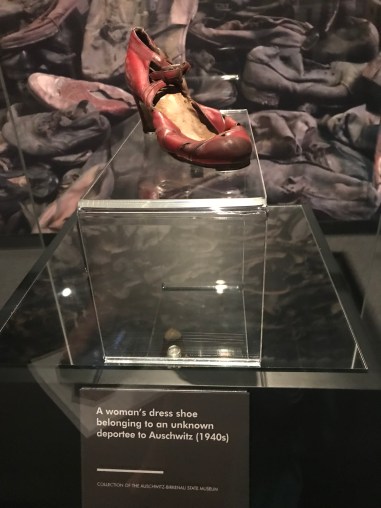
A single red shoe belonging to one of the millions murdered at Auschwitz.

IMG_2301

Children’s clothing and objects found at Auschwitz.

It is well known that being excluded has deep emotional consequences, but what do we lose when we ourselves are the aggressor of exclusion? We often do so to seek a sense of solidarity or significance with other aggressors. We want to belong- just as every human does. Yet, the method by which we are seeking belonging involves hate, denial, dehumanizing, and anger. This demands a significant amount of energy, and detachment. And, quite frankly, anger is toxic on the mind and the body. The pain we inflict on others becomes our path to prosperity and reconciling this means we must create a worldview in which causing hurt is necessary. Ultimately, we create a very rigid and small world that must be maintained in order for us to have any sense of satisfaction. Problem is, this rarely happens, and we are often confronted, albeit maybe only on our deathbeds, with our legacy.

I write this not to make a political statement, but to remind myself and perhaps anybody who reads this that the seeds of hate are often apathy and desperation. It takes courage to acknowledge responsibility and look within rather than seeking to blame another. Furthermore, I am reminded of weight of our words. As I left the museum, I was challenged most by the following statement from Auschwitz survivor, Simone Alizon:

“Our words are not your words. Ramp does not equal platform. Number does not equal name. Segregation or selection does not equal choice. Barracks does not equal building. And today words have the power. And it is also destructive. On the internet, in discussion, on forums, in comments. In the media, titles, captions. In the groups of notions where the people who are poor, cringing, running away…are presented as people with germs and diseases. In the language of political debate, to demagogy, in populism. In brutal opinions of those who, supposed to serve, want to lead. The words of hatred poison the imagination and stupefy consciousness. Maybe this is why so many remain silent while confronted with evil. The words of hatred create hatred. The words of dehumanization dehumanize. The words of menace increase the threat. We have already started paying for this. The camp is not just a memory. For the majority of us, its reality is omnipresent in our everyday life. I have never heard a more terrible warning. The warning against our own words.”

Thanks for listening everyone.

blog-me3


Audry Van Houweling, Owner She Soars Psychiatry,

Sisters & Silverton, Oregon

www.shesoarspsych.com