Making Peace with Our Multitudes

One of my first patients was a pastor. He was esteemed and well-respected—a pillar in the community. I was a newbie in the small town where his roots ran deep. He was a man of conviction and compassion. He spoke with authority. And he was also sometimes hopeless…and desperate. At twenty-six years old, I sat at my desk sporting my newly printed diploma. I was trying my best to hide my imposter syndrome. Still shaky in my confidence, I kept questioning how a man who has guided so many, seek out any sort of guidance from me? He was a master at portraying steadiness and reassurance for his patrons. He held tight to concepts of duty and responsibility. In a small town, he felt there was little room for any misstep or deviation. Despite being surrounded by people who revered him, he shared with me that he often felt alone…and scared. While I stumbled through coping skills and strategies, I learned that my best intervention was to simply hold space for his complexity and provide a brief respite from the rigidity of his self-imposed and societally reinforced standards. 

Over the years in my practice, I have come to have a deep appreciation for the multitudes we all contain. The pastor and so many others in their courage to be vulnerable, unknowingly also gave me permission to better accept my own depth and sometimes messy complexity. Feelings and thoughts that may seem contradictory can all exist simultaneously. Grief and gratitude, courage and fear, joy and pain, hope and despair. The ability to hold multiple realities and straddle paradox might be one of the greatest measures of resilience.  

Life can be a bit performative. Like a play, we all take on different roles. The character descriptions will likely differ depending on if we are at work, home, social settings, or alone. This is completely human and to an extent, shows cognitive flexibility and healthy adaptation. Some roles we have mastered. We know the lines front and back. We have become intimately familiar with certain characters. Others, we would prefer to remain out of the spotlight or silenced altogether. The cast of characters can be diverse. Some may be protective, some ambitious, some ashamed, some stubborn, some silly, and some hopeful. At times, we might allow other people or societal expectations to take the director’s seat and choose the cast despite our unspoken resistance. If we have faced trauma or dysfunction, we might favor a cast who seemingly offers protection by seeking control while we might sideline child-like characters who crave lightness and adventure. When faced with a decision, multiple characters may want a seat at the table–at times contradicting one another generating inner conflict. We might have a character begging to take center stage, but fears of judgment or shame keep the muzzle tight. 
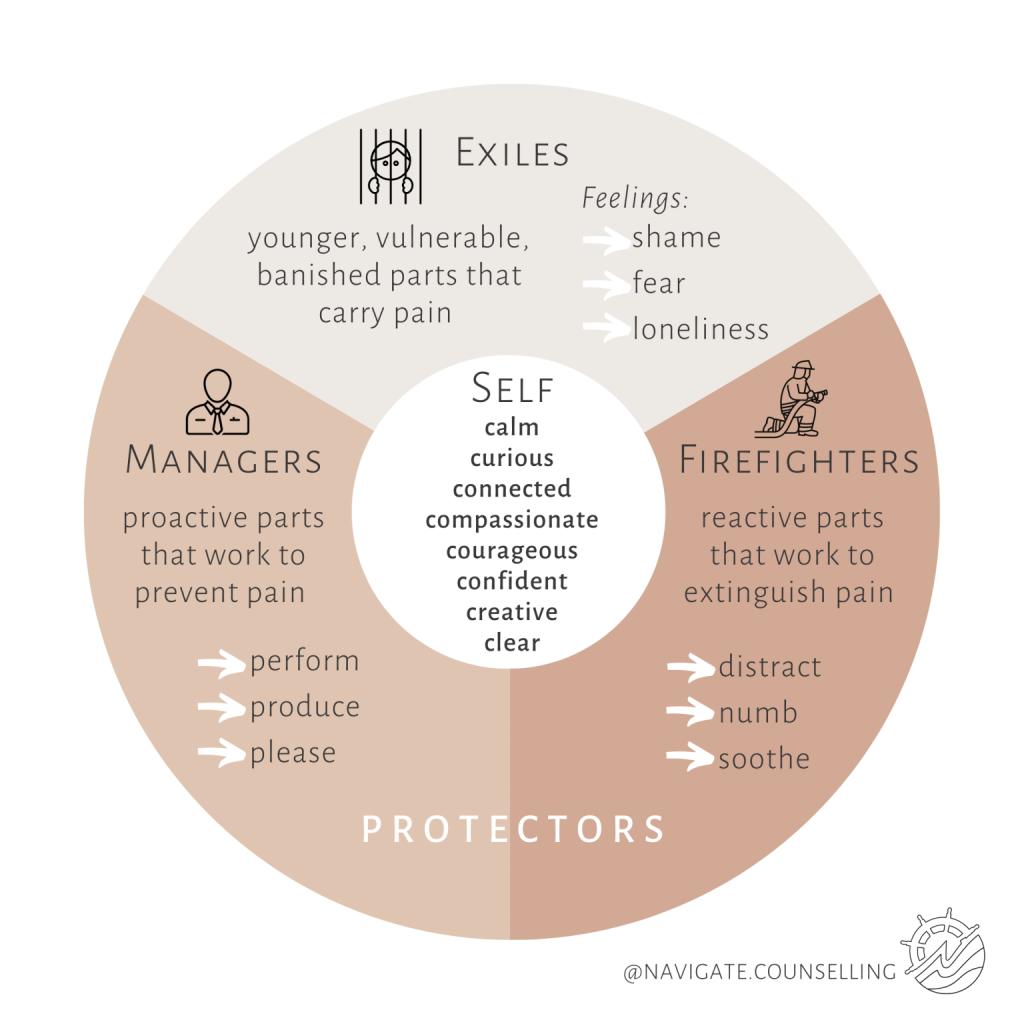
Different parts of ourselves as outlined in
Internal Family Systems Therapy

As with most entrepreneurs, I have a strong identification with my professional cast of characters. Defined by productivity, steadiness, responsibility, and a fair amount of rebellion to the mainstream, this industrious cast has a tendency to crowd the stage and can be hesitant to share the spotlight. I call on these characters in times of life’s turbulence and yet, they have been known to create some undue stress themselves. They are supposed to take a bow around 6pm Monday-Friday and enjoy a mini sabbatical through the weekend. Lighthearted characters have had to bargain with them at times, finally convincing them that rest, and playfulness are also necessary ingredients for success. Characters offering grace have also had to remind them that success is, in itself, a construct up for interpretation.  
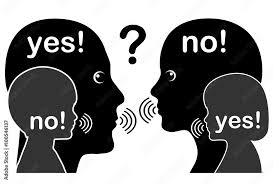
Sometimes we find ourselves acting in a play we never signed up for. When tragedy strikes, we often default to self-preservation. The protective cast of characters takes center stage. For some of us, this cast of protectors might convince us that the best way to self-preserve is to sideline emotion. We might launch into attempts of control and order, retreat to our work, numb or detach, or dive into martyrdom taking care of everyone else but ourselves. While these characters have likely served important roles in our past, the safety they seek in the present can be a guise for self-sabotage. 

Ultimately, we must remember that none of us are made to be one-dimensional. By remembering that we are by nature, multi-dimensional, we can grant ourselves and those around us more grace. We can remember that everyone has struggles and shadows. We can appreciate nuance and acknowledge complexity. We can know that sometimes those most skilled at portraying a brave face can sometimes be facing the greatest battles. Hold space for your own multitudes and in doing so, hold space for the multitudes of others. 

Thank you for listening.

With gratitude,
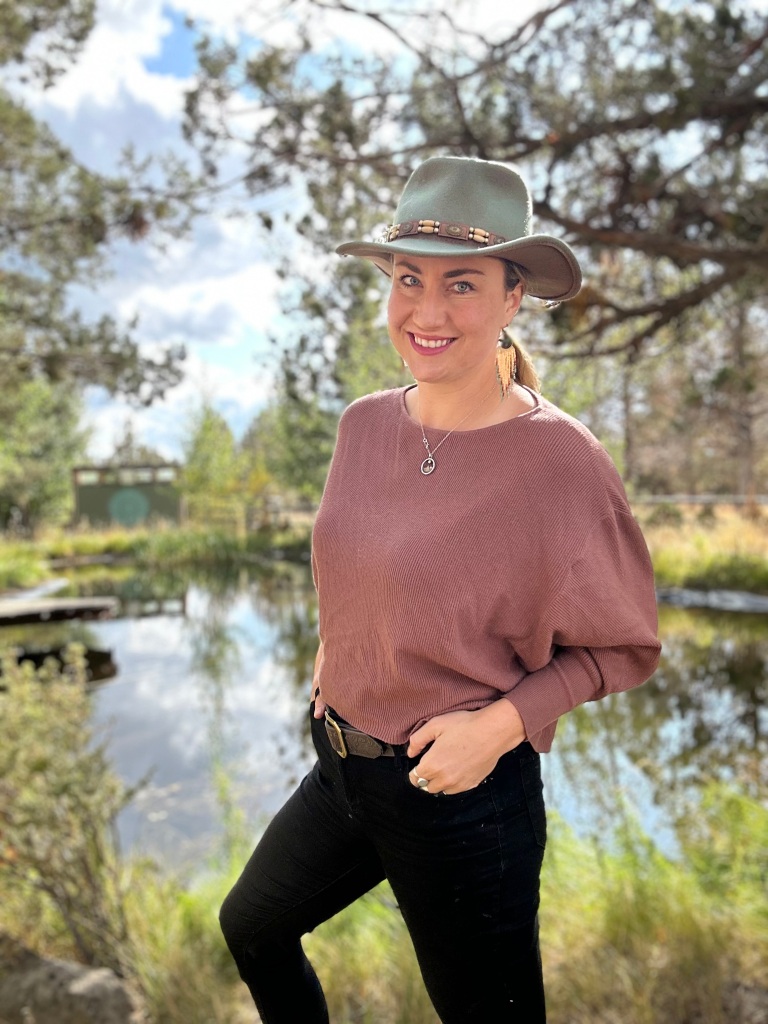
Audry Van Houweling, PMHNP-BC

Owner & Founder, She Soars Psychiatry, LLC www.shesoarspsych.com

Sisters & Silverton, Oregon
Finding Rest Amid Uncertainty

When you sit with patients long enough, you start picking up on patterns. Individual wellness is often connected to the collective and with our digitalized world becoming smaller, that collective is more interconnected than ever. Feelings and sentiments are more palpable and like a contagion, can spread. While we may not ourselves have experienced a particular trauma or loss, we have immediate access to those who have, creating a breeding ground for secondary anxiety, fear, sadness, anger, or division.  

Despite my training in stress reduction and self-help, I am by no means immune to my own anxieties. I prefer to sit near the exits in a theater. I scan a crowd with a healthy dose of scrutiny. I am more comfortable in the woods than in the city. I am a bit slower to trust others. After weekly commutes across the mountains and pondering “what if’s,” my SUV is probably ready for the apocalypse and definitely not kid friendly. I made my first emergency kit. I bought an escape ladder. I am intent on adding a bit more cash to the emergency fund. With so many images and stories of tragedy filling the news, my mind easily slips to a place of “what would I do?”. My imagination can sometimes feel like an intruder whipping up worst-case scenarios that periodically overpower my sense of safety. Essentially, I find myself needing to be more mindful of “walking the talk”.  

It’s a strange paradox that amid trying to avoid imagined fears, the energy, thought processes, and attempts to control an outcome, can become pretty scary and overwhelming in themselves.  

Our anxiety does not empty tomorrow of its sorrows, but only empties today of its strengths.
-C.H. Spurgeon

It is easy to be in a place of anticipatory anxiety, to over-prepare, to feel the need to plan and predict. To an extent, there is good reason for this. There is political unrest. The economy is not great. There have been acts of violence that challenge our comprehension. The climate is changing. To anticipate is to survive. It is part of our evolution story. And yet, defaulting to a mindset of anticipation and preparation without the balance of rest and restoration, can be costly to our health, relationships, and spirit.  

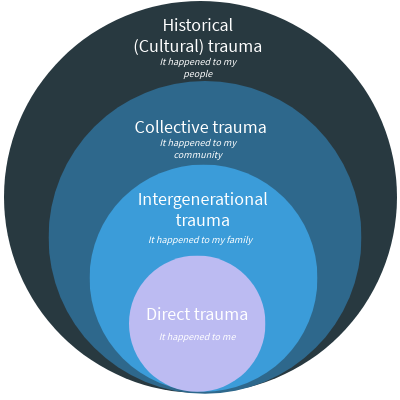
Sometimes we may not have a choice. Life will sometimes demand that we grind. Life will sometimes demand that we stay vigilant. Our sympathetic nervous system takes the wheel pumping out adrenaline and cortisol priming us for action- at least for a while. Our parasympathetic nervous system allowing us to rest, heal, and digest, gets pushed to the back of the bus. This arrangement is only meant to be temporary. Regardless, the primal alarm bells eliciting a fight, flight, freeze, or fawn response are for many of us, in overdrive. Even in the midst of relative safety, many of us are convinced that if we let our guard down, even temporarily, the risks are too high.  

In the midst of preparation and anticipation, it would benefit us to remember what we are trying to preserve. Most of us would cite safety, stability, connection, peace, gratitude, and hopefully a bit of joy. Compared to so many who are searching for such outcomes, it can feel almost indulgent or selfish to bask in such positivity. And yet, our joy and ability to hold compassion for ourselves and the greater world is the ultimate rebellion against tyranny and unrest.  

How do we cultivate joy in a world that seems to be lost in so much struggle? Smile a little more. Compliment. Dance. Sing. Be a little silly. Go on an adventure. Prioritize acts of kindness. Take a walk in nature. Practice gratitude. Take care of ourselves. It takes mindful intention. 

As we enter the holiday season, let’s remember in the midst of feeling pressure to prepare and anticipate, what it is we are working so hard for. Can we spend moments in the joy? Can we dwell for a bit in gratitude?  Can we open the door for healing and reflection? Can we be still? The welfare of the world is not just secured by military arsenals and weapon stockpiles, but so too in our insistence to not forego our compassion and kindness despite it all.

Wishing you a joyful holiday season.

With gratitude,

Audry Van Houweling, Owner, She Soars Psychiatry, LLC

www.shesoarspsych.com

Sisters & Silverton, Oregon
Prioritizing Resilience Over Stability

Life is HARD. 

There is no way around this fact. If you are lucky enough to have resources and privilege to bypass certain stressors and outcomes, some of life’s curveballs may be dodged, but ultimately, we will all experience our own versions of grief, heartache, trauma, and pain. 

The circumstances of our world the past two years have forced many of us to become far more intimate with our emotional fragility as the triggers and vulnerability to emotional distress have been vast. More isolated with fewer coping resources, many of us have felt overwhelmed with an emotional intensity we may have not encountered before. 

Seeking mental health support has become near trendy. Stigma has lessened and seeking counsel has generated more applause than perhaps ever before. The art of self-care is proudly featured throughout popular culture and social media platforms. Mental health professionals find themselves inundated with inquiries and waitlists are months long. While the interest in shameless self-improvement deserves an exuberant cheer, accommodating the “worried well” while also saving space for individuals in crisis is a struggle many mental health agencies and professionals are grappling with. Despite the boom of interest in mental health, the prevalence of crisis is not slowing. Studies throughout hospital systems demonstrate an overall decrease in total emergency room visits in general (this makes sense in the context of COVID), but a significant increase in the median number of total mental health emergencies. 

What is stability anyhow? 

Stability seems to be the elusive and highly sought-after goal throughout healthcare disciplines as treatment plans develop. Chart notes tracking a patient’s progress echo… 

“Patient presents as stable” 

“Patient reports overall stability” 

“Patient leaves the emergency room in stable condition” 

Stability seems to be the endgame for many health professions, but especially in regard to mental healthcare, what is “stability” anyhow? The very notion of stability is up for interpretation and rich with bias per the reporter. My version of stability may very likely differ from the next provider. While there are no true standards for what constitutes emotional stability, stability in mental healthcare is most generally noted as the absence of emotional distress. Of course, many of us are well accustomed to appearing “stable” while perhaps dealing with depths of distress internally and furthermore, what constitutes the presence or absence of emotional distress is also rich with interpretation and bias.  

Follow me if you will… 

If so-called stability is the absence of emotional distress and yet life is inevitably hard, creating inevitable emotional distress, then is the pedestal we place stability upon more predicated on avoidance than resilience? Are we haphazardly creating a mindset of emotional aversion than acceptance? There are certainly other definitions and theories of emotional stability out there, but ultimately, emotional wellness is not served by trying to run from what we cannot hide from.

Confronting Avoidance and Entitlement 

I do not seek to take away the pain of my clients, but rather to empower them to sit with the pain while developing more adaptive and constructive responses. I do not seek to make my clients “happy”, but to cultivate gratitude and lightness alongside the grief and heaviness. Do I prescribe medication? Yes. It is a cure-all? No. Is it a stepping-stone allowing clients to strengthen other aspects of resiliency? Hopefully.  

In our Westernized world rich with privilege, many of us are lucky enough to have access to primitive necessities keeping us away from the basic pursuits of survival. Internal struggles are less about where to find the next meal, but more so rife with comparison, insecurity, jealousy, purposelessness, anger, and existential fears. Underscored by the filtered and edited world of social media, we can be tricked into believing that if our lives are not rich with happiness and inspiration, we are somehow “not OK”. We are too quick to believe that such happiness is something we ought to be entitled to in our professional and personal lives, which often only enhances the discomfort felt during life’s inevitable hardships. We are a culture not so well equipped to handle pain. We are, however, very good at numbing, distracting, repressing, and avoiding what we perceive as uncomfortable feelings. I have said it before and will say it again, it is not the feelings of sadness, anxiety, loss, or shame that are problems in themselves, but often the avoidant responses that create greater suffering. 

Emotional wellness is not a destination, but a daily intentional process that demands radical responsibility. It is not something to be solved or “fixed”.  Alongside medication, treatment protocols, supplements, and lab testing, comes the willingness to acknowledge pain layer by layer, become more comfortable with discomfort, take ownership of our behaviors, and strive for more productive responses. 

Cultivating Emotional Resiliency 

Like stability, the concept of resiliency is also up for interpretation. Unlike the concept of stability however, implied within resiliency is the inevitability of hardship. At its core, resiliency acknowledges struggle and distress.  

Amid greater rhetoric around mental health and social-emotional learning, it is important not to enhance hypervigilance or skittishness around negative emotional states, but to enhance coping and responsiveness to the tough times that are part of being human. The conversation can’t stop at “its OK to not be OK”, but expanded to how can we continue to be decent and relatively healthy humans when we are not feeling “OK”? How can we better acknowledge and problem-solve so that we don’t project our distress on others? How can we create a lifestyle that enhances energy and compassion? How can we find meaning in a tough world? How can we limit distraction and numbing? How can we ask for help? 

The struggle is real y’all. There is no need for comparative suffering…it is not a competition. We have all had our dark days. Emotional distress will happen, stability is IMHO overrated, but resilience can be cultivated. In my version of resiliency, perhaps one of the greatest skills is learning to connect and ask for help. So do yourself a favor and reach out. You are not meant to ride out this rodeo called life alone. 

Thanks for listening.

With gratitude,

Audry Van Houweling, Owner, She Soars Psychiatry

Sisters & Silverton, Oregon

www.shesoarspsych.com

Hope despite it all…

It’s been a tough year. Tough for individuals, tough for families, tough for communities, and tough for the greater world. Layers of “tough” so to speak. As 2020 comes to a close, I think most of us have been up close and personal with the “tough”. Many of us have taken inventory of the hardships, which weigh heavier for some more than others. What may be more elusive, yet some days the only force that keeps us going, is hope.

Hope is personal. It is subjective. My concept of hope and how I go about seeking it is likely to be different than yours. We all hope in our own ways. Hope can be specific…I hope I have a good day at work, or more abstract…I hope for something better. Regardless, hope allows us to temporarily transcend the “tough” by envisioning moments that evoke feelings of happiness, peace, and/or excitement. Hope can define us, inform us, and inspire us to take action.

We are a society that loves to focus on outcomes. The outcome of our investments, our looks, our grades, our performance. When hope is too closely tied to such outcomes, it can become conditional and too often backfire. When outcomes do not come to fruition or are not as expected, hope can leave a bitter taste and for some of us, can be harder to grasp. Associating hope too closely with failed outcomes can expedite feelings of hopelessness, resentment, and despair.

Whereas conditional hope can be limiting and depleting, wholehearted hope is much more transcendent. Wholehearted hope acknowledges the tragedies as well as the triumphs. Hope is not idealism and idealism is ultimately denial. Our world has some brutal realities right now. Being able to absorb tragedy and pain without sugarcoating and still believing that something better will come is wholehearted hope. Suffering and hope are intimately connected as when we can comprehend the darkness, the light in turn can become more clear.

Wholehearted hope acknowledges the inevitabilities of life. The trials, the heartbreak, the grief, and the valleys. Implicit in wholehearted hope is the art of “letting go”, recognizing that the motions of life are all ultimately acts of hope in themselves as life itself is unpredictable, sometimes painful, sometimes joyful, and full of surprises. Wholehearted hope makes room for perspective, growth, and openness. Our greatest struggles can often be our greatest teachers. Wholehearted hope allows us to seek comfort in the small moments of beauty and kindness amid otherwise despair. And finally, wholehearted hope recognizes that while we cannot always control the circumstances that frighten, oppress, or limit us, we can still choose our response…our inner sanctum—and that is the basis of freedom.

10 WAYS TO CULTIVATE HOPE

  1. Develop a spiritual practice. Find ways to explore meaning in your life.
  2. Start a gratitude practice. Find 3 things to be thankful for each day.
  3. Seek out support from others. This is a great way to gain perspective.
  4. Be gentle with your emotions. Stay curious about how you are feeling.
  5. Recognize that most everything is fleeting. This too shall pass.
  6. Share your story- you never know who you will inspire.
  7. Find ways to serve others.
  8. Move your body. Nourish your body. Health makes hope easier to grasp.
  9. Find reasons to laugh.
  10. Stay open to growth even in tough times.

With all the layers of “tough”, it can be easy to be consumed by suffering. Hope is not an antidote to pain and cannot erase traumas that may continue to haunt us. Hope however does allow for the possibility of beauty born from pain and inspires our imagination to envision better days ahead. Perhaps this is best said from Holocaust survivor and psychologist, Edith Egar, PhD:

“Hope tells us that life is full of darkness and suffering—and yet if we survive today, tomorrow we will be free.”

Wishing you a hopeful Holiday season and New Year.

With gratitude,

Audry Van Houweling, Owner & Founder, She Soars Psychiatry

www.shesoarspsych.com

Sisters & Silverton, Oregon

Navigating the Muddy Waters of Grief

Loss is part of life. Nobody escapes it. Grief will come for us all at one time or another. Nobody gets to claim the trophy on having suffered the “most grief”. There is no such competition. Ultimately, the worst grief is your own- the loss you are personally experiencing. Grief is quite simply, the death of something or someone. Whether that is from the death of a loved one, a job, routine, a relationship, gatherings, friends, financial security, or safety, the origin(s) of your grief may remain relevant, personal, and deserve acknowledgement.

2020 has been a year of collective grief layered on top of the many grief situations that arise day to day for each of us personally. COVID has triggered grief en masse across the world and yet, has also impacted each of us as individuals. While solidarity and empathy create a necessary buffer for our grief, how we process loss is ultimately unique and often solitary.

When wildfires engulfed my home state and the smoke laid down a heavy, eerie blanket, it all felt a bit too close. This on top of COVID, political unrest, division, and disruption made optimism hard to grasp. Gratitude and grief were close companions coexisting day after day as stories were shared of devastation, perseverance, despair, and hope. A whole host of paradoxical emotions. And then tragedy struck my hometown of Sisters as we lost four young lives known intimately by our small community in a period of two weeks.

I have had my stack of losses just like most people, but it can be hard to claim grief sometimes…to feel justified to name it. For me, this is complicated at times by a sort of survivor’s guilt. How can I claim to be grieving amid so much privilege? Am I justified to grieve while others face incomprehensible loss?  

While some grief can feel identifiable and concrete, this has also been a year of grief not so well defined or as it is so termed, ambiguous grief. It is the loss of what is less tangible—our boundaries, our safety, our sense of balance, the sense of routine, and predictability. In my professional life as a mental health provider, as the layers of grief compound for the communities I serve, I grieve my ability to provide reassurance and resources that not so long ago seemed so much more accessible. I grieve the capacity that seems to be outstretched for so many- capacity for joy, spontaneity, stress, compassion, grace, and resilience. As people max out their threshold or “hit a wall” so to speak, they often withdraw and the empathy our world so desperately needs becomes harder to inspire.

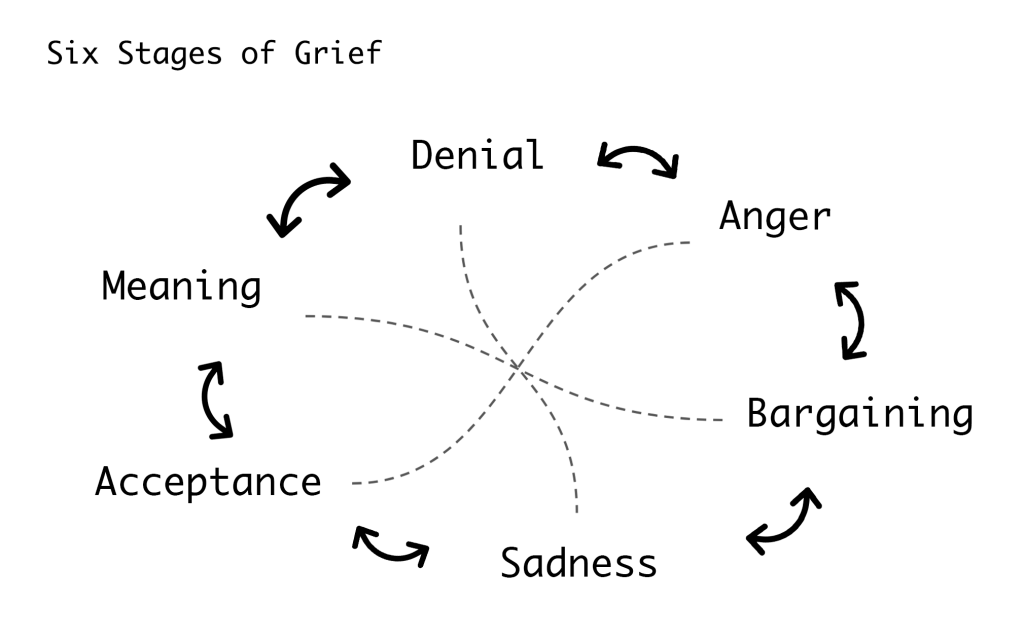
We must be careful not to judge one another for how we choose to grieve. While we may be facing similar losses, it is so important we make room for each other’s process. Elizabeth Kubler-Ross first named the five stages of grief in 1969: denial, anger, bargaining, depression, and acceptance. Years later, her colleague, David Kessler termed the sixth stage of grief, finding meaning. While these stages describe patterns, it is important to know that grief is by no means linear and emotions can shift without predictability. Grief is also not “a journey” as it is often called. A journey implies a final destination. Grief evolves, but does not end.

Finding meaning amid loss can soften the hardness of it all. It goes further than acceptance and allows for the possibility of hope.

Finding meaning does not mean we have to ascribe to the sort of toxic positivity that suggests we must be grateful for our traumas or losses because it makes us “stronger”. It does not mean we have to believe things happen for a reason. Our loss does not have to be called a test, or karma, or “an opportunity”. I do not think there is necessarily a deep meaning to somebody losing everything in a fire, losing a child, suicide, or somebody dying behind a sheet of plastic apart from their loved ones. You do not have to understand why loss happens to find meaning. Finding meaning also does not mean we get to bypass the pain of loss by some sort of spiritual transcendence. Ultimately, we have to feel to heal.

What can be meaningful is our personal journey following loss. The “meaning” is not the loss itself, but what transpires within us thereafter. Perhaps we grow in compassion, in wisdom, in empathy, in grace. We can feel grateful for who or what was once in existence and grasp the possibility of our lives being meaningful despite the loss of such.

Our resilience through grief is made so much stronger when we come together. If we are not careful, we can become too territorial in our grieving process and polarize ourselves against others. Acknowledging each other’s grief with grace and not judgment is paramount. Honoring the grief in others can also help us process and honor our own grief. Showing up for each other in ways big and small with a smile, a meal, a note of encouragement, a prayer, a donation, a moment of silence, a phone call, or simply listening can mean the difference between despair and hope.

Wishing everyone peace and comfort in these trying times.

With gratitude,

Audry Van Houweling, Owner & Founder, She Soars Psychiatry, LLC

www.shesoarspsych.com

Sisters & Silverton, Oregon

COVID Stole my Dopamine, Now What?

Excitement. Pleasure. Novelty. Anticipation. Reward. The “zest”, the “looking forward to”, and the “passion”. The common denominator? Dopamine. What we chase in our society and what we have a hard time living without. We must thank dopamine for the gusto it gives us, the inspiration, the drive, and innovation, but in our popular culture so reinforced by a mindset of scarcity where whatever “is” is simply not enough, dopamine has hypnotized so many of us into restlessness, discontentment, and distraction. Our dependence on the dopaminergic excitement or trepidation of “what’s next” robs us of being present in the “what’s now”. We become antsy, impatient, frustrated, and even hopeless in times our once trusted dopamine fixes fade from our reach.

COVID has undoubtedly been a dopamine disruptor. Financial reward, opportunities to perform, incentives for validation, leisure, the chance to be noticed, anticipated escapes, and methods of distraction have all been compromised. As they have dwindled, many of us have attempted to hold on to dopamine’s spell. Alcohol consumption has spiked, the pantry door has been opened a few too many times, drama has been manufactured, we get lost in the fight or flight as we defend our side of the fence, and point fingers at others. Certainly more uplifting, some too have found ways to create, to serve, to give, to protect, to advocate. Dopamine is central to it all.

“I don’t feel motivated” say the vast majority of clientele that walk in my office these days. “I don’t know what to look forward to”…”I don’t feel excited for anything”…As children and adolescents suddenly lost many of the social incentives and validation from physical school and navigated the blurry experience of  virtual learning, many simply stated, “what’s the point?”

dopamine

For a lot of us, COVID has quieted our “give a darn’s” about a lot of what seemed to be important pre-pandemic. I personally have made some efforts to keep a morning routine as I  hastily run a brush through my hair and slap on some makeup, but as I sit in my reasonably wrinkle free blouse while doing ZOOM session after ZOOM session, I am rather comfortable in my running shorts and bare feet unbeknownst to my clients.

work from home

I just don’t care for my slacks much anymore. But thank you to all that is holy that my (yes, I feel like it is mine) local coffee drive thru is still open. Caffeine deprivation is not yet a first-world dopamine sacrifice I am prepared for.

Some of the lost “give a darn’s” have been in fact liberating. Others more consequential. For some, COVID meant such a rapid shift circumstantially and neurochemically that the unrest in the unknown has been paralyzing. Traumatic. Just the act of getting out of bed may seem daunting.

In the initial days of the COVID pandemic, dopamine was intimately intertwined with the novelty, the stress, the innovation that followed. Altruism flourished, people mobilized, we prepared. As the dust has settled to reveal what seems to be a long road ahead, the sprint that epitomized the early days has slowed to tenuous march. As is many times the case, the feeling of motivation in itself is fleeing. It takes discipline and intentionality despite hardship to persevere. And sometimes that means asking for help.

As stated, our society and popular culture jumps in bed with dopamine every chance it gets. Who gets pushed out of the bed? Serotonin.

While dopamine has been termed our “reward” chemical, serotonin has been dubbed our “contentment” chemical. And guess what? It doesn’t take much to realize that in our culture, contentment is simply not sexy. Enthralled with dopamine, serotonin gets sidelined.

dopamine2

Our brains and bodies become so primed for dopamine and stress that serotonin receptors central to mood and anxiety eventually become less responsive. Furthermore, as we flood our brains with dopamine, our cellular receptors dopamine attaches to become a bit overwhelmed by it all and start to downregulate. This is the biology of tolerance. In an attempt to compensate, we try to up the ante- more adrenaline, more distraction, more drugs, more sugar, just more. And all the while, we become less content and often, more depressed.

Robert Ludwig, the author of The Hacking of the American Mind: The Science Behind the Corporate Takeover of Our Bodies and Brains says it well:

The road to hell is paved with good intentions. The same factors that increase dopamine (technology, lack of sleep, drugs, and bad diet) also decrease serotonin. Furthermore, stress drives dopamine release and also decreases the serotonin-1a receptor reducing serotonin signaling. Addiction results from dopamine receptor down-regulation coupled with excessive stress. Depression results from reduced serotonin transmission from the same precipitating factors, also coupled with excess stress.”

contentment

COVID has taken away much of what we were looking forward to, much of our perceived motivation, but in the absence of so-called excitement, it is an also an opportunity to reevaluate, to slow down, and to simplify. Passion, excitement, and drive are central to the human experience, but must be balanced with times of stillness, contemplation, gratitude, and thoughtfulness. Many of us have forgotten or perhaps have never been taught how to be still. How to be without noise. How to feel without a ready escape.

These are uncertain times, but then again, life is never certain. Accept change, accept the chance to evolve. On the other side of grief is transformation and perhaps as we mourn our dopamine, serotonin and the contentment it brings may become just a bit more alluring.

Thanks for listening everyone.

With gratitude,

IMG-0649 (1)

Audry Van Houweling, Owner, She Soars Psychiatry

www.shesoarspsych.com

Sisters & Silverton, Oregon
Our Health Depends on Justice & Equity


Finding Roots… 

Working in functional medicine, a form of medicine that examines root causes and dedicated to a holistic vision of wellness, it is not enough to talk about nutrition, exercise, meditation, and gut health. While these factors and others have true merit, I would be negligent as practitioner to dismiss the broader forces inequity, discrimination, and socioeconomic status have upon the wellness of individuals and communities.  

equity

Mainstream medicine continues to be driven by insurance payers and pharmaceutical companies forging a narrow path by which “healthcare” must take place. This forces healthcare institutions to play the game of profit and economic stability, which results in rushed office visits, unending paperwork, too much red tape, burnout, and patients not feeling heard. This can result in the very place that should be making you feel “well” resulting in disempowerment and even trauma. As a caveat, I do prescribe pharmaceuticals. Yes, medication can sometimes be a worthwhile tool. And yes, I often feel like I am medicating societal shortcomings rather than actual pathology. 

Navigating justice… 

In the era of COVID and the horrific circumstances of George Floyd’s murder, the realities of inequities and gross discrimination that continue in both subtle and overt ways to pollute our Constitution and cause division, have been ushered to the forefront of our national conversation. 

While I like to think I am a proponent of social justice and advocacy, in recent days, I have been convicted of the gravity of my own privilege and how it has veiled me in many ways from confronting the hardships and injustice impacting so many. My tendency  is to want to compartmentalize the hate, to escape to the luxury of denial, to tear up and express brief bouts of anger without lasting action, to voice opposition to discrimination, but rest easy in my white upper middle-class comforts. 

The wounds of our country will never heal with the thin band aids representing short lived motivations from a rally, supportive sentiments without action, and promises not upheld. Change must come with a national reckoning of our failures to uphold the Constitution, apologies married with sustained, systemic action, and the emotionally charged work of confronting our personal narratives that uphold the often quiet and subconscious, but oh so powerful schemas that allow for discrimination, inequity, and hate to exist too often without penalty. True, restorative justice has become more and more elusive. 

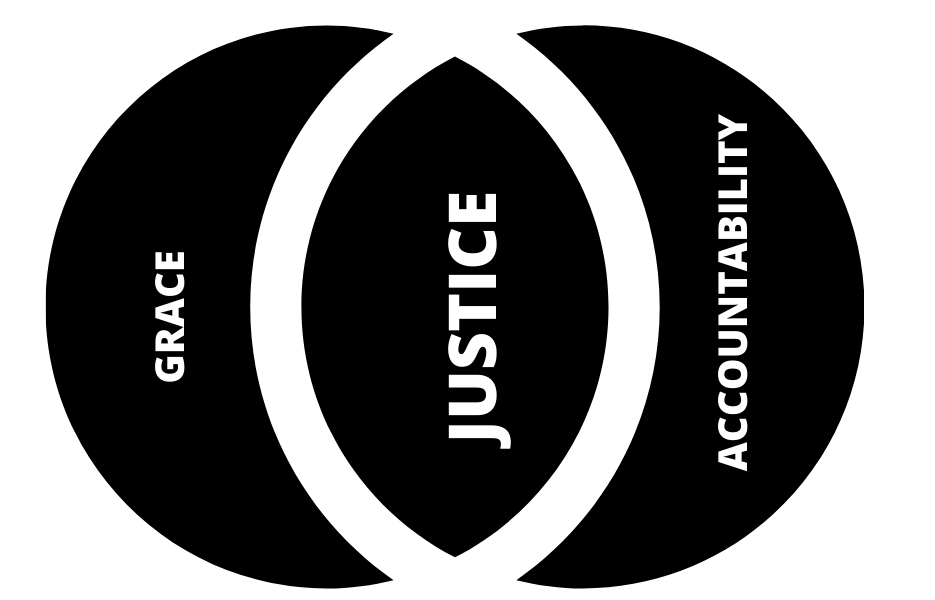
JUSTICE

WHERE GRACE AND ACCOUNTABILITY INTERSECT

My best definition of justice is that it is the intersection between grace and accountability. Under this definition, justice allows grace for the complexities behind certain actions and behaviors, while also making clear how certain actions harm ourselves and others. Locking a man up in a cell without addressing roots of trauma, fractured self-worth, and missed opportunities is “justice” without grace. This breeds resentment and mistrust. In our broken criminal justice system, wealth and power have too often allowed for criminal acts to be baptized free without regard to accountability. This allows for entitlement and reinforces perceived superiority.  

Facing the realities… 

While we may reminisce about the pre-COVID days when things were “normal”, in my home state of Oregon alone, suicide had become the greatest killer among youth ages 10-24, over 500,000 residents had food insecurity, we placed #44/50 among national public school rankings, had one of the nation’s leading rates of homelessness- over 2x the national average, and despite stereotypes of progressivism, Oregon’s history has deep roots of racism that continue to haunt the present day. 

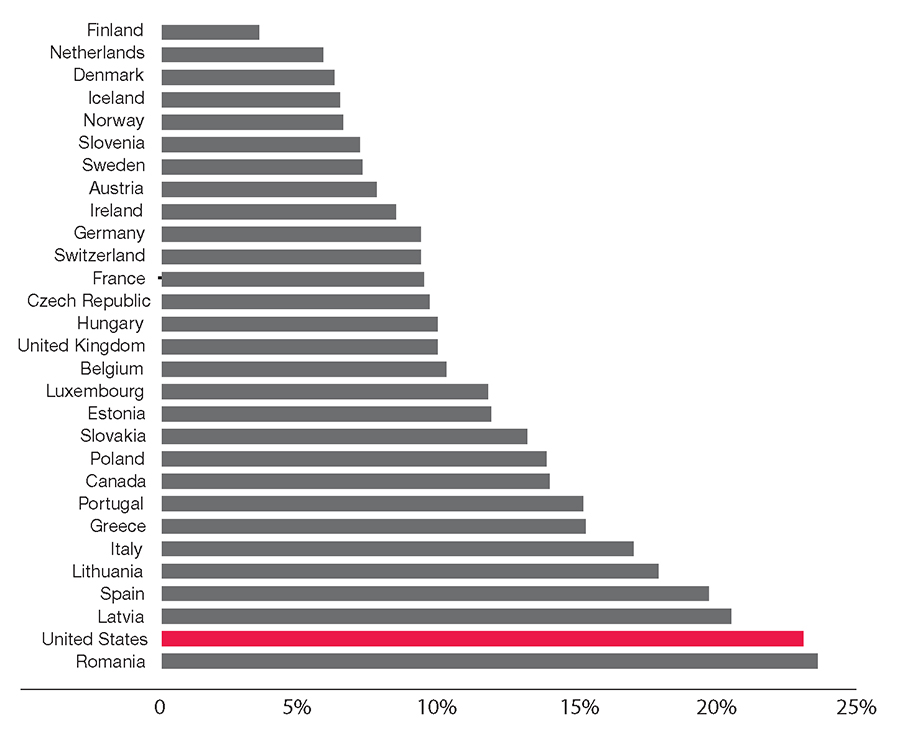
US Ranks Second Highest in Rates of Childhood Poverty UNICEF, 2016

Native Americans and African Americans have the highest rates of poverty by race (25.4% and 20.8% respectively) followed by Hispanics, Whites, and Asians. The emotional stigma and burden of poverty is significant on its own. Poverty often comes with limitations to accessing quality healthcare and implement healthy behaviors. Accessing healthy food, finding reliable transportation, funding medical care, finding a safe place to exercise, taking time away from work for appointments, social and geographical isolation, and facing stereotypes and bias within the healthcare system are all potential barriers. With the time demands on mainstream medicine, healthcare providers rarely have the time to address or even acknowledge such complexities and are pushed further downstream from the driving factors of illness. It has created a flood of chronic illness and a scourge of mistrust and hopelessness. We keep throwing down sandbags when we really need to turn off the hose. 

health and race1

health and race2

A Collective Healing Approach…

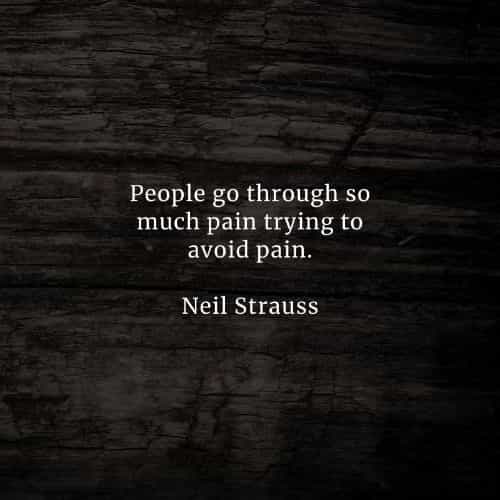
While personalized medicine is a care model that has been popularized and has value, for us to better address upstream policies, social structures, and inequity, we must look towards a model of care that reinforces healthy communities and thereby acknowledging individual wellness is intimately intertwined with the wellness of a community.  

lonely1

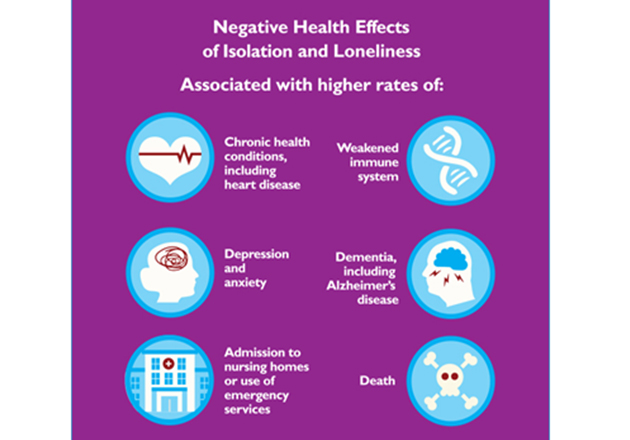
To untangle the roots, we must take time to come together, listen, share stories, allow for vulnerability, hold each other accountable, and support one another. Especially in mental health where privacy is understandably a mandate, we must also recognize how keeping our struggles in isolation from one another may be reinforcing stigma, stress, and fear. In some ways, a culture of too much privacy can limit the healing that can take place when we allow for connection. 

For our individual and collective wellness, we must continue to mobilize, to innovate, to advocate. The mass protests and desperation of COVID is not simply what is now, but a buildup of what has been for far too long. Ultimately, as isolated as we may find ourselves these days, we continue to be interconnected. Your struggle has a ripple effect beyond yourself. Your neighbor’s struggle has a ripple effect that may impact you. True wellness will never be solved in your 15-minute doctor visit, but by the security of human-human connection.  

Wishing you wellness.

With gratitude,IMG-7955 (1)

Audry Van Houweling, Owner, She Soars Psychiatry, LLC

www.shesoarspsych.com

Sisters & Silverton, Oregon
Withstanding the Ripples

Work the last few weeks has been interesting to say the least. The impact of COVID-19 has created a ripple effect for all of us. For those of us who are privileged, the greatest adjustment may be an unfamiliar boredom as we sift through Netflix, learn how to prepare meals again, and try meditating. Those of us used to a full plate, multitasking, and accessible distraction, may find discomfort in the stillness. Unresolved trauma and grief tend to surface in quiet times and if support is unavailable, the quietness can be traumatic in itself. In contrast, others are getting to rest, reflect, and perhaps heal for the first time. And then there are those of us with legitimate panic married with immense grief and adjustment. Incomes that dissipated in an instant, support systems that dissolved, hopes that were not realized, family members that fell ill, and death. For some, COVID-19 has meant a few ripples easily withstood akin to the impacts of a small pebble. For others, it may well have been an asteroid.

There is no Guidebook…

I have had many clients ask, “How should I be coping with this?”

There is little to be said for should’s and should not’s in this uncharted situation. There is no guidebook.

COVID-19 has not been the popularized romanticized slow down for many while for others, it has allowed for unexpected silver linings. There can be guilt and discomfort on both sides of the fence. Guilt for feeling positive while others are struggling and guilt for feeling angry and afraid instead of mindful and grateful. Both sides of the fence are valid, are acceptable, and can coexist.

While there is much solidarity and collectivism in the COVID-19 human experience, how we are each navigating this virigin territory is uniquely informed by our social position, privilege, background, past experiences, and core beliefs. This demands grace and patience for ourselves as well as for others. Accepting the ambiguity, the awkwardness, and the uncertainty is central to our resilience as we let go of the tension between perceptions of right and wrong.

Returning to basics…

Ultimately my suggestions in this pandemic are not so different than what I might encourage amid other situations involving grief or trauma.

Do your best to stay on a routine. The power of a schedule is that it allows for some predictability during very unpredictable times. Try to uphold what I have deemed ‘the four foundations of wellness’. Essentially, these are the necessities that can help keep our head above water:

  • Sleep: Have a wind down routine. Do your best to go to bed on a schedule and wake up on a schedule. Staying out of bed during the day helps you have better sleep at night so do yourself a favor and watch Netflix anywhere other than in your bed.
  • Nutrition: I know this is easier said than done these days. Do your best to eat whole foods and lots of plants. Try to stay away from processed foods and sugars. Your immune system will be happier too.
  • Physical movement: Whether you stream yoga on YouTube or get outside while being conscious of distancing for your daily run, please find a way to stay active.
  • Connection: To people. To spirituality. To nature. This has been more challenging, but in this time it is so very important. Zoom coffee dates, scheduled phone sessions, spiritual practices, and when safe, enjoy nature.

Gaining Perspective…

The last few weeks I find myself scouring quotes from wartime leaders—Lincoln, Churchill, Roosevelt, Kennedy, and more who faced immense adversity and had to rally resilience and some form of hope in times of such bleakness. I have been thinking a lot about my late grandmother, a Holocaust survivor, the trials and resilience exemplified by my parents and other family members, the grit of the “lost generation” of folks born between 1883-1900 who had to endure the Spanish Flu,  two world wars, the Great Depression, and maybe even the Cold War…And finally, I have been reflecting a lot on the resilience of my clients who have faced adversity far greater than the threat of a virus.

pererverance

While it is perhaps easy for me to say having been thus far lucky amid current circumstances, our country and our world has seen dark days before and will see dark days again. There is a solidarity to be gained in collective grief and struggle. My hope is that out of such we can salvage lessons of humility, resilience, collectivism, and innovation.

Kindness, The Other Ripple Effect…

kindness

Social media has historically been a hotbed for filtered comparison. It has been a platform to present a desired image and good or bad, COVID-19 has quickly reorganized priorities. Suddenly, it seems a bit removed to be posting diet plans, filtered selfies, a new car, or relationship woes. What does seem to be trending however…kindness. And kindness has created its own ripple effect. The generous and philanthropic acts of others popularized and made public have led us to question how we can ourselves contribute.

For those of us who are privileged, this is our opportunity to support our neighbors. It is our responsibility as Americans (and global citizens) to do what we can to uphold our values of life, liberty, and happiness. And personally, I believe the grass-root efforts among our communities are likely to do more for instilling hope and healing than the policies of our governments.

So to conclude, words from Winston Churchill…

We make a living by what we get, we make a life by what we give.”

In solidarity,

IMG-7478

Audry Van Houweling, Owner & Founder, She Soars Psychiatry, LLC

www.shesoarspsych.com

Sisters & Silverton, Oregon
 

Sex, Spirit, and Shame

Let’s talk about sex. Let’s talk about spirituality. Let’s talk about shame. The interplay between the three are powerful, complex, and deserve honest discussion.

Sex, shame, and spirituality undoubtedly come up a lot in my office. The connections are not always consciously known, but as we explore the human needs of relationship, intimacy, and love the enmeshment of these powerful life forces is enlightened.

When we talk about the need to feel known, the freedom to be vulnerable, the drive to connect with and understand, to give and to receive, are we talking about sexuality or are we talking about spirituality? When we lie naked with another versus baring our soul to a greater power is the implied vulnerability and trust really so different? Could it be that sexuality is one of the most powerful means of expressing spirituality and that spirituality is a primary means of bringing meaning to sexuality?

Unfortunately, our society and in particular, popular culture and religious institutions do not always acknowledge and many times, deny the implicit correlations between sexuality and spirituality. Sexuality and spirituality are too often in opposition to each other rather than allowed to coexist and feed each other in the symbiotic relationship they ought to. This socially driven divorce allows too much room for tension, shame, hiding, and perversion.

Popular culture too often portrays sex as a physical transaction with the primary goal being pleasure versus intimacy. Thoughtfulness and respect can at times be lost as there may be a refusal or denial to acknowledge the meaning behind such vulnerability. Popular culture also generally prioritizes and favors the pleasure and pursuits of men versus women. By depicting sex as a too often masculine-driven, hedonistic venture, our society diminishes the value of true intimacy, which can so too fracture the connections to soul and spirit. A person can have a lot of sex with very little intimacy and despite so many physical interactions, it can be altogether lonely.

sexshame3

Religious institutions too often go to far in denouncing sexual expression or feelings of pleasure. The emphasis on modesty can too often be married with shame as (especially women and girls) are made to feel that the universal urge to physically connect with somebody must be suppressed and unseen. Implied in this belief is the notion that suppression of sexuality is somehow associated with an exalted spiritual state and that pleasure is an impediment to devotion. Sadly, this has at times created a culture of hiding that only bolsters feelings of shame. Particular harm can come when persons of authority representing a faith or set of spiritual beliefs exploit their power and abuse another. Too often has this happened, too many stories where simultaneously the beauty of sexuality and spirituality are tarnished amid trauma.

In other words, popular culture too often exalts the body’s pleasure to the point of denying the spirit while religious institutions too often exalt the spirit to the point of denying the physical body. There can be severe consequences with both.

quotesex

The majority of my clients are women and girls. Both popular culture and religious institutions historically also objectify the female body. Too often, whether a woman is wearing a string bikini or head to toe cloak, her virtue and desirability are still reduced to her external appearance, and either the expression, or suppression of her sexuality. She may wrestle with modesty being associated with virtue while the display of her body is associated with desirability. When it comes to sexual expression, women and girls frequently feel damned if they do damned if they don’t. A woman’s appearance should never be the sole gauge to measure either virtue or desirability. She is ultimately far more complex. I will celebrate the day when women universally are given room to be desirable, sexual, and yes, virtuous all together.

Too often our experience with sexuality and/or spirituality is fractured by trauma, abuse, or corruption and we can be left struggling to truly connect, find intimacy, and meaning. In extremes, we might try to deny these needs or trivialize them. Trauma can be complex and so too can be responses to trauma. Sexual trauma can cause some to isolate and withdraw from physical intimacy, while others may seek some level of control or pleasure amid so much pain by allowing risky or dangerous situations to repeat themselves. Spiritual trauma can similarly lead to isolation, fear of closeness, mistrust, poor self-value, and lack of meaning. Sexual trauma and spiritual trauma may happen apart from one another, but the impact is very often bidirectional, and shame can encapsulate each.

spiritual abuse

Rather than trying so hard to buttress the unsustainable barrier of shame our society often wedges between spirituality and sexuality, perhaps we can do a better job of acknowledging the beauty that can come when they are allowed to coexist and support one another. By continuing to divide sexuality and spirituality we are doing ourselves (men and women) no favors as we may feel pressure to fulfill unrealistic roles that leave too much room for judgement against ourselves and others.

Thank you for listening.

With gratitude,

Audry Van Houweling, Nurse Practitioner, Author, Speaker IMG-6251

Owner & Founder, She Soars Psychiatry, LLC www.shesoarspsych.com

Sisters & Silverton, Oregon

 

TOUGH.

“I told myself I was tough”, she said.

“I told myself I was strong enough to stand by him”, she went on. “He has a troubled past and I understand why he might…”

She was no doubt tough. She had come into my office with her boots authentically worn from long days and dust. She placed her wide brimmed cowboy hat on the side table revealing her face with lines etched by the sun. Her long sleeve button down shirt was tucked into pressed dark denim Wranglers adorned by a silver belt buckle. She told me about her horse who had been her companion for the past fifteen years, her cow dog, and her days counting cattle and mending fence. She said she preferred solitude and despised being the subject of pity. “I have never been to anybody like you before”, she said. “It just never felt right to complain”, she continued while she shook her head and stared at the office floor.

At the time, as a bonafide ‘beginner’ in my profession, I couldn’t help feeling intimidation, respect, admiration, and curiosity all at once. She exuded an old-fashioned wisdom and grit softened by humility.

She told me about her anxiety. She told me that she could generally escape the worry amid daily demands on the ranch and with the freedom she felt on her horse’s back navigating endless acres of high desert and sage.

Inevitable aging and the toll of ranch life had forced a slow-down. She told me two much younger ranch hands were hired and the herd was downsized, which offered a reprieve, but also more moments of stillness seldom available in the past. Distractions became fewer and God help her, she was not going to get one of those “darn smartphones”. The opportunities to bury the day’s worries in hard work became scarcer.

For a long time, the story she told was not being able to overcome the tightness in her chest, the pit she felt in her gut, the lost “pep in her step”. She avoided using words like ‘sad’ and ‘afraid’ and often apologized for “bombarding me” with so many problems despite my repeated reassurance.

At times, she exuded suspicion and stubbornness when we discussed strategies and ways to cope. Nevertheless, her attendance week after week did not waiver.

One week, nearly six months into our work together, she sat down on the couch as always, put her hat on the side table as always, and then tears fell. Most always armed with stoicism and a ‘safe’ emotional distance, her tears caught me off guard. I attempted to gently inquire knowing that this was a pivotal moment…

“Can I show you something?” she said. I nodded with equal parts encouragement and concern.

She unbuttoned the cuffs on her shirt and with tears still falling rolled up her sleeves.

She held out her bare forearms discolored with visible shades of blues, reds, and purples and then stated, “there’s more”, and she slowly removed her shirt. Trying to hold back the intensity of my own emotions, I stood up from my chair, put a hand on her shoulder and could only think to say, “you are safe here”.

I scanned her upper body etched in bruises and redness- up and down her arms, the contours of her back, the base of her neck, along her ribs. Amid the damage, I couldn’t also help but notice her physical strength and stature that seemed to be in such stark contrast to the violence forcefully inscribed all over her body.

He had been described as an “old cowboy who liked whiskey”. He had been a Vietnam veteran almost certainly haunted by the trauma of war. She told me his rages would come without warning and she would become his target. Sometimes months would go by without incident. Accusations of infidelity, belittling, and name calling would escalate into punching, pushing, kicking, and hair pulling.

Afterwards there was usually an apology and sometimes a letter with promises never realized. Enduring the fear of staying was somehow lesser for her than facing the fear of pity and a future unknown. She tried her best to see her tolerance as toughness and in the lonely moments, found bits of reassurance riding out to her favorite viewpoint and taking in the beauty of the land when all else seemed so ugly.

I was the first person she told. Amid her desperation, I withheld my temptation to respond with a directive to ‘leave’ as it is almost never that simple. As she stood in my office exposed, vulnerable to the core, and overwhelmed with uncertainty, I struggled to find words. So instead, I could only say to her what was most evident to me… “I have never seen you so tough” and this I repeated week after week as we navigated the journey ahead.

DV

This story is in honor to all the men, women, and children who have experienced or have been witness to domestic violence. 

Details of this story and names have been withheld due to confidentiality. Client consent was granted prior to publication.

Thank you for listening.

With gratitude,

kiger gorge

Audry Van Houweling, Owner & Founder, She Soars Psychiatry, LLC

Sisters & Silverton, Oregon, www.shesoarspsych.com