When Roots Run Deep…Collective & Inter-generational Trauma in a Small Town

I have an unusually strong affinity for small towns. Some people find more energy and excitement in the big city, but to me there is an undeniable allure and richness within the layers, roots, stories, and secrets of generations past that define small town America. I am intrigued by both the triumphs and woes that give a place identity and how this influences the collective consciousness of its residents.

This collective consciousness or energy is much more palpable in a small town. Ripples of change are felt more acutely- more intimately. It is as if you would compare a pebble being tossed in a fish bowl with a pebble being tossed in a lake.

These ripples carry energy- both positive and negative.

Ripples carrying the anticipation of the local parade. The relief from the local festival boosting business. The celebration of the Friday night football victory. The pride of this year’s graduating class. The excitement of a new store or coffee shop coming to town.

download (2)

Ripples also carrying the unease when business gets slow and jobs dissipate. The grief that permeates when somebody passes on. The helplessness of addiction that can swallow communities alive. The desperation felt at Sandy Hook, Sutherland Springs, Roseburg, Blacksburg, and too many others.

Even events that may seem small and commonplace- marriage, divorce, a child’s struggle, illness, financial strife, and more can have significant impacts in a small town as one individual can have so many interconnections with others.

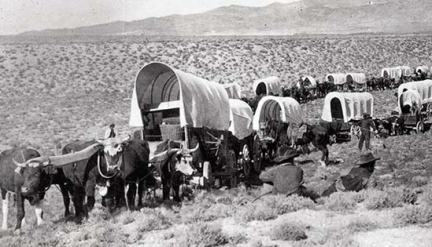
The communities where I currently practice in Oregon- Sisters & Silverton, have been fortunate to enjoy recent economic prosperity, growth, and are both known as desirable destinations. Working in mental health you learn to appreciate stability, but also to look beyond the charm. You learn about grief, bullying, scandal, loss, and family dysfunction with roots dating all the way back to the Oregon Trail.
homepagewide

Trauma in a small town can be both collective in that it is felt by many whether or not they directly experienced the event and/or intergenerational in that the pain can be transferred from one generation to the next.

The intricacies and dynamics of all these interconnections can also create a level of stigma as asking for help can seem too risky or too vulnerable. There may be fear of gossip, a breach of confidentiality, or simply being able to find someone to talk to without bias.

The beauty of small towns however is that in this web of interconnections, deeply rooted generations, and tight knit community is also power. Small acts of kindness are not so small. Creating space for vulnerability and authenticity in our schools, places of worship, and social gatherings can have far reaching impacts. Seeking common ground rather than reinforcing divisions can create a net of safety and acceptance. Valuing community instead of self-reliance. Creating dialogue about the hard stuff- depression, anxiety, grief, addiction, trauma, suicide, and shame can take someone from a place of isolation to empowerment.

Albeit perhaps for selfish reasons, my role as a mental health provider seems to have more significance in a small town when an individual’s progress seems to have more immediate impacts on their family, workplace, school, and ultimately, the community.

In summary, while the place in which we live has an impact on our identify and self-concept, it is also our actions and beliefs that help define and transform a place. In the meantime, I continue to enjoy the great privilege of being part of the small-town experience…and dropping my pebble in the fishbowl.

With gratitude,

Audry Van Houweling, PMHNP-BC, Owner & Founder, She Soars Psychiatry, LLC

www.shesoarspsych.com

2017-09-09 Audry VanHouweling Headshots (2 of 2)


How Selling Bras Made Me a Better Provider: The Lost Art of Customer Service in Medicine

Let’s rewind a bit…I was 18. Having just graduated high school, I was on the hunt for my first real summer job. Feeling determined to find something ‘glamorous’, I landed the all-important job of selling bras for someone named Victoria who had a secret, if you get my gist. I laugh now, but at the time I sure was proud of my black blazer, first set of high heels, and pretending to be an expert in all things feminine.

bras2

Despite the minimum wage, inconsistent hours, and somewhat annoying supermodels starting down at you with condescension from their black and white posters, I can tell you in all seriousness that my years selling intimates have made me a better medical provider.

bras1I worked at “VS” on and off for the next five years through my undergraduate days. The wages did not get much better and the hours were still sporadic, but in addition to feeling suave in my black blazer and heels, I learned a few things about customer service. Certainly, the art of customer service could have been learned elsewhere, but when you deal with women, breasts, bra size, insecurity, and vulnerability, you better be careful with your words, be a good listener, personalize each client’s experience, and treat every woman (and the occasional man) with respect.

Let’s fast forward now to present day. My days of selling bras are long over. I have worked in healthcare for the past 10 years in various locations and facilities and truth be told, when it comes to customer service, “VS” takes the cake…easily. To put it simply, our healthcare system is at the bottom of the barrel when it comes to prioritizing a customer’s experience.

Buying a bra can be downright stressful and even sometimes scary, but going to the doctor can take fear to another level.

Maybe it is just a check-up, but you are terrified of the scale or if the doctor is going to notice that 10 extra pounds. Maybe it is one of those “preventative procedures” we all dread—pap smear or colonoscopy, anyone? Maybe you are awaiting results that are going to dictate your future livelihood. Maybe you are going to disclose your history of trauma or abuse.

And yet when we are at our most vulnerable, we continue to encounter:

  • Long wait times
  • Confusing paperwork
  • Not feeling listened to
  • Poor communication
  • Unnecessary errors
  • Overworked staff
  • Lack of transparency
  • A lack of empathy
  • Sterile office environments
  • Feeling rushed through an appointment

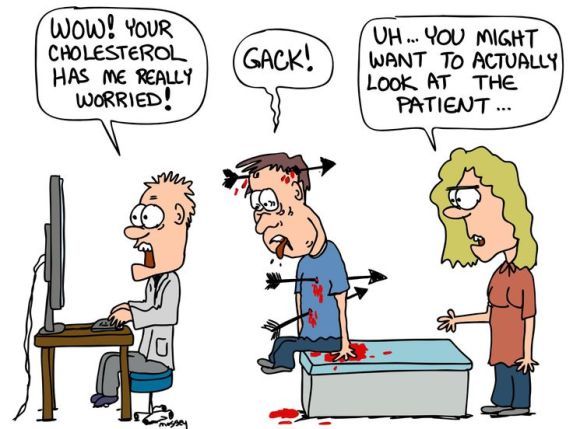
doctor's officepatient

This would not be tolerated at “VS” or any customer service industry. Could you imagine these characteristics describing a restaurant? A hotel? Real estate? Okay yes, maybe the airport. Oh- and the DMV. Point is, most businesses would fail if they operated this way!

It is important to know that many wonderful, well-intended, and extremely knowledgeable providers work in our mainstream healthcare system. I can relate. Many of them are frustrated and disillusioned, but feel stuck. Many of them know that things can be done better, but feel overwhelmed by bureaucracy, which of course makes it hard to feel inspired and passionate, which ultimately impacts patient care and customer service.

It is not the people that are the problem, but the system. In mainstream healthcare, it is not the patient that is the customer, but the third-party payor (your insurance), which is dependent on billing codes that dictate severity and therefore, what the healthcare facility is being reimbursed. Therefore, the patient is not actually the customer, but rather the entity from which reimbursement and codes are derived from. Personally, when I worked in mainstream healthcare, I had far more communication with the billing department than I did with anybody involved in patient satisfaction and in our team meetings, billing, documentation, and insurance dominated the conversation…not customer service.

On the other hand, team meetings at “VS” were serious business. We would role play, troubleshoot, and brainstorm process improvement. We talked about how we greet customers, communicating as a team, our body language, putting aside judgment, and following through. Sounds so applicable, yet so sadly distant from healthcare.

Truth be told, in the midst of other revelations, my years selling bras contributed to my departure from conventional medicine. I had had a glimpse of what prioritizing customer service looked like and I was eager to emulate that personalized experience as a medical provider.

An experience that included:

  • Prompt communication with me. Not a medical assistant, not the nurse, not the receptionist, me.
  • Prompt scheduling.
  • Transparency and true informed consent. We talk about side effects. We talk about options. It is ultimately the client’s decision.
  • Goals are not defined by a standardized rubric, but are designed to meet the circumstances and needs of each client.
  • Being seen on time.
  • Eye contact. Eyes on the patient, not a screen.
  • Reflective listening.
  • Empathy.
  • Holistic care that considers all aspects of wellness.

There is no ‘right way’ to practice medicine, but the art of customer service is too frequently overshadowed by reimbursement and payors. Certainly, there are exceptions out there as some facilities have been compelled whether by reimbursement or patient demands to innovate and truly prioritize the patient experience.

Every healthcare provider is on their own journey. Many providers are still committed to the mainstream model and that is OK especially if they can feel they can thrive not only financially, but professionally and emotionally. For now, I am embracing my journey, happily applying the lessons of my bra selling days, and looking forward to continuing the art of customer service one unique client at a time.

Thanks for listening everyone.

With gratitude,2017-09-09 Audry VanHouweling Headshots (2 of 2)

Audry Van Houweling, Owner & Founder, She Soars Psychiatry, LLC

www.shesoarspsych.com

Being Addicted to Pain & How to Break Free

Addicted to pain? Sounds a bit extreme, ridiculous, perhaps even illogical. But then again, our minds are only sometimes logical and thankfully, many of us are fortunate enough to have filters so we do not have to disclose the inner workings of our thoughts, which if we are all honest, can be disturbing at times to say the least.

Let’s talk about self-sabotage. Let’s talk about all those times when you are yelling insults at someone you love and perhaps you know it is counter-productive, yet continue to do so anyway. Let’s talk about feeling hyper-vigilant and a constant need to be defensive- almost to the point of looking for an argument. Let’s talk about our consumption of the media that may bolster our views, but further intensifies our anger towards whole groups of people who may think differently.

OpposingForces1

The list could certainly continue, but to put it simply, in many ways our society thrives on fear and justifying anger and pessimism. For many of us feeling stuck, disillusioned, or afraid, we seek to find ways that validate our experience. And thus, we will often find what we are looking for.

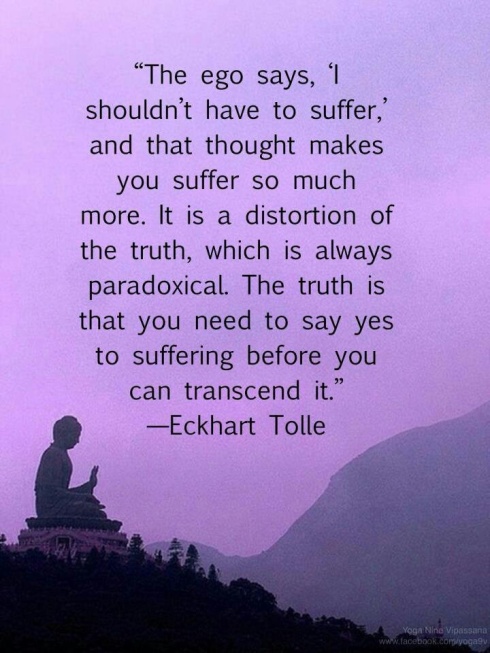
One of my all-time favorite reads is Eckhart Tolle’s, “A New Earth”. It is a must read that discusses our ego’s grasp on our consciousness and how we perceive ourselves and those around us. In this book he describes the phenomena of the “pain body” which he defines as, “the shadow aspect of our being”. Often working without our conscious awareness, the pain body needs to be “fed” in order to survive and it must also evade our conscious recognition of it.

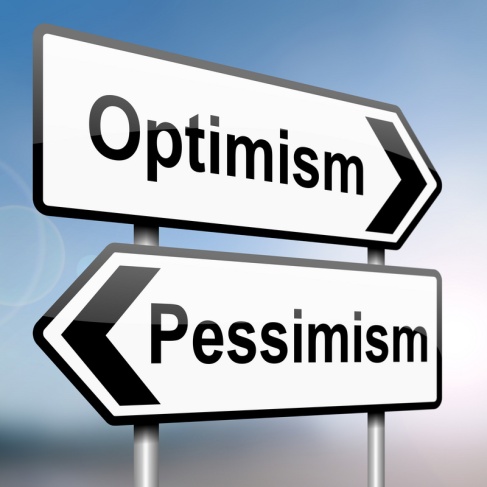
Sometimes the pain body becomes so immense that we can identify almost the totality of who we are with its negative force. This is not uncommon when individuals have faced recurrent trauma, misfortune, grief, and/or loss. We can become consumed by negativity and seek out reasons that support our perpetual glass-half-empty perspective. It may feel foreign or even uncomfortable to seek enjoyment or embrace optimism. It may feel pointless as in the past, the other shoe has always dropped.

It can be hard to acknowledge the “pain body” and in many ways, it means confronting what may be at the foundation of our discontent, which can be in itself a difficult task. Additionally, it can be a challenge to transition from identifying as a victim to empowerment, which comes when we recognize our own ability to transform our perspective, thoughts, and consequently, feelings and experience. On some level this involves self-responsibility, which in many cases can feel unfair and may even evoke resistance as the “pain body” seeks to stay alive and justified.

pessimism-or-optimism-small

Of course, many of us will deny ever seeking out pain, yet when we start becoming aware of our thoughts, words, and actions, it may be a bit startling to recognize how much energy may be spent on maintaining negativity versus joy and positivity. The pain body can be elusive and unrelenting. Once taken over, it often wants more and we can become both the victim and the perpetrator again and again.

We can often feel stuck, overwhelmed, angry, and afraid. The pain body thrives on putting us against others, but also turning us against ourselves. It can make our self-esteem dismal and our self-talk perpetually critical and unforgiving. We want joy on one level, yet inevitably find ourselves drawn to the negative. We may be able to escape our pain body for lengths of time only to be quickly triggered by an event, interaction, or memory.

We can all get stuck in the patterns of the pain body from time to time. How can we break free of its grasp?

Awareness is always the first step to change. We all have countless thoughts passing through our minds every day. Most of us can choose to identify with those thoughts or not. The pain body survives only when we remain unconscious to its grasp and patterns. It loves to stay hidden and in the shadows. Once we can learn to observe and shine light on its force, we can begin to undo the pull it may have on our identity.

Try being a self-observer of your thoughts and feelings. Practice being the witness to your pain body…a watcher. Pain will happen, acknowledge it for what it is and be careful to let it not transform into something it is not. Resist identifying with it. Practice staying present as pain has the tendency to keep us stuck in the past or catapult our anxieties to the future. Question the evidence you may have for a particular thought and what evidence you may have against it. Be your own detective. Is a particular thought helpful to forward progress? Acknowledge the thought, but practice the art of saying, “not now”, or reframing the thought into something less harmful.

In the functional medicine world, our perceptions of how we view ourselves, those around us, and our environment is the foundation of foundations from which both emotional and physical wellness can thrive or be hastened. It can be so easy to find ourselves stuck in negativity, but I am going to do my best to count my blessings and take a few deep breaths. Namaste everybody.

eckhart

Wishing you contentment and vitality.

With gratitude,

Audry Van Houweling, PMHNP-BC, Owner & Founder, She Soars Psychiatry, LLC 
2017-09-09 Audry VanHouweling Headshots (2 of 2)

What if I don’t have bootstraps…?

I am a country girl at heart. I crave the wide open spaces, the sagebrush, the endless views, the mountains rising up in the distance. I think about being on my horse- her hooves beating in the dust- solitude- quiet- and feeling like time stands still.

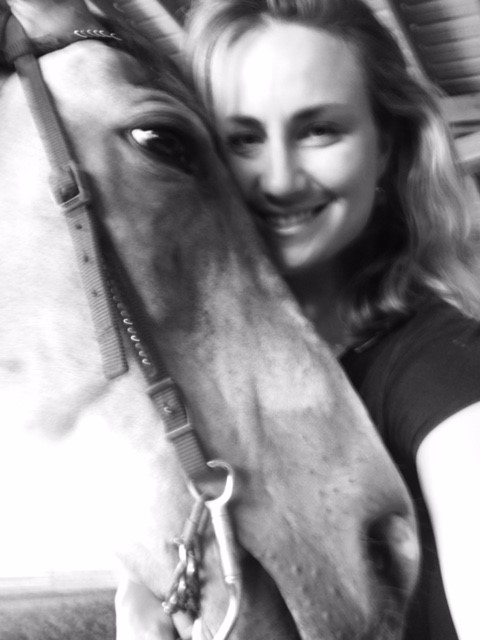
horse

Myself and my buddy since she was born 18 years ago, Sierra.

I have spent much of my schooling and career seeking these rural and rugged places out. Wyoming, Montana, Eastern Washington, the rolling hills of the Willamette Valley, and will soon be embarking to the mountain town of Sisters, Oregon.

My attraction to these places is also rooted in the mentality- the toughness, the grit, the independence, the “I don’t give a damn” attitude, think Brad Pitt in “Legends of the Fall”…(I think of him often- don’t worry my husband is completely aware of this).

Undoubtedly however, contradictory to the strength that abounds in our rural areas, suicide, depression, and substance abuse also abound throughout these places. Physical isolation, a lack of resources, poverty, and limited opportunity are all likely contributors, but so too is the same mentality that I both admire and am challenged by.

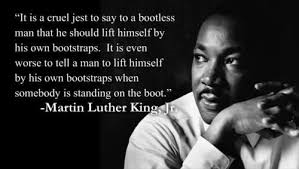
But you know as they say- when life gets tough, “pull yourself up by your own bootstraps”. Or perhaps you tell yourself something similar…”get over it”, “move on”, “put on a brave face”, “just smile”…As entitled, sometimes we just don’t have bootstraps, or as Martin Luther King eloquently explained it, sometimes someone or something is stepping on our boot:

untitled

Certainly the things we tell ourselves have their merits and there are times when “toughening it out” can build character and resilience, but trying to simply push on without support can lead to feeling desperate and alone. Depression, anxiety, fatigue, and other mental health concerns are all mediated by physiological factors, but are also often informed by our psychosocial and cultural circumstances.

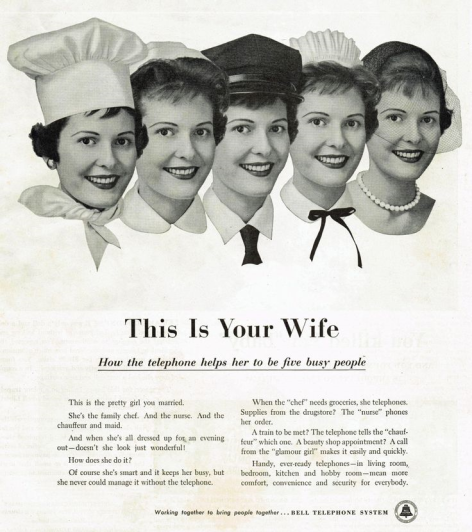
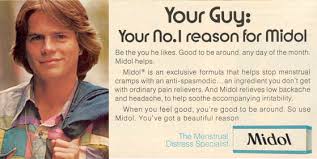
The cowboy culture of “git R done” and finding your bootstraps is not exclusive to the rural parts of our country and is certainly not exclusive to only COWBOYS, ladies. Women have been expected to serve others with relentless stamina and with a smile for eons. The current façade of social media (I am guilty as charged) is not doing us many favors either.

blog2.png

blog1

How often do we convince ourselves to push aside our burdens out of fear that we not be a burden for someone else? We convince ourselves that we will be perceived as weak, vulnerable, unhinged, “crazy”. We bury our worries and our fears and often fail to recognize how this negative energy can manifest physically, psychologically, and spiritually.

The stigma that surrounds mental health has improved, but is still very much alive. Some cultural beliefs and/or religious beliefs continue to downplay or dismiss the importance of addressing emotional wellness. Seeking professional help is still something many of us feel we have to hide.

While I love my boots- how they make me feel- and when I feel like I have bootstraps, it has been the times that I have been figuratively barefoot that I have found my true strength- many times with others by my side. Sometimes you just need to ask for a pair of boots!

The struggle is real folks…but it can also lead to transformation. Let’s do our best not to hide from it and let’s intentionally check in with one another. Let’s try to avoid shaming others and ourselves. We all have our dark places, our skeletons in our closet, our demons, what have you…nobody has it all together…nobody has it all figured out…

I will let you borrow my boots if you let me borrow yours once in a while.

May you be well!

Audry Van Houweling, PMHNP-BC, Owner @ She Soars Psychiatry

http://www.shesoarspsych.com