Binging, Booze, Boys, Bags, & Beachbody… Our attempts to escape the inescapable.

Do you struggle with sitting still? Is watching a movie, reading a book, or even having a conversation a test of your patience? Many of us have become accustomed to a routine of constant stimulation and distraction. Embracing the present can seem counterproductive, like a waste of time, or perhaps even painful. As women we can be pros at creating distractions for ourselves or about reaching an outcome. We give ourselves kudos for being master jugglers. We are praised for our maternalism and caring capabilities, and yet self-care can be met with skepticism.

Afraid of confronting destructive beliefs and patterns, we externalize our problems and blame our bodies, relationships, work environment, and finances among other “causes” rather than looking within. And so, we rely on such things as binging, booze, boys, bags, and never-ending body projects to keep us occupied and detached from our truth. We lose patience as patience is nothing more than simply accepting the present moment.

A note on binging…

blog-binging

It is often a cycle of guilt, shame, and secrecy. Perhaps when the kids are in bed and the husband is not watching, or a hush-hush trip through the drive-thru, or a secret “snack” drawer at work. Everyone is allowed a sugar-spree every so often, but when binging and food becomes a false sense of control or the mechanism by which we quell our emotions, it can become dangerous and destructive. Rather than feel the discomfort, fear, sadness, or grief, we drown it out with the fleeting pleasure of sugar and salt on our taste buds. We might gain weight, or we might purge to try to cover up the “evidence”. The guilt takes over and then the feelings, which must again be quieted.

A note on booze…

BLOG-BOOZE

While there has been a recent spotlight on opioid and prescription drug use, alcohol use has quietly been climbing and deaths attributed to alcohol continue to rival any other substance. High risk drinking, which was defined in the study as women consuming more than 4 drinks per day or men consuming more than 5 drinks per day increased by 30% between 2001-2002 to 2012-2013. Among women specifically, high risk drinking increased by nearly 60%. In the Northwest, alcohol consumption and being privy to the latest and greatest brew pub is associated with social prowess and prestige.

A note on boys…

blog-boys

Lust, codependency, and compromising our own comfort to satisfy. It is human nature to fantasize and want to please to an extent, but boys or whomever you place affection can be a powerful distraction and our means to validation and self-worth. We might be plagued by self-doubt if we assume we are not meeting expectations. Sometimes we may subconsciously (or consciously) seek out or relive situations reminiscent of past traumas or heartache to try to make the traumatic pleasurable or find power when we previously may have felt powerless.

 A note on bags…
blog-bags

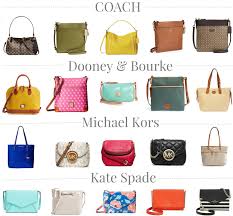
I was in Las Vegas recently and took some strolls through the opulent designer rows filled with top trends to satiate high rollers. It is all a bit exciting for a moment and then I found myself rather quickly disillusioned. I suddenly felt pride for my $15.00 Target purse and my sleek black jumpsuit I got from Ross Dress for Less. Really, who gives a damn and if they do, do I give a damn? I must admit I enjoy shopping, fashion, and I understand the power of a first impression. That said, character is not defined by designer labels and if you think external possessions are going to make you happy, you will be quickly disappointed. When it comes to judging one another based on materialism, quite frankly, my give a damn is busted. I think your’s should be too.

A note on Beachbody’s…

blog-food

Your body is your vessel and if you can walk, talk, move without pain, digest your food, and have a healthy heart, there is so much to be grateful for. Many cannot say the same. We take the power of our body for granted as women and we fight the inevitable process of change. We believe that we must punish our body’s until we reach a socially predetermined goal. Through deprivation and often exhaustion we may lose the 10 pounds, but weblog-beachbody reach it having done so with a mentality of shame and self-degradation. We tell ourselves we will finally be happy when we have a 6-pack, lose 10 pounds, run the race, or get rid of the jiggle. Problem is we are acting out of fear rather than love and when fear is the driver, we almost always crash.

Okay so now what?

Okay so you have some vices, guilty pleasures, or admittedly, self-destructive behaviors. Now what?

  • You must take time to practice being OK with the present, which means learning to acknowledge your feelings and fears. This takes practice and intentionality and it might take professional help. Deep breathing, meditation, keeping a gratitude journal, taking a sensory inventory are all small ways to invite the present. This takes practice and intentionality and it might take professional help.
  • Acknowledge your inner child- it is likely desperate to be heard. Picture a hurt child coming to you for help- would you deprive, degrade, and punish that child? That seems cringeworthy as most of us would seek to help that child with gentle curiosity. “What’s wrong? How can I help? Tell me what hurt you? I am here for you. You are going to be OK.” Perhaps then we should be kinder to the wounded child within ourselves. inner child

  • Question everything. Question your core beliefs. Are they born out of fear of love? What behaviors and patterns are energy restorative versus energy depleting? Are you acting and behaving out of compliance or tradition? Has this caused you to sacrifice your personal truth?
  • Treat self-care as a responsibility. This means you honor yourself- your mind, your body, and your spirit. You honor yourself because the energy that you bring into this world has consequences- positive and negative from interacting with the grocery store clerk to your spouse. Take ownership of your energy.

Remember, the present is all you have. Right now, right here, there is power.

Thanks for listening everyone.

blog-me3


With gratitude,

Audry Van Houweling, Owner, She Soars Psychiatry, LLC

www.shesoarspsych.com

Sisters & Silverton, Oregon


Scarlet letters & shame in a small town

Nathaniel Hawthorne’s classic, The Scarlet Letter, tells the story of a woman, Hester Prynne, chastised by a Puritan community after she is found guilty of infidelity. She is forced to wear a scarlet letter, “A” on her chest for ‘adultery’ and endures public judgement and shaming. While small-town America has generally moved beyond such extremes, we certainly can wear our own metaphorical scarlet letters and brand them on each other. Given the intimacy and interconnections of small towns, emotions can spread like contagions transforming a community’s energy. Joy, excitement, peace, strife, sadness, fear, and certainly shame.

scarlet letter

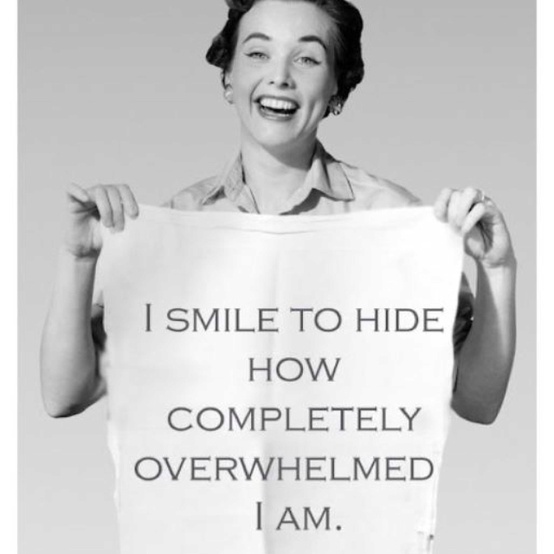
Many of us have felt burdened by the perceived mark of shame- our own scarlet letter. Be it financial woes, family drama, infidelity, illness, or simply choosing to live outside the bounds of what has been deemed acceptable. Many of us try to hide our scarlet letter through work, isolation, distraction, external appearances, and forced smiles among other efforts that altogether can make life downright exhausting. Afraid we will be found out, we rob ourselves of authenticity.

I work in two beautiful small towns. Sisters, Oregon on the eastside of the Cascade mountains and Silverton, Oregon on the westside of the mountains. Each is similar, but different and each with its own ideas of social idealism.

Sisters has this sort of cowboy-bohemian-earthy vibe. The town’s Old West theme is contrasted by vegan fare, yoga studios, and chic boutiques lining streets. Tourists are a mixed bunch donning their cowboy hats, outdoor gear, paisley prints, and California couture. On multiple occasions I have passed a local cowboy riding his horse downtown as I walk to the vegan smoothie bar across the street- so yeah, it is a special place.

Silverton, the garden-city of Oregon, has a quaint-Norman Rockwell-ag town-meets modernism sort of vibe. It is a place where families tracing back to the Oregon Trail hold strong to tradition while also attracting newcomers enchanted by its charm. While it does not yet have a vegan smoothie bar (at least as of last week), Silverton is a good mix of traditionalism sprinkled with just enough hipster to make it officially “cool”.

Shame is a funny thing. Each town seems to have their own rules about shame dictated by the uniqueness of its culture and social norms. Sisters & Silverton for example have certain criteria you may have to meet to be considered acceptable or ‘a local’. Your scarlet letter may be particularly painful in one town while it may be celebrated in another. Sometimes when so many people have the same scarlet letter, it becomes shameful to not have a scarlet letter. This can happen in cases of learned helplessness when forward mobility can seem unorthodox and even condescending.

no-shame

If there is one thing I have learned in my work, it is that no one person is immune to shame and insecurity. Not the most successful, not the wealthiest, not the most popular- everybody has their burdens. Everybody has their struggles.

Sharing the Scarlet Letter: 5 Ways to Lessen the Burden

So assuming we all have our own scarlet letter how then can we lessen each other’s burden of shame and move towards acceptance and authenticity?

  1. Be wary of gossip– Small towns are notorious hot-beds for gossip. Gossip gives the illusion of pseudo-closeness and by being a participant, it can increase our own sense of hypervigilance and shame. It can leave a person feeling on edge, judged, and even shunned. Talking about somebody’s successes can promote positivity but gabbing about somebody’s trials is a disservice to everyone- you included.
  2. Give each other (and yourself) space to make mistakes– Or maybe I should just say let’s give each space to be human. We all f**k up once in a while and while there are certainly limits to our slip-ups, holding ourselves or each other to unrealistic standards of perfection or control is probably the biggest mistake we make. Try not to make assumptions and realize a person’s actions are part of a complex story.
  3. Be genuine– Formalities have their place, but how often do you really ask with true curiosity, “how are you?” By the same token, don’t be afraid to respond to such questions with genuine honesty. You may be surprised how this provides safety for others to open up with you as well.
  4. Shame vs guilt– This is an important distinction. Guilt means I did something bad. Shame means I am bad. Learn to acknowledge this in yourself and others. One action does not have to define your worth or value.
  5. Pieces of you– Remember that Jewel song, Pieces of You? Recognize that which you dislike in others is often secondary to what you dislike in yourself. Therefore, if you are feeling shameful you are probably more likely to “shame” others. Own your shame story, acknowledge the pain, and be weary of projecting it onto others.

Do you live in a small town? What have your experiences been with ‘Scarlet Letters’ & shame? Let’s challenge ourselves to stop the judgment and chastising. After all, we will all likely need help overcoming our own scarlet letter at some point.

Thank you as always for listening.

With gratitude,

2017-09-09 Audry VanHouweling Headshots (2 of 2)

Audry Van Houweling, PMHNP-BC, Owner of She Soars Psychiatry, Sisters & Silverton, Oregon

The loneliness behind our success…

How do you define success? Who or what shaped your ideas of what success is? Has this definition served you not only financially, but so too spiritually, and emotionally?

Our vision of success has likely been dictated by past experiences, relationships, education, opportunity, culture, and the society in which we live. In our society success is often defined by external accomplishments- our bank accounts, our home, our cars, our clothing, how many letters we have after our name, and how many followers we have on our social media accounts. Many of us know there are shortcomings to this model of success, yet we nevertheless embrace the facade day after day.

facade1

Putting on a bit of a masquerade is human nature. We all like to flaunt our stuff once in a while or feel impressive from time to time. Our quest for belonging and acceptance is part of the human experience that has roots in survival, emotional, and physical well-being.

What worries me is that we have set the bar too high and this has had significant ramifications on our well-being. We are bombarded by expectations that are both unrealistic and often impossible all the time every day. We have bought into the idea that our value is connected to fleeting affirmations of worth and we compare ourselves to filtered, edited, and false portrayals. Have you ever followed somebody on social media and then met up with them in person only to realize their life is nowhere near as effortless as their virtual portrayal may seem? And have you been guilty of trying to portray your own “effortless” existence? My answer is yes and YES.

Former Facebook executive, Chamath Palihapitiya, in an interview with the Washington Post (2017) emphasized this dynamic:

“…We curate our lives around the perceived sense of perfection, because we get rewarded in these short-term signals—hearts, likes, thumbs up—and we conflate that with value and we conflate it with truth. And instead, what it is is a fake, brittle popularity that’s short-term and leaves you even more, admit it, vacant and empty…”

Some of us are afraid to portray anything but an edited version of who we are. Aside from social media we may rely on our fancy labels, titles, career, makeup, or substances to distract from vulnerability and authenticity. Ultimately, this can be pretty lonely. We realize our connections to others are built on a facade that can be exhausting to maintain and that few if any persons have been allowed access to what’s behind the mask. Maintaining prestige, fame, and status can ultimately be emotionally depleting as well as isolating.

facade3

Genuine social connection and space to be simply “real” is central to our health and I might argue, success. Loneliness and isolation have been associated with cardiovascular disease, inflammation, diabetes, depression, anxiety, and suicide. Our largely individualistic society loves to give pats on the back to those who have apparently forged life by their own willpower. We become afraid to ask for help fearing it is a sign of weakness. We convince ourselves that virtual followers and connections can replace face to face encounters.

In my opinion the loss of genuine human connection is central to the rising depression and suicide rates plaguing our country. It is why wealth does not always buy health and why those who appear to “have it all together” may be experiencing deep personal struggle. So in addition to your yoga class, green smoothie, eco-friendly home, and meditation make sure that you also call a friend, meet a neighbor, plan a coffee date, and just maybe let your guard down a bit.

Thanks for listening everyone.

With gratitude,

Audry Van Houweling, Owner & Founder, She Soars Psychiatry, LLCheadshot4

www.shesoarspsych.com

Sisters & Silverton, Oregon

541-595-8337

A Woman’s Desire for Control: Origins and Ramifications

One of my goals in my practice is to heighten insight and self-awareness among my clients. Many of my female clients come to me with complaints of feeling overwhelmed, exhausted, and underappreciated. These symptoms are often married to perfectionistic tendencies and attempts to control the external to compensate for internal chaos.

Now for some controversy. When it comes to control and gender, it does seem that a double standard exists. Men are often chastised for seeking control in a relationship as it seems akin to emotional abuse and patriarchy. In my opinion this sense of disapproval is warranted; however, I question whether women are judged by the same standard. It also seems more acceptable for a woman to voice emotional distress over a controlling man, yet if a man were to voice his emotional distress it seems he would need to overcome a societally reinforced barrier of embarrassment and defeat. A man may feel pressure to acquiesce in order to not “rock the boat” and consequently, similar to a woman in the same position, resentment can flourish.

control1

When I ask women- many of whom laud equality as a core value- to put themselves in the shoes of their partner or children or inquire whether they would tolerate the same level of control from their partner, a good healthy pause and then reflection ensues. Ironically, these same women often voice that their partner is too passive, yet simultaneously insist on “doing it all” and have difficulty delegating even simple tasks.

A woman’s desire for control certainly in not born in a vacuum. Often the origins of her controlling tendencies are rooted in trauma. Trauma is an insidious and almost universal experience among women. Taking control and maintaining order may have been critical to emotional and physical survival at times, which can be a hard pattern to shake even when emotional and physical safety are secured. This can leave well-meaning spouses, children, coworkers, and others in the path of the “control storm”, so to speak. Putting aside individual experiences, our society alone perpetuates the persistent unease among women that “we are not yet good enough until…”. This by itself can cause a strong fear of disapproval and ongoing attempts to control partners, children, coworkers, food, appearances, and money, among other things.

A woman may have experienced times of chaos or abuse or dysfunction that left her feeling desperate for a sense of control. Micromanaging, demands, and persistent critique are often secondary to a sense of emptiness or internal turmoil that fuels uncertainly, self-doubt, and the need for external validation, praise, or a sense of order. In some cases, a woman experiencing abuse from a spouse or partner may seek to regain a sense of power or control by displacing her anger and resentment onto her children. It comes as no surprise that the children who have absorbed emotional impacts from their mother and father then also start displaying concerning behaviors. Children may then be chastised given that they are not fulfilling desired outcomes and yet in trying to correct the be

control3

havior, it is only further reinforced.

Control is about being attached to an outcome that will somehow, per our perception, dissipate fear of the unknown. Yet despite our best efforts to plan, manage, and control, the unknown will always exist a minute from now, an hour from now, tomorrow, and so on. Letting go of outcomes is not giving up, but rather trusting yourself enough to navigate the unknown…whatever may come your way.

With gratitude,

Audry Van Houweling, PMHNP-BC, Owner She Soars Psychiatry

www.shesoarspsych.co2017-09-09 Audry VanHouweling Headshots (2 of 2)m

Sisters & Silverton Oregon***541-595-8337


Confronting Body Shame

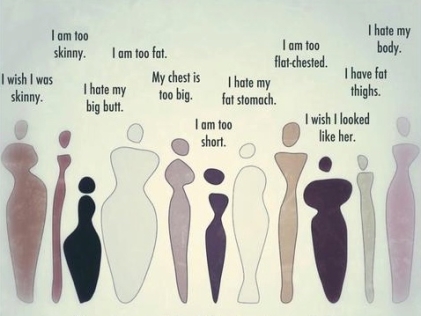
I always ask my clients to rate their self-esteem 0-10. The vast majority of my clients rate themselves below 5. If my client happens to be female, complaints about her body almost always dominate the list of why. Intellect, character, performance, and achievement are often never mentioned.

It is altogether disheartening how many of us associate value and worth with size, the number on the scale, and measurements that are idealized by a social concept that is both unrealistic and, in many cases, impossible.

body image3

Every woman has her own story about body shame. Like most women, memories of my own body shame are all too vivid. I remember the early days of elementary school playing follow the leader on the playground and not being able to fit through small spaces that seemed so effortless for my peers. I remember my portions and food choices being scrutinized by family members. I remember seeing the school counselor and being told I eat too much. I remember starting at my young body in the mirror- loathing what I saw and wishing I could switch bodies with the Disney princesses or Barbies I idolized. In dismay I would compare the size of my legs, my arms, my stomach compared to my peers…and this was all before middle school.

Rather quickly my body seemed to lengthen rather than widen. I stretched to nearly 5’10” by the seventh grade and the dynamic of attention and commentary shifted. Yet seemingly too tall for pre-pubescent boys my own age, suddenly there were comments from men- sometimes much older men. Cat calls, innuendos, and crass remarks on my physical form that still seemed so new and foreign to my budding mind. Soaking in what seemed to be validation, I aimed to maintain the streak of physical affirmation sometimes by means of extremes. Food restriction and excessive exercise became a pattern. Negative self-talk was the driver. I could not let myself be satisfied. I was terrified of regressing.body image2


Our society promotes a sustained hypervigilance around body image and while I have made progress, I am not out of the woods. Most of us are actually still pretty deep in the woods so to speak. Women & girls are often ridden with trauma regarding their bodies. Whether it be a collection of accumulated comments and encounters or events of blatant harassment or abuse, we are taught from a very young age that the form of our bodies defines our worth and, in some cases, even our survival. Other elements of our being and soul are minimized, disregarded, and suppressed. As the inevitable shifting and ultimate decline of our physical bodies occurs, we are confronted by shame and guilt as the form of our body may drift farther away from the social ideal. Social media further reinforces our shame as edited and filtered comparisons are only one click away.

So make a point to praise your daughter, partner, spouse, or family member on attributes other than her physicality. Support her in creating a legacy of inner beauty and confidence. Ladies- we can be our own worst enemies. Let’s try to refrain from objectifying one another. Let’s honor each other’s accomplishments outside of what happens in the gym or on a scale. Modest or immodest, let’s realize we are all marvelously complex despite our exterior. Let’s celebrate our diversity and be unafraid to call out unrealistic and harmful stereotypes and ideals.

Character, compassion, intellectualism, humor, empathy, and mindfulness resonate far more than the number on a scale. After all, I have yet to see anything about weight loss or dress size on somebody’s tombstone. On that note, give your body grace. It will fail standards again and again, but your value is far more unconditional.

Be kind to yourself.

With gratitude,

2017-09-09 Audry VanHouweling Headshots (2 of 2)

Audry Van Houweling, PMHNP-BC, Owner She Soars Psychiatry, LLC

www.shesoarspsych.com

Embracing Grey in a Black & White World

We all like to feel safe. When chaos and uncertainty surround us, it is common to fall back on rigid thinking in order to create the sense of control, predictability, and make sense out of the inexplicable. Reducing a complex world into right and wrong, good and bad, successful and unsuccessful, and so on might seem to give us security until we have to confront the endless variables that suddenly make our black and white thinking so grey.

black and white

A lot of us are experiencing fear and heightened stress these days. Many of us live in a state of adrenaline, fight or flight, and hypervigilance. When we are afraid we often resort to primitive ways of thinking that include language such as “always”, “never”, and “must”. We tell ourselves to “never” associate with certain people, to “always” present a certain way, and that we “must” adhere to societally driven formulas to succeed. These rules for ourselves and others leave little room for flexibility and a lot of room for disappointment. An all or nothing experience emerges…
We either succeed or we fail, someone is a good guy or a bad guy, something is either right or it is wrong.

black and white2

Black and white thinking limits both our grace for ourselves and others in addition to robbing potential connection, self-discovery, and empathy. Because the world is not static and ultimately nuanced with a whole lot of grey, holding tight to such rigidity can perpetuate pessimism, perfectionistic thinking, depression, and anxiety. We may feel like we are running a race and the finish line keeps on moving.

Seeing the world as grey can be uncomfortable especially when we may feel threatened or when we have been hurt. We categorize, we stereotype, and we generalize. We let labels and assumptions take over. We hesitate to let go of our way of sorting the world due to fear we may get hurt. To defend our black and white thinking we find ways to validate our worldview perhaps through the media we choose to consume, the people we surround ourselves with, or the spiritual beliefs we adhere to. Essentially, we often find what we are looking for.

Because black and white thinking is often kept alive by fear, we must defend the fear to defend our thought processes and thus, in many ways, it creates a fear-based existence. It turns out spending so much time and energy defending ourselves and seeking validation can also be quite exhausting.

When we let go of the black and white in exchange for the grey, we open doors for kindness and understanding for ourselves and others. We can more readily “step into someone else’s shoes”. The pressures that we put on ourselves are not as burdensome, and compassion comes easier.

It is important to question how we categorize ourselves- what labels, roles, and rules have we tried to adhere to? Are these restorative or draining to our being and those around us? Do they allow for growth and self-exploration or do they keep us confined?

As we consider the world of yes and no, good and bad, right and wrong, successful and unsuccessful, we must recognize that these are all on a spectrum nuanced by numerous variables unique to each of us. Putting aside black and white thinking and embracing the grey takes courage but can also be pretty darn liberating. In the words of Deepak Chopra, “Instead of thinking outside the box, get rid of the box”.

Thanks for listening everyone.

With Gratitude,

Audry Van Houweling, PMHNP-BC, Owner of She Soars Psychiatry, LLC

www.shesoarspsych.com

2017-09-09 Audry VanHouweling Headshots (2 of 2)

Sisters & Silverton, Oregon


Compassion Fatigue & Vicarious Trauma

In my job I hear a lot of stories. I hear stories of enormous tragedy and loss, but also stories of great strength and resilience. I have and always will consider it a great privilege to be witness to these stories and the vulnerability intertwined within the ups and downs of life. Like most helpers and healers, I would consider myself an empathetic person capable of appreciating what it might be like in someone else’s shoes.

It seems empathy is in high demand these days. Helping professionals, healers, or simply those with caring personalities may feel overwhelmed and even exhausted trying to meet this demand. Having a caring heart and a tendency to put others ahead of ourselves makes us especially vulnerable to compassion fatigue. ‘Compassion fatigue’ a term coined by Dr Charles Figley, is a “state of tension and preoccupation with the suffering of those being helped to the degree that it can create a secondary traumatic stress for the helper”. Compassion fatigue occurs hand in hand with vicarious trauma, which is when ‘the helper’ is exposed to the traumatic experience of another and experiences a personal transformation resulting in a multitude of possible symptoms including anxiety, panic, sleep changes, depression, hypervigilance, and social isolation among others.

compassion fatigue2

Vicarious trauma and compassion fatigue may lead to feelings of being unsupported and underappreciated. We may also be a tendency to roll up our sleeves and become workaholics- in a search to find control and distractibility when we may feel powerless in other aspects of our lives. We may also find ourselves justifying maladaptive coping mechanisms because of the good and hard work we do. It may be easy to blame our struggles on circumstance and others, but ultimately we need to look within ourselves to find answers and solutions.

Vicarious trauma and compassion fatigue can occur among educators at a loss of how to comfort students fearful of tragedy, or healthcare professionals struggling to provide adequate care to desperate patients, or parents trying to nurture their children in a world that can seem so chaotic, or parents trying to nurture their parents, or leaders of faith trying to restore hope in the hopeless, or first responders repeatedly encountering the aftermath of trauma, or the countless unpaid volunteers and nurturers in our communities working hard to uplift others with often little recognition.

I have learned to be aware of my own vulnerabilities to vicarious trauma and compassion fatigue—and it has not always been easy. I have learned it is critical to have what I call “non-negotiables” or ways of coping that help keep me grounded, present, and emotionally resilient. I have learned it is best not to sacrifice these non-negotiables and if I do, it is not only a disservice to myself, but takes away from my loved ones, clients, and yes, ultimately the communities that I serve. I am not overstating my importance, but have simply grown an appreciation and awareness how my energy and actions reverberate to everyone I come in contact with—and it is the same for you.

compassion fatigue

It is easy to feel hypervigilant about all the woes and fears that may seem so imminent, which makes vigilance about our own well-being so much more important.

Many of us believe that prioritizing our own well-being aligns with selfishness. In my humble opinion, self-care is a matter of self-responsibility and has nothing to do with being selfish. Importantly, self-care and self-responsibility may also mean asking for help when we feel at a loss. We can only give what we have. It is ultimately not sustainable to be so focused on giving and not restoring. So, in the midst of widespread fear, taking inventory of what we need to keep ourselves grounded and creating dialogue is a necessity.

It is easy to feel lost, on edge, and powerless. Our reality is our perception and perception can change. So let’s help ourselves and one another see the light in the darkness. Take care everyone.

With gratitude,

Audry Van Houweling, PMHNP-BC, Owner She Soars Psychiatry, LLC.

Sisters & Silverton, Oregon2017-09-09 Audry VanHouweling Headshots (2 of 2)

www.shesoarspsych.com

Is Marijuana Harmless? No. But Let’s Get our Priorities Straight.

I have lived most of my life ‘by the books’. I think I tried marijuana once…okay maybe twice. Curiosity I suppose mixed with a bit of peer pressure back in my younger years. Despite my anticipation of some wild trip, I think I just ended up eating more potato chips and falling asleep on the couch. Underwhelming you could say.

Years later, I am now a psychiatric nurse practitioner. Having worked throughout the Northwest, you would have to be living under a rock to avoid the chatter marijuana has incited throughout our region. There has been both celebrations and staunch opposition. I have been asked many times what side I stand on and I generally give the same neutral answer: “Marijuana is not harmless. There are potential consequences and possible benefits. In most cases, there has not been enough research to allow for definitive answers. There are substances that have proven to be far more dangerous than marijuana.”

At the end of the day, thinking about my clients using marijuana quite frankly, does not haunt me.

I am haunted by clients prescribed dangerous cocktails of potentially addictive and dangerous medications.

am haunted by the ongoing laissez faire attitude still taken with alcohol and tobacco consumption- legal substances that kill far more people than all other illicit substances combined.

am haunted by the ease with which youth can procure potentially lethal doses of opioids, methamphetamines, cocaine, and alcohol.

am haunted by parents who are desperate to save their child trapped by the opioid epidemic or worse yet, devastated by a recent loss. Conversely, I am haunted by the children struggling to understand their parent’s addiction.

am haunted by the weeks, months, or even years clients in crisis will have to wait to get access to mental health care or substance abuse treatment.

Some believe marijuana to be a gateway drug and that may certainly be the case is some scenarios. For some of my clients however, marijuana has been reported to be instrumental in allowing them to give up opioids, alcohol, or methamphetamines. I am not in a place to give a verdict either way; however, it is interesting to consider recent research conducted by Livingston and colleagues (2017) via the American Journal of Public Health noting that opioid deaths declined in Colorado during the years of marijuana legalization.

The marijuana debate has been widespread and somewhat consuming, but in my humble opinion by exhausting so much time on the topic, we are neglecting priorities.

MJ2MJ

Yes, marijuana can be associated with cognitive changes. Yes, there has been an increase in non-life-threatening marijuana related visits to the emergency rooms nationwide. Yes, marijuana (depending on some variables) may induce serious psychiatric symptoms. Are these consequences serious? Potentially, yes. Do we need more research into potential implications and side effects? Absolutely.

Have there been any recorded deaths directly related to a marijuana overdose? According to the Drug Enforcement Administration, the answer is no. None.

In regards to other statistics…

As of 2015, Oregon had the third most alcohol related-deaths in the country behind Wyoming and New Mexico.

As of 2017, Oregon had the highest number of seniors hospitalized for opioid-related issues in the country.

As of 2013, Oregon topped all other states for the non-medical use of pain relievers.

As of 2017, Oregon was ranked dead last in the country by Mental Health America for rates of mental illness and access to mental health care.

As of 2016, Oregon’s suicide rate was greater than 30 percent the national average.

In 2016 alone, more people died nationwide (64, 070) from drug overdoses compared to total lives lost in the Vietnam War (58,200).

Numbers do not lie. I am neither celebrating or condemning the legalization of marijuana. Ultimately, given priorities and our country’s hierarchy of needs, marijuana is quite simply not scary enough compared to vastly more dangerous problems currently impacting so many. My hope is that we can regroup, step down from our pedestals, and take a step back from what has become such a deeply politicized topic. We have plenty of work to do otherwise.

Thanks for listening everyone.

With gratitude,2017-09-09 Audry VanHouweling Headshots (2 of 2)

Audry Van Houweling, Owner & Founder, She Soars Psychiatry

Sisters & Silverton, Oregon 541-595-8337 www.shesoarspsych.com

Don’t Chase Resolutions, Chase Habits

The New Year is upon us. It is that time of year again when we feel a surge of inspiration to tackle those resolutions- lose weight, quit smoking, read more books, travel—you know the drill. The beginning of a new year can feel like a fresh start, which at least for a while can jump-start our motivation into action.

Now for the bad news…most resolutions fail. We start the year feeling optimistic and then all too often life seems to get in the way and our motivation dwindles. Sound familiar? Many of us have our sights set on an outcome and rely on motivation to take us there. Ultimately however, motivation is all too fleeting.

Have you ever heard someone speak, watched a powerful movie, or read something that spoke to you and compelled you to make change? We have all had experiences when we heard or saw something that was incredibly “motivating”. In the moment we feel convinced that we will make changes, yet often fail to fill in the blanks of how we will accomplish this change and again, motivation is not enough.

habits

Let’s put resolutions and motivation aside and instead talk about habits. Habits demand practice and practice makes habit. Habits also take commitment and intentionality. Starting a new habit can feel unfamiliar and therefore, demands planning. For example, if you want to start exercising in 2018 that is wonderful, but now it is time to ask why, when, where, and how?

habits2

Asking “why” is important. It helps us clarify the importance of developing new habits. Why do you want to start exercising? To be fit? To be strong? Why is being fit or strong important to you? Do you want to feel more energy, be more attractive? Why then is that important to you? Are you attempting to make changes for yourself or someone else?

The “when” can be particularly important especially with our tight schedules, kids, and other priorities. Look at your planner, think about how long you are going to exercise, write it down, schedule it, be intentional, and be realistic! If you need to, let those around you know about your plans for both accountability and to avoid disruption.

“Where” is this exercise going to take place? I live in the Pacific Northwest and while I prefer to breathe fresh air, weather can be a hindrance. Are you going to bundle up? Get a gym membership? Find some open floor space in your home?

“How” are you going to exercise? What are you actually going to do in the gym, outside, or at home? Are you going to link up with a buddy or partner to help with accountability?  Do you need a new pair of gym shoes? Do you need to set an alarm?

Be realistic with yourself. Be patient- it is okay to start slow. If you want to run a half marathon, but have spent more time on your couch then on your feet in 2017, a 15 minute brisk walk may be your first step.

Be committed. Set a goal and stick to it. There will be days when staying committed sounds like a drag- perhaps most days if you are just getting started. Go back to the reasons why staying committed is important to you. Showing up can truly be half the battle.

Give yourself pats on the back. Congratulate yourself when you do the work and most importantly, remember to judge your own success- not that of somebody else.

Happy2017-09-09 Audry VanHouweling Headshots (2 of 2) New Year Everyone!

Cheers to becoming creatures of habit!

With gratitude,

Audry Van Houweling, Owner & Founder, She Soars Psychiatry, LLC

Sisters & Silverton, Oregon  www.shesoarspsych.com

Social Media & The Curse of Comparison- From a Perfectionist in Recovery

I would like to think I am a perfectionist in recovery. Not so long ago I put a high price on external measures of success. The perfect house, the perfect job, the perfect marriage, an avid people pleaser, and feeling like I was running a race with no finish line. Like many healthcare providers, I struggled to follow my own advice when it came to self-care, setting boundaries, and granting myself grace. As I have been more intentional about embracing unpredictability, vulnerability, and giving myself permission to question society’s standards, I have recovered feelings of authenticity, contentment, and joy- although this is certainly an ongoing process!

It is human nature to compare ourselves against others. There has always been a pressure from generation to generation to “keep up with the Joneses”. Of course, who the “Joneses” are has changed overtime. For instance, you have had to replace those lovely harvest gold or avocado appliances once so chic with white or black and then to stainless-steel appliances, and now somehow to smart appliances that can order your milk for you.

avocodo

The way in which we compare has also changed. If we go back a century, our means to compare was based primarily on face-to-face interactions had with neighbors, coworkers, family members, and people within our immediate communities. As transportation and media progressed, we gained greater exposure to different beliefs and lifestyles that we could then contrast against our own. The means for gossip and comparison continued to expand with the telephone, email, the cell phone, the smart phone, and then of course, social media.

For many of us, logging into our social media accounts has become as habitual and normalized as drinking water or eating and in fact, without this ever-present doorway into each other’s lives, some of us can indeed feel deprived or disconnected. In this two-dimensional world, we are often presented with each other’s best moments—filtered, edited, cropped, and portraykeeping-up-with-the-jonesesing a social ideal that is in many ways unattainable. As we scroll through our feeds however, it is hard not to judge ourselves against the smiles, highlights, and achievements posted by our peers. Furthermore, we feel compelled to capture the very ‘best’ of ourselves and then measure our social standing by how many likes or positive comments we can collect.


As a woman I feel this phenomenon to be particularly pervasive. Women and girls are already expected to achieve unrealistic standards regardless; however, our tendency to people please, hide from vulnerability, and cover up our flaws is taken to a new level with social media. Many of us strive to portray perfection in our appearance, perfect family photos, our relationships, motherhood, our impressive exercise routine, and our financial success.

In the end, our need to compare and attempt to keep up with the Joneses comes from a deep need for validation and acknowledgement. Everyone wants to feel important and noticed from time to time; yet in putting forth an edited and filtered version of who we are, the acknowledgement we receive can feel shallow and dissatisfying as we continue to trade an idealized image for authenticity. This can ultimately be isolating especially if the allure of the two-dimensional world supersedes opportunities for three-dimensional, face-to-face human contact. Using social media as the platform for self-portrayal can ultimately rob us from the feeling of being truly known for who we really are. Thus, despite our widespread connectivity, many of us continue to feel lonely, misunderstood, and unfulfilled.

comparison joy

Bringing awareness to our social media habits is a crucial first step to making change. A social media hiatus can be very refreshing. Recognizing the fallacy and unrealistic standards portrayed on our social media feed is important. Prioritizing face-to-face relationships where you can express the totality of who you are is paramount. Appreciate the achievements of others, but embrace your own uniqueness. Be the best version of yourself—not someone else.

With gratitude,2017-09-09 Audry VanHouweling Headshots (2 of 2)

Audry Van Houweling, PMHNP-BC, Owner & Founder, She Soars Psychiatry, LLC

www.shesoarspsych.com