Lady, Get LOST- A case for solo adventuring

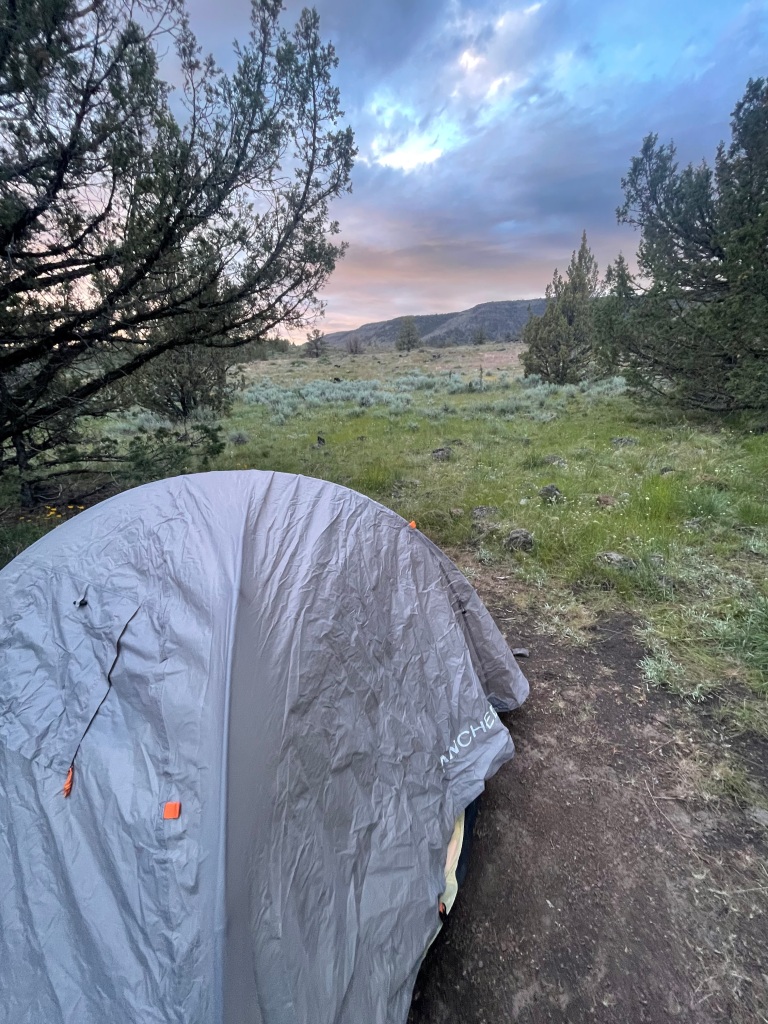
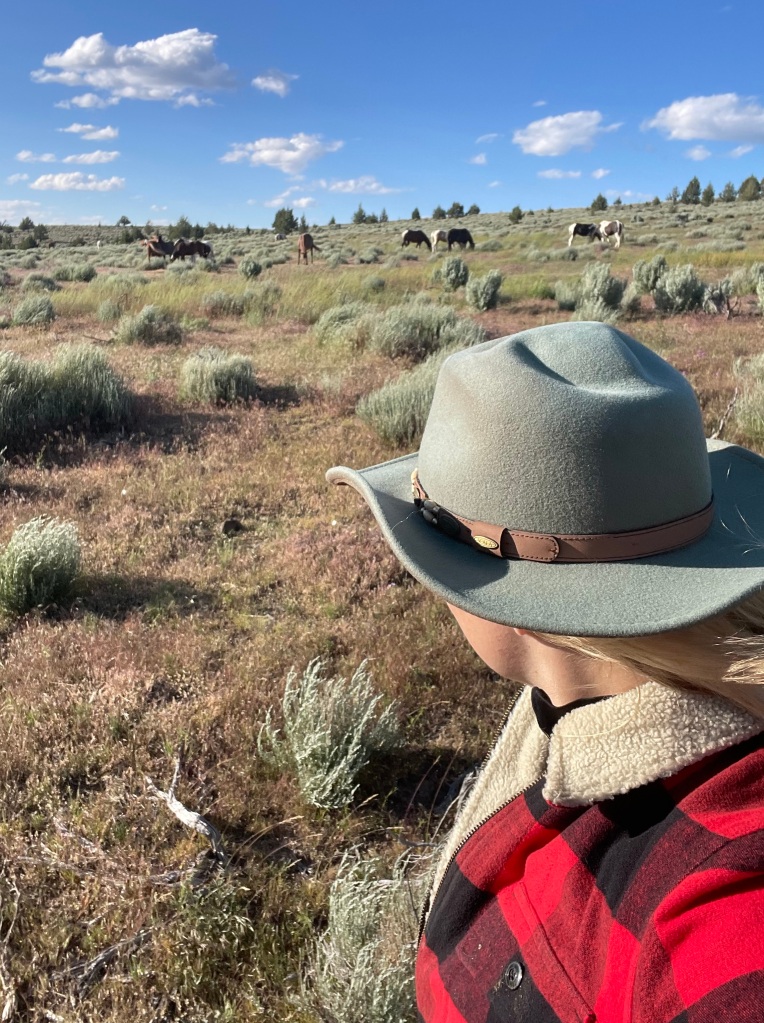
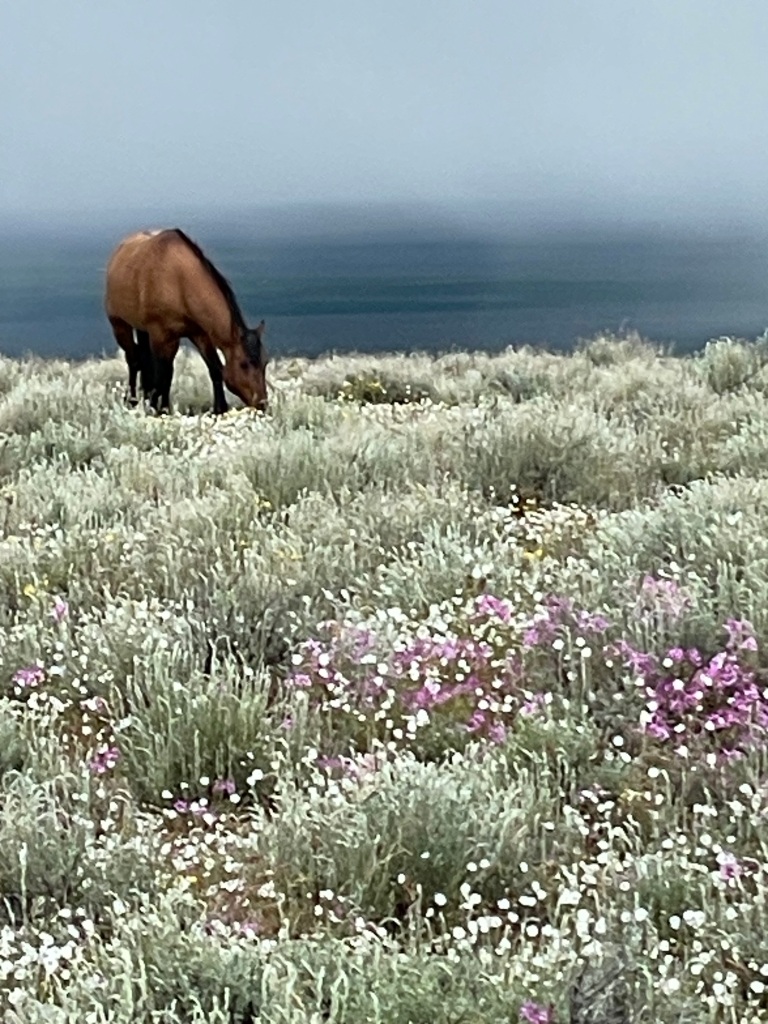
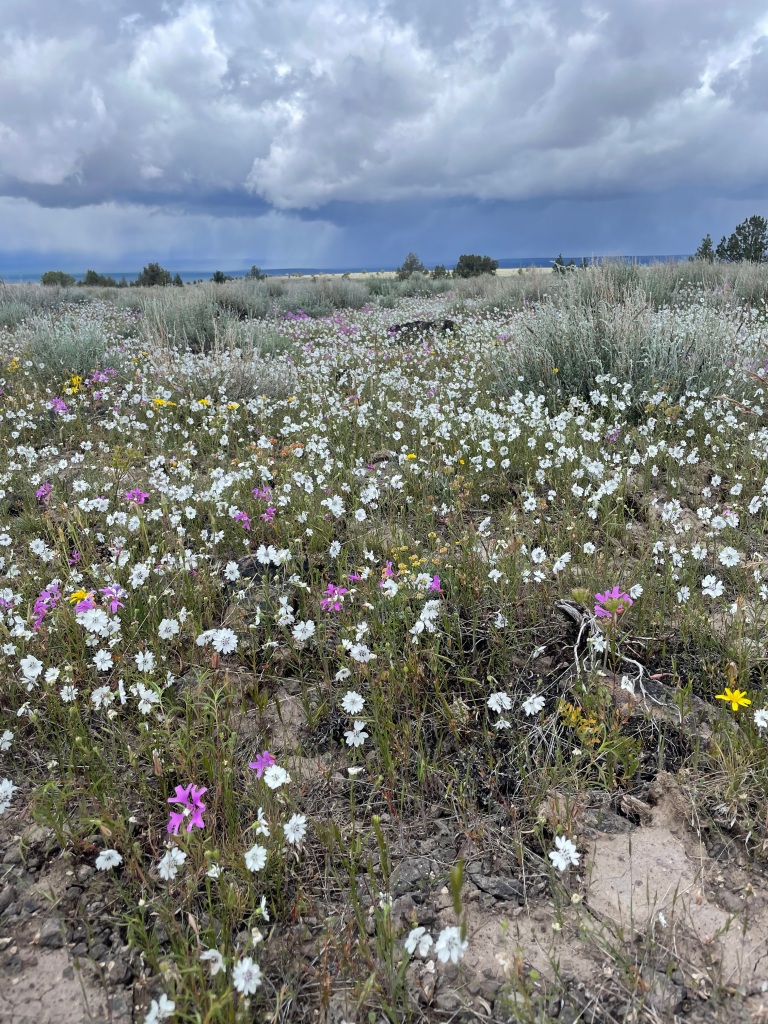
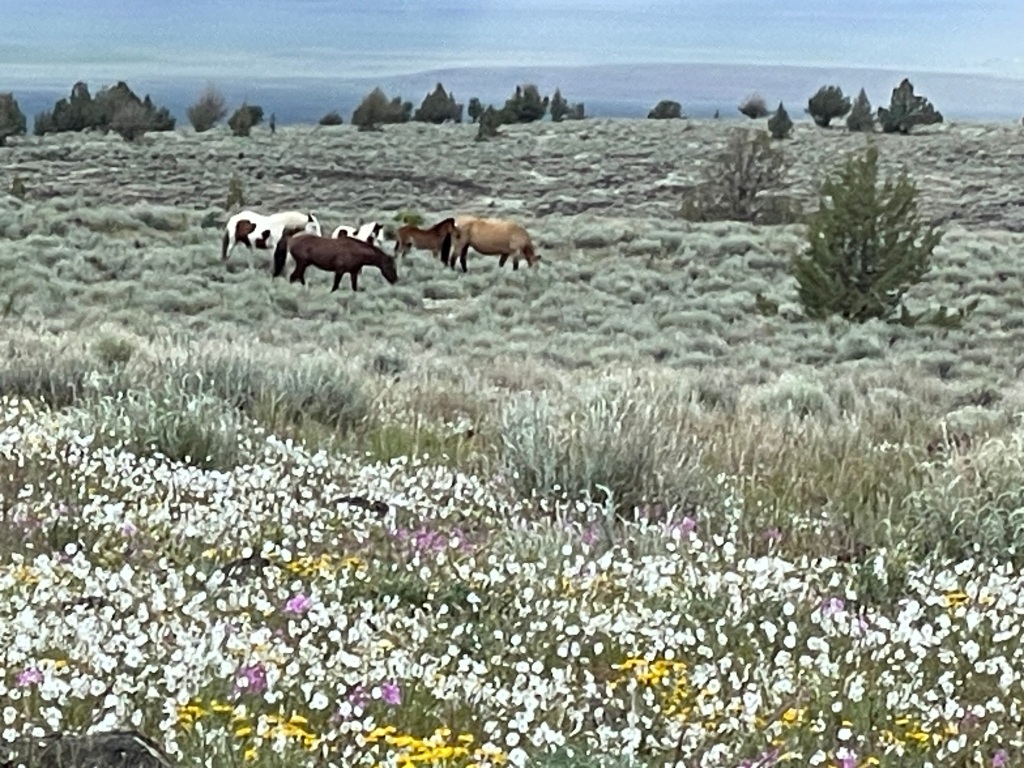
As I write this, I am sitting solo at my camp deep in the heart of the Steens Wilderness. One eye on my journal and the other on my campfire grappling to sustain itself after a day of unexpected pre-Solstice snow and wrathful rounds of high winds and hail. Generally clear this time of year, this time the skies are angry. The sun is finally making its debut out from the West lighting up the sharp cliffsides of the Little Blitzen River. I can hear the booms of the nighthawks above me. After a day of chasing the sun to the Alvord desert and tracking down wild mustangs in sage and blankets of desert flowers, it is dinner time. The peekaboo evening sun makes a fire seem hopeful. The can of chili that had previously been sitting in my kitchen pantry for at least eighteen months is the winner tonight. 

The Steens Wilderness is an annual escape for me frequently followed by a trip to the Blue or Wallowa mountains. This year’s solo adventure will culminate with trips to the Wenaha Tuccannon wilderness and the slopes above the Grand Ronde River. I have a strong desire to find an elusive Oregonian moose. 

I affectionately have termed these solo ventures my “vision quests” and yes, I am aware of the cultural misappropriation. I travel solo by choice. An annual commitment to adventure (some misadventures), solitude, and challenging my comforts has proven to be a dependable opportunity for respite, reflection, and growth. It is a small attempt at putting aside the modern comforts and sure-fire dopamine machines that make resilience and distress tolerance harder to come by. Although, I really do miss my lattes… 

It is not lost on me that it is still probably the exception that a 30-something year old woman goes adventuring solo in the wilderness. On the rare occasion I have an encounter with another solo female traveler, my excitement is met with validation. Inevitably there are those who question my judgment, or tiptoe on 21st century political correctness expressing “cautious support”, or look at me as if I am carrying some torch for equality. From where I am sitting, I am just a person who dreams of wild places where my wanderlust is no match for the “what if’s”. Don’t worry, it is not blind faith. I do my homework, I prep, I pack a little punch, and a little 38 special on my hip.  

Women (and certainly some men) deserve to grant themselves the permission to on occasion, “get lost”- to seek solitude. As women, we are still too frequently socialized to base so many of our decisions on popular opinion or on the needs of others. If this is not interrupted every once in a while, we can lose our inner compass in the process. The space that is opened when we are the sole owners of our decisions and have only to respond to the moods of the skies and the terrain at our feet, can be very healing. It can also feel scary sometimes to sit only with the companion of silence, to act without reassurance, or to endeavor without approval. That said, it is both uncomfortable and necessary to open spaces for our inner voices to be heard and acknowledged. This is where growth begins, self-trust blooms, and change starts. 

Detachment, escapism, and apathy are pervasive problems in our society. It is too easy to become disconnected from our inner voice and become preoccupied by distraction and the many ways available to avoid discomfort. Nature is and has been a loyal antidote to detachment. It forces present awareness as we are in tune with how our body interacts with our surroundings- where we step, how we eat, how we stay safe, and how we adjust to the rhythm of the sun and the moon. As women, we too frequently detach from our bodies often in response to trauma or societal pressures. We may view our body as an enemy or something that needs to be “managed”. Nature has a way of inviting us back to a place of connection and awareness as our bodies integrate and interconnect with a greater ecosystem. It is a natural homecoming of sorts allowing for an allyship with our bodies made historically difficult. 

So, cheers to getting a little lost- and cheers to your solo adventure whether a short walk in the woods or a multi-day trek.  We are social beings at heart- let’s not forget that, but a continued commitment to deepening our sense of awareness and resilience sharpens our inner wisdom and only makes us better for the people and places we love. As John Muir wisely stated, “In every walk with nature, one receives far more than he seeks.” Happy trails! 

Thanks for listening, everyone.

With gratitude,
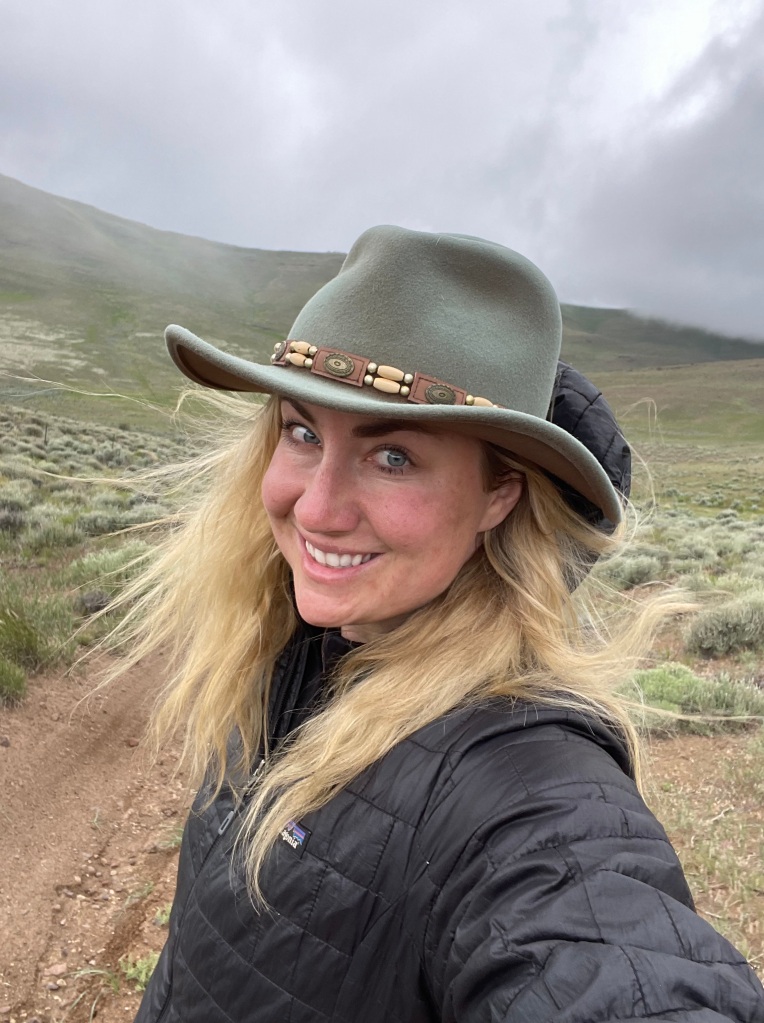
Audry Van Houweling, Owner & Founder She Soars Psychiatry, LLC

http://www.shesoarpsych.com

Sisters & Silverton, Oregon

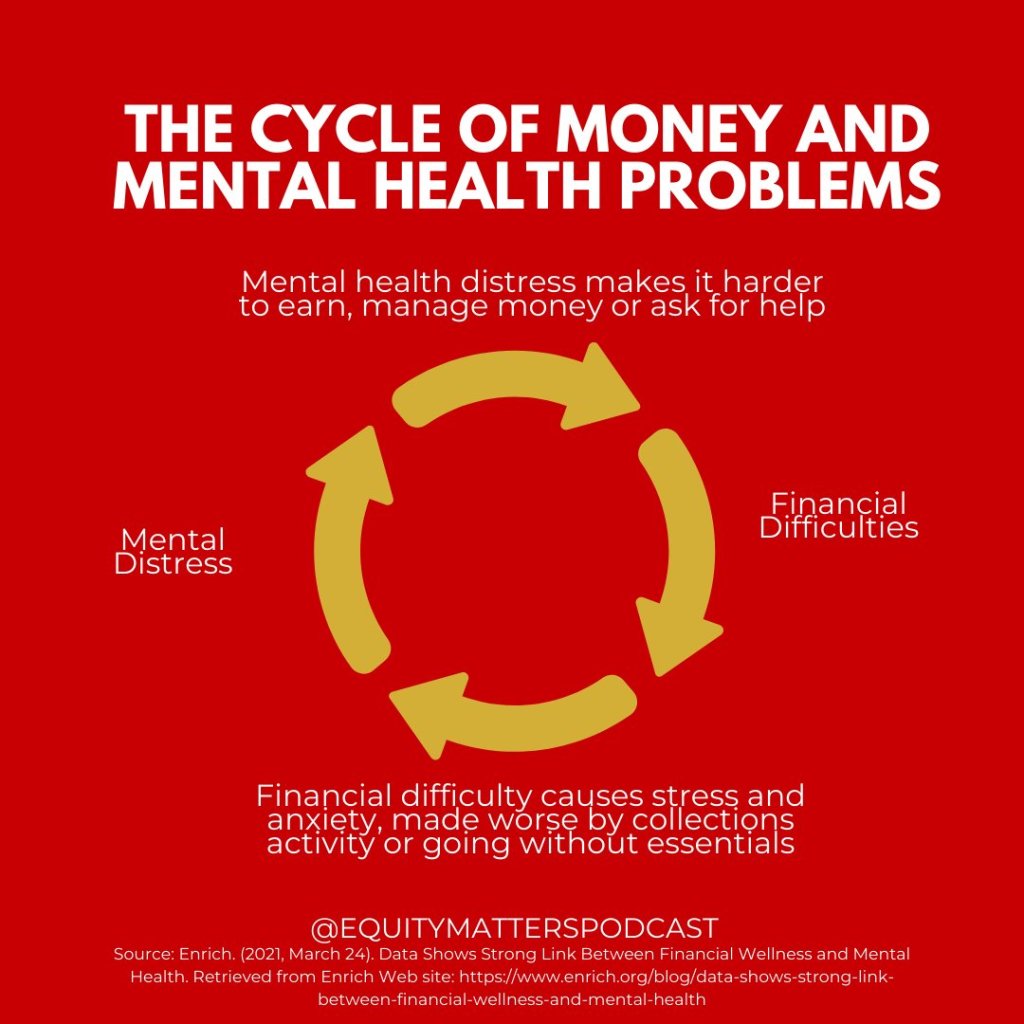
Money on the mind: The intersection between money & mental health

In my day job, I spend a lot of time talking to patients about relationships. To partners, to children, to coworkers, to themselves, but more frequently, the conversation has shifted to a personal relationship with something too often ignored in the healthcare office…money. And as it turns out, money has a way of impacting just about every other relationship too.

In the wake of inflation, warnings of a looming recession, climbing interest rates, and increasing cost of living, money is officially ‘on the mind’. Nearly two-thirds of Americans are living paycheck-paycheck. Less than half of U.S. adults have enough savings to cover three months of expenses. In my office, financial woes and trepidations frequently top the list of concerns and are often married with feelings of anxiety, shame, envy, fear, denial, avoidance, and despair. Certainly, when in the midst of mental health challenges, there can also be further difficulties in managing finances. According to researchers, financial hardships increases the risk for suicide 20-fold. Apart from the typical guidance on deep breathing, meditation, and positive self-talk, the art of budgeting and financial resourcing seems to be just as paramount to meeting current emotional challenges.

Personal finance was essentially absent in my academic curriculum. While the tide is shifting slowly, personal finance is still today often seen as an elective rather than a standard for youth. While I stood on the valedictorian stage, I had no concept of interest, credit, mortgages, down payments, the mechanics of saving, or investing. I gleefully treated myself to shopping sprees courtesy of my bonus checks from high interest student loans thinking it was somehow free money. I didn’t understand how anybody bought a house believing the only option was to pay outright with cash, and I definitely maxed out my emergency 500.00 limit credit card co-signed by my parents more than a dozen times (mostly on so-called ‘emergency’ take-out). Sorry mom and dad.

When I moved to the wilds of Wyoming in my early 20s for nursing school- states away from the free meals and free laundry home always guaranteed, it was clear that this new concept of adulting necessitated stepping out of my naivete around financial wherewithal. And so, I wandered to a local thrift store, found a used Suze Orman book, and started reading.

Regardless of your feelings about it, our society runs on capitalism. In this model, access to money means access to choice and in my book, access to choice is access to freedom. Not surprisingly, when money is hard to come by, this can leave one feeling trapped, unsafe, and threatened triggering our primal fight, flight, or freeze system conditioned for survival. How much desperation, chronic disease, depression, and anxiety can be traced back to a money trail? To policies keeping people stuck? To a lack of financial literacy? The point is that money and our beliefs surrounding money have huge implications in our health and welfare. We know this, we don’t talk about it enough, and we need to improve on the language and tools around financial well-being.

Some of us are in positions where our financial well-being is dependent on another. I am not going to trample on beliefs or traditions, but the fragility of such a financial ecosystem should be acknowledged as both the provider and dependents can face unique stressors. Regardless of who is bringing home the bigger paycheck, understanding the underpinnings and logistics of financial stewardship is important for all of us nonetheless. Financial stability should not be taken for granted. Power dynamics around finances can turn ugly really quick and are too often a hallmark in abuse and manipulation. I don’t recommend it.

Ultimately, as many concepts in mental health lead to, we come to a point where advocacy is essential to forward progress. We meet the intersection where policies directly impact symptomology. Access to financial capital, opportunity, and financial literacy is no exception. Standardized education around personal finance, affordable housing, enhanced job training programs, affordable pathways to career advancement, & reforming public welfare systems are just a few items worth speaking to. And as we continue to evolve our understanding of holistic wellness, we can’t afford shyness around bringing up the Benjamins.

Thank you for listening, everyone.

With gratitude,

Audry Van Houweling, Owner, She Soars Psychiatry

Sisters & Silverton, Oregon

You Can’t ‘Fix’ Struggle

Fresh off the tracks of academia in my early 20’s, my early motivations seeking a career in mental health were fueled by a rookie desire to bring concrete solutions to those facing struggle. An even deeper desire, below my professional angst, was to better understand and maybe fix the struggle witnessed in my own family. I immersed myself in best practices, learned the pharmaceutical-based algorithms, and gathered the tools. I wanted to feel equipped…prepared…ready to have answers. 

A bit more seasoned after nearly 15 years in the field of human emotion and having encountered an early run-in with burnout, I have come to understand that I will not always have an answer, that concrete solutions can be far more elusive, to listen more and to talk less, and to appreciate beauty alongside struggle. Sometimes the best solution is to kick away my preconceived pedestal, set aside expectations, and simply be with, acknowledge, and provide space for suffering. The time pressures, outcome-based reimbursement, and our stubborn quick-fix mentality in mainstream medicine can sometimes interfere, but when our practice revolves around the vastness of human emotion, we better learn to get cozy with discomfort, mystery, and uncertainty. From the humility of “not knowing “we are forced to simply be with and accept what is.  

Photo by Suzy Hazelwood

We honor a person’s dignity by allowing space for their discomfort. Our sense of predictability and control can feel threatened when encountering difficult emotions that don’t come with a roadmap. We may have an intention to help, but in our quest to “fix” another’s emotional struggle, we can rush an important emotional experience. We may also tend to limit or suppress our own emotional spectrum. Sometimes people (including ourselves) need to metaphorically cocoon before transformation takes place.  

“This ‘doing nothing’ is not a cold, passive resignation, but is an alive, sacred activity, infused with the light of awareness and a wild, relentless sort of compassion. To do nothing in this way is a radical act of kindness and love, filled with qualities of earth and warmth, and a holy gift that you can offer yourself and others.”

-Matt Licata

Sometimes we offer unsolicited advice. This can imply that our process of “coping” is somehow superior. For those intimately familiar with the caregiver role, we can even judge our own worth on the emotional outcome of another person. This can create unhealthy resentment and codependency. Repeated attempts to “fix”  others can also be a convenient distraction from tending to our own needs and hardships.  

Sometimes we can find ourselves hijacking another person’s emotional experience by too rapidly shifting the focus to a hardship we faced perhaps trying to communicate a shared sense of understanding and yet, this can also feel dismissive. 

Sometimes when we have significant discomfort with emotional vulnerability, we can diminish and shame another’s emotions. We might tell them to “move on”; “get over it”; “suck it up”. This erodes emotional trust and reinforces emotional suppression. 

It’s important to remember that powerlessness and helplessness are not synonymous. We may be powerless to change the outcome of another’s struggle, but we can be intentional in our ability to stay present, open, and available. That is not helpless. 

Whenever we respond to another, it allows us to look in the mirror at our own biases and insecurities. If we feel discomfort in witnessing the struggle of another, it may be a rich opportunity to embrace self-reflection rather than resort to judgement.

So what can we do?… 

Photo by cottonbro studio
  • Validate another person’s pain. “This must be so hard for you.”  
  • Provide physical presence. Hold a hand, offer a hug, sit by. 
  • Ask questions. “How are you feeling today?” Stay curious about their emotional experience without placing judgment. 
  • Create space for pain. “It’s OK to cry”; “I am happy to just sit with you”; “I am happy to listen to anything you want to share”. 
  • Offer specific support. Offer to bring a meal, tidy up the house, go grocery shopping, watch the children. 
  • Practice boundaries and self-compassion with our time and energy.
  • Explore our own discomfort with emotional vulnerability.  

Thanks for listening everyone.  

With gratitude,

Audry Van Houweling, Owner, She Soars Psychiatry, LLC

Sisters & Silverton, Oregon
Lost Accountability & The Paradox of Tolerance

In the world of mental health where we contend with the abstract intersections of nature versus nurture and what behaviors we have agency versus those we may not, the role of accountability can be hard to define. How do we define who should “know better” versus who should be excused. When the layers of trauma and struggle are excavated and the context of a person’s defenses brought to the surface, bad behavior can be interpreted as remnants of survival. Where then does tolerance end and accountability begin? In our increasingly politically correct world, tolerance is seen as a popularized moral directive and yet, with the undercurrents of division in our society, intolerance of whole groups of people has become commonplace. 

Accountability must have a launch pad. What constitutes this launching pad of morality is forever evolving. In a democracy, discerning and defining a reasonable constitution of overarching morality, policy, and law demands dialogue, careful judgment, and rational arguments. Unfortunately, in our current political and social landscape, constructive dialogue is lacking and the act of “reaching across” is infrequent. We often approach politics with defensiveness as a way to protect ourselves from the “other” and galvanize those most similar to us. We can assume in our state of division that those on the other side of the fence are unchangeable or a lost cause and forget that mindsets are complex and often fragile. We preach a certain version of progress, but often do not take the time to listen to those threatened or uncertain by the progress we hope for. And in that stagnation and hesitancy, the basis for accountability dies and the infrastructure of democracy crumbles. As the collective shies away from shaping the groundwork of accountability, there can be a trickle-down effect from our governments to our communities, to our families, and to ourselves. In the absence of accountability, there is yes, more room for bad behavior, but even more concerning, apathy.  

“Accountability is a love language.” -Maryam Hasnaa

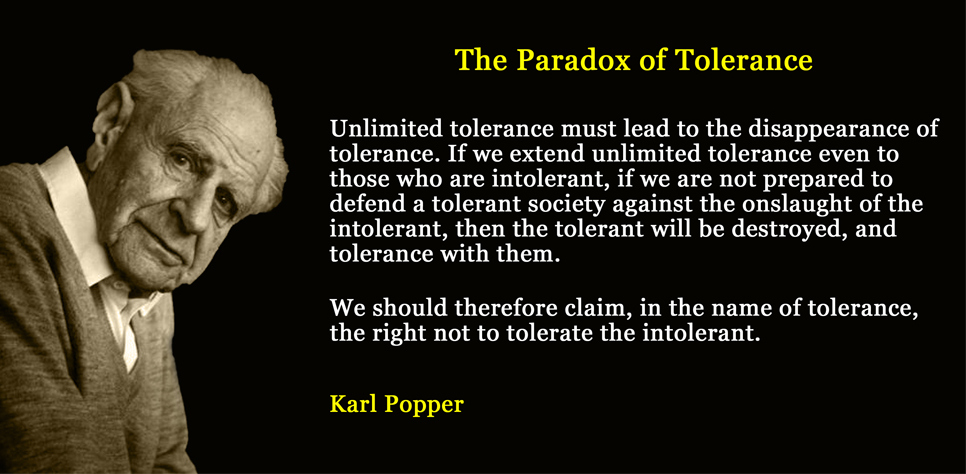
Apathy and unbridled tolerance are in many ways, synonymous. Philosopher Karl Popper speaks of the paradox of tolerance stating the following, “Unlimited tolerance must lead to the disappearance of tolerance. If we extend unlimited tolerance even to those who are intolerant, if we are not prepared to defend a tolerant society against the onslaught of the intolerant, then the tolerant will be destroyed, and tolerance with them.” 

In other words, by standing too long on the pedestal of tolerance and not coming together to define a collective basis of reasonable morality and accountability, we risk being overwhelmed by intolerance and roll out the red carpet for extremism and authoritarianism.  

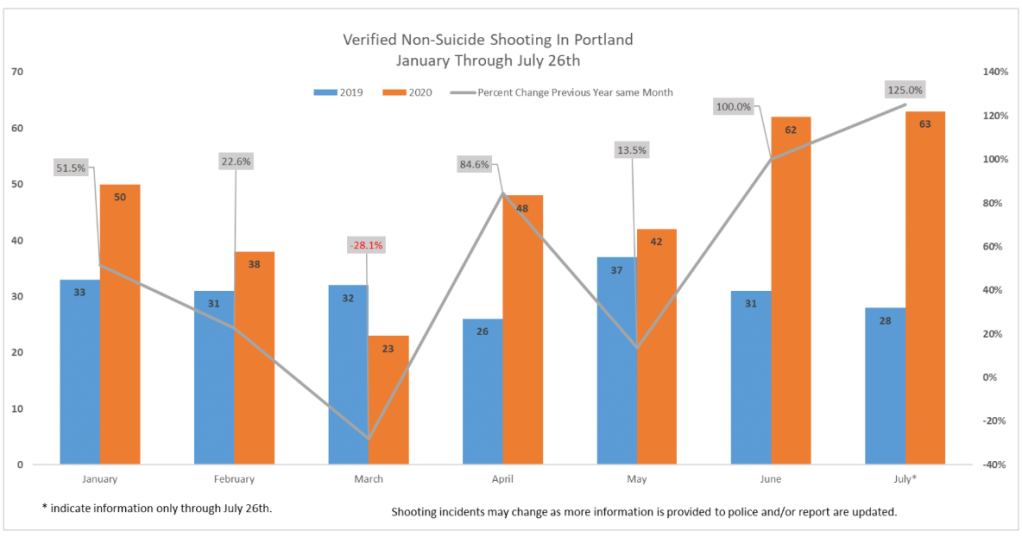
Whole communities have fallen victim to this overwhelm. In my home state of Oregon, Portland, the City of Roses, historically glorified by its trendy eccentricity, foodie scene, and natural beauty, is buckling under rising homelessness, unprecedented crime, vacant store fronts, & political missteps. Known for its attitude of progressive tolerance, so much city-wide upheaval has finally led to collective pressure to better define the boundaries of this so-called tolerance.  The idea of “live and let live” can be liberating as long as what we are asked to tolerate does not come at the expense of somebody else’s existence or well-being. 

As a mental health professional, the concepts of radical responsibility and accountability are in no way in opposition to grace and understanding. Accountability- despite its reputation, is not punitive and in fact, communicates an investment of care and engagement on a personal, familial, community, and societal level. Promoting accountability promotes growth. The intersection of tolerance and accountability is inevitably vague and will continue to be such in our non-dual world where the definitions of right and wrong are continually in flux. Therefore, the health of our democracy is worth fighting for. When we can do the hard, but so very necessary work of debating, dialoguing, & discerning the basis of accountability and boundaries of tolerance in our larger communities, we also benefit from greater clarity & growth on a personal level. Let’s hope we can stay brave enough to keep coming together as messy as it might be. In our country, fortified by a democracy emulated throughout the world, this turbulent and sometimes riotous persuasion & dialogue is, after all, our hallmark, our means to progress, and the backbone of our freedom. 

Thank you for listening.

With gratitude,

Audry Van Houweling, Owner, She Soars Psychiatry, LLC

Sisters & Silverton, Oregon
The Legacy of Mental Health: Faulty Foundations & Future Directions

What I enjoy most about my job are the stories. Tales of resilience, trudging through struggle and persistence that is awe-inspiring. Tales of celebration and transformation allowing lightness to be just as present as the heaviness. To have the privilege to bear witness to the rawness of life—the vulnerability that may have never been spoken outside the walls of my office, is an opportunity I try not to take for granted. While diplomas hang on my office wall constituting some level of due diligence for my job, my most meaningful work does not come from a textbook or fancy training, but in the simple act of providing a platform for somebody to feel seen, heard, and validated.  

I have been asked many times why I have chosen this line of work. Put simply, a mental health provider is not for those who desire logic and certainty. It is a field that demands a draw to creativity, at least a bit of proclivity for drama, and a sustained fascination for what lies between point A and point B in a person’s life. What are the layers and circumstances behind action and behavior? But perhaps most of all, being a mental health provider demands an appreciation for mystery, ambiguity, and uncertainty.

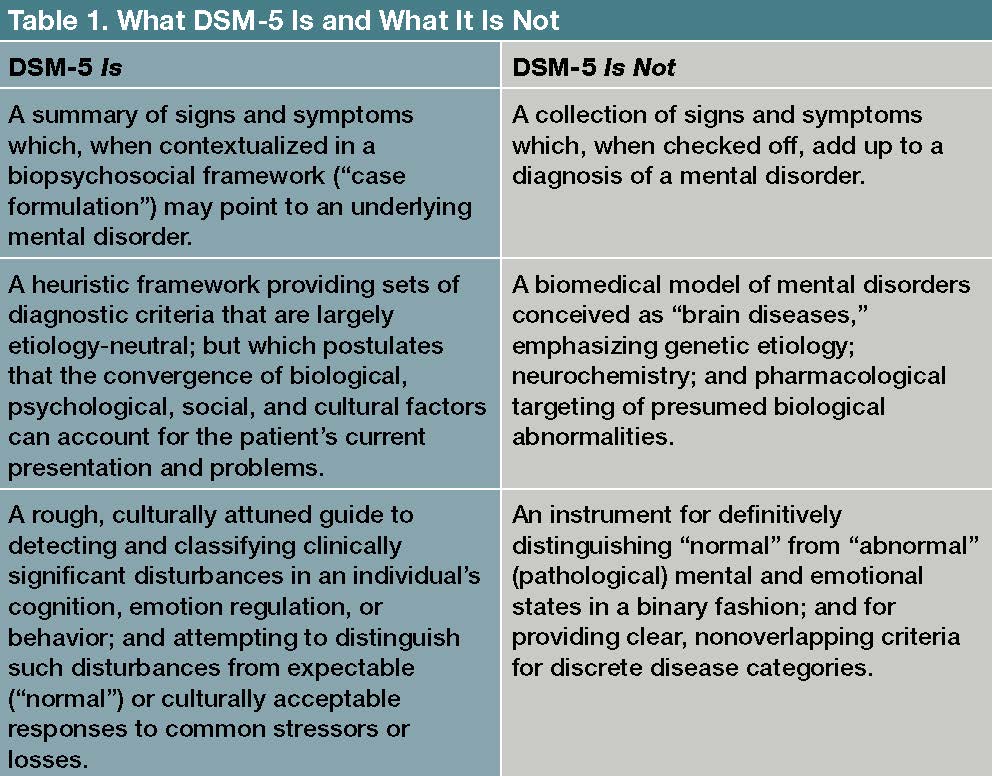
Despite attempts for algorithms and treatment protocols throughout the years, the field of psychiatry and mental health has long been on shifting sand. The first edition of the Diagnostic Statistical Manual of Mental Disorders was released in 1952 and to date, there have been eight revisions published by an appointed committee of reportedly well-regarded experts tasked with establishing what has become a bit of a subjective and culturally informed bible to the mental health profession.  

The diagnoses found in what is currently the DSM-5-TR have provided a sense of clarity and validation for many and have provided targets for specific treatments, but for most of these so-called pathological conditions, there is little scientific basis constituting them as anything more than well-thought-out descriptions of generally to be expected sequelae. The DSM has attempted to universally categorize and define the vastness of human emotion, which at its essence is deeply personal, full of paradox, interconnected, and strongly intertwined with context and circumstance. Per my opinion, we have to take it all with a grain of salt.

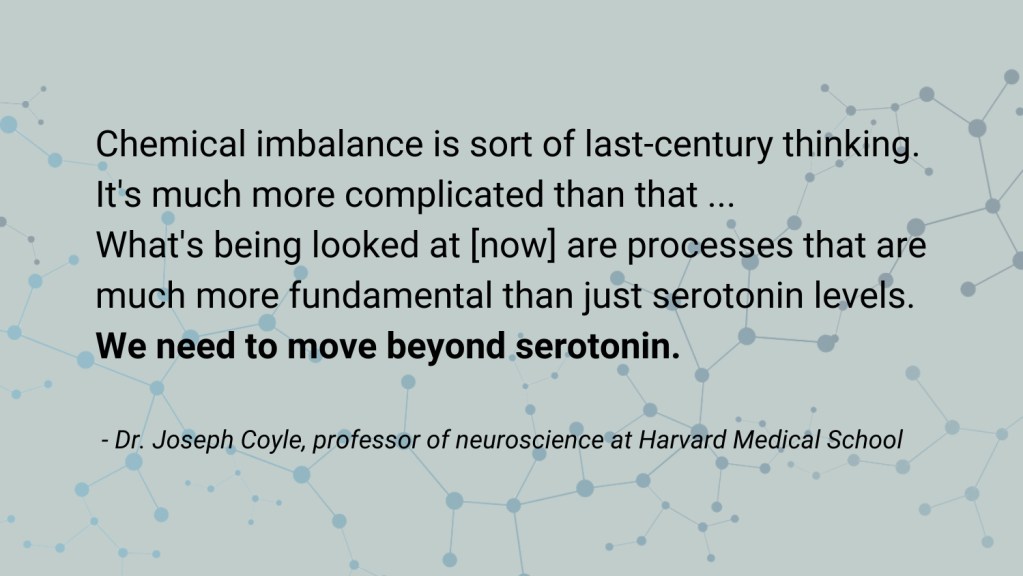
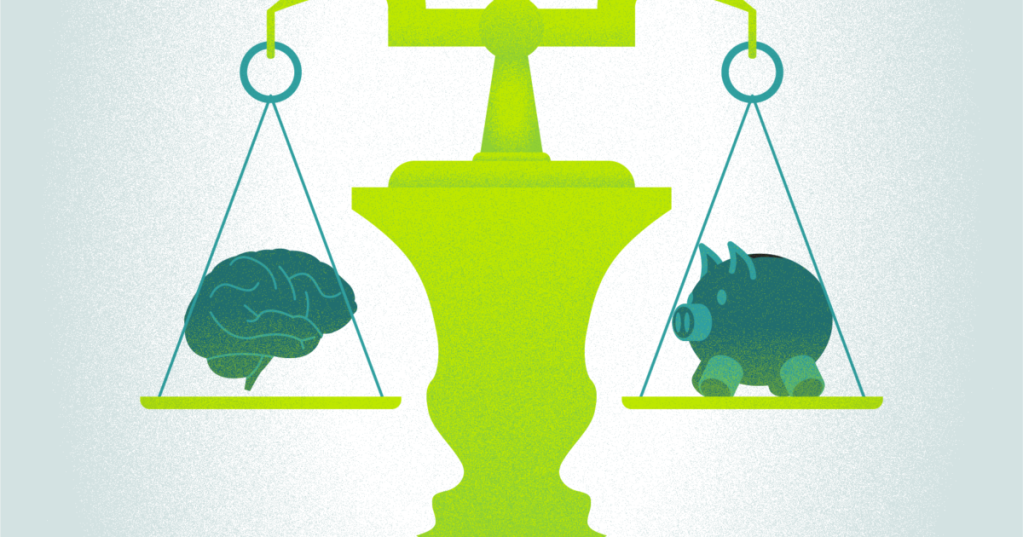
Alongside the subjectivity of mental health diagnoses, are widely accepted theories that depression concurrent with other mental health diagnoses constitutes an “imbalance in the brain”. This has historically referred to an imbalance or deficiency in the monoamine neurotransmitters (serotonin, dopamine, & norepinephrine). This monoamine hypothesis has served as the primary catalyst for extensive pharmaceutical campaigns promising the latest and greatest pharmaceutical agents to “restore” such imbalances. Yes, sometimes medications can be helpful and even lifesaving, but despite fancy names and multi-million-dollar ad campaigns, the extent of progress against rising rates of depression, suicide, and substance use, ought to be questioned. Extensive peer-reviewed studies have suggested that only about a third of antidepressant users will appreciate some level of improvement.

A recent extensive review conducted by University College London scientists and published in Molecular Psychiatry (July 2022) scrutinized the leading hypothesis that depression (and implicitly other mental health conditions) is a consequence of an imbalance in serotonin. In a thorough review of tens of thousands of subjects, researchers found no significant difference in serotonin levels among depressed versus healthy subjects. This shakes the foundation supporting the use of antidepressants predicated on the seemingly debunked monoamine hypothesis. With antidepressant use sharply on the rise in recent years for both adults and children, it makes one wonder how such a precarious theory became so widely accepted. And yet, I suppose that is what pharmaceutical companies do best…followed by insurance companies. While antidepressants should not be completely disregarded, the study further emphasizes the need for a holistic, contextually informed approach to mental health concerns.

The goal of emotional wellness should not be to avoid pain and sadness, but to embrace the inevitability of struggle balanced with the hope to cultivate moments of joy, gratitude, and connection. It is a quest that is undoubtedly easier for those with resources and supports and has also become difficult when up against our mainstream culture that exploits insecurities, fear tactics, time scarcity, and has cast a long shadow of existential gloom for many of us. Simultaneously, the prevailing message of mainstream mental health is that accommodations ought to be made per our discomforts perpetuating the idea that we are entitled to the path of least resistance. Our tolerance for struggle has dwindled and our resilience has faltered with it. 

Regardless of nostalgia for better times, the world has always had its dark spots. In times past, we had more distance from it all as we awaited the daily newspaper or a phone call. Now, exposure and susceptibility to vicarious trauma is only one click away and as immediate as ever. Adults and parents seeking to buffer children from danger may be unintentionally robbing opportunities for resilience-building and transferring their own anxieties. Children are less likely to drive, get a summer job, date, do chores, and communicate face-to-face. On the outside they are growing up slower, but as soon as they pick up their device, they are confronted with a slew of emotionally charged topics that overwhelm even the most emotionally mature—divisive politics, bullying, climate change, war, death, mass shootings…who wouldn’t be anxious? 

Uncomfortable emotions are part of the human experience and can be just as informative as they can be problematic. Depression, anxiety, poor focus, burnout, and other common complaints these days cannot be attributed solely to an imbalance, or a subjective description written in a manual. Depression and many other mental health diagnoses remain complex, perhaps not always a “disorder”, often rooted in trauma, and may tell us more about the angst and urgency of mainstream culture than about actual pathology.

Relying on arbitrary theories to explain emotional distress can minimize our responsibility to ourselves as we contemplate lifestyle and connection, but also to our neighbors as we contemplate policy and social reforms. Therapy and pharmaceuticals only go so far when the feelings of environmental safety and stability are frequently in jeopardy. Strengthening our collective emotional wellness demands advocacy, an acknowledgment of privilege, and innovation- a conversation we can all contribute to.

Thank you for listening, everyone.

With gratitude,

Audry Van Houweling, Owner, She Soars Psychiatry, LLC

www.shesoarspsych.com

Sisters & Silverton, Oregon

Will You Weep for Her?

Will You Weep for Her?  

Will you weep for her as she stands at a crossroads? 

Both roads sure to have risks, unknowns, twists… 

Will you weep for her as she contemplates trying to carry a secret 

A secret soon to come out of hiding as the baggy sweatshirt fails to hide the contours  

Of the unborn life blooming in her belly 

Crowds flock to weep for this unborn life, but will they weep for her?  

Will you weep for her as the story she tells becomes a mountain of shame? 

A so-called celebration turned into isolation 

She worries, prays joy will replace fear, waits… 

Will you weep for her as forced bedrest takes over her livelihood? 

As bills pile up and her body rebels 

Will you weep for her as she postpones dreams for dimes?  

You can do it all so they say…and a burden she does not wish to be 

Will you weep for her as she feigns faint smiles to onlookers? 

Wanting desperation to go undetected. 

Will you weep for her as shaky supports dwindle? 

As the once upon a time prince becomes a coward 

Abandonment all too familiar on repeat 

And she wonders, can I survive this? 

Life, liberty, & the pursuit of happiness blur into murky waters 

Will you weep for her as her body stretches overcome with primal pain 

Screaming without an anchor as she squeezes the nurses hand 

The unborn becomes born 

Pressed against her swollen chest 

A paradox of joy and fear 

Will you weep for her as she struggles through sleepless nights 

Help is fleeting and more help breaks the bank

Without a compass, a captain, or crew mates, navigation is daunting 

She sings the only lullaby sang once to her by a kind face long gone 

How do you build a family when family has never been defined?


Will you weep for her as she scavenges for discounts 

Welcoming kind hearts, but not wanting to be anybody’s charity case 

Diapers, formula, doctor’s visits, clothes and more clothes 

Faced with questions, dilemmas… 

How to support a child without work?  

How to support a child with work? 

Sometimes she wants to run away from it all.  

Sometimes she gets lost in darkness.  

Do you weep for her as she grasps for her worth? 

In a society failing to treasure the crown of motherhood 

Will you weep for the child as he grows 

Mother working two jobs to sustain 

Never has he known a father 

Protective of his mother, hiding his shadows… 

She doesn’t need to know 

Desperate for belonging, he strays 

Will you weep for the child turned into a man 

Who found solidarity in the streets 

They told him he was one of them 

They told him he was strong 

He writes his mother from behind steel bars 

Will you weep for her?  

A mother with the burden of a broken heart 

Will my baby boy make it? She cries. 

Don’t they remember they wept for him in my belly?  

Who weeps for him now? 

Who wipes his tears? My tears? 

She falls to her knees each night  

Praying to God that her baby be protected 

That she might have the strength to carry on 

And she does with tired eyes and bones that feel brittle 

One. Day. At. A. Time. 

Will you weep for her? 

.

This poem is dedicated to all the mothers and mothers-to-be who know the meaning of struggle and sacrifice as they navigate raising our youth in a society that offers few reassurances and safeguards. Protecting life means showing up for the unborn and already born. Mothers are the backbone of our communities. Honoring them, acknowledging their hardships, and creating policies that allow their worlds to expand rather than become smaller, are essential components to protecting the welfare, health, and livelihoods of current and future generations.

Written by Audry Van Houweling, Owner & Founder

She soars Psychiatry, LLC www.shesoarspsych.com

Sisters & Silverton, Oregon

The Problem with Unbridled Entitlement

It was September 1939. My maternal grandmother was 15 when the wails of air raid sirens broadcasted throughout her home city of Warsaw, Poland. The Nazi invasion had begun. Targeted as ‘intellectuals’ by the Nazis, my great grandparents were killed in short order. My grandmother, spared for her youth, was shipped to a forced labor camp, where she later escaped, joined the underground resistance, was apprehended again, and imprisoned in Germany where she remained until the end of the War.  

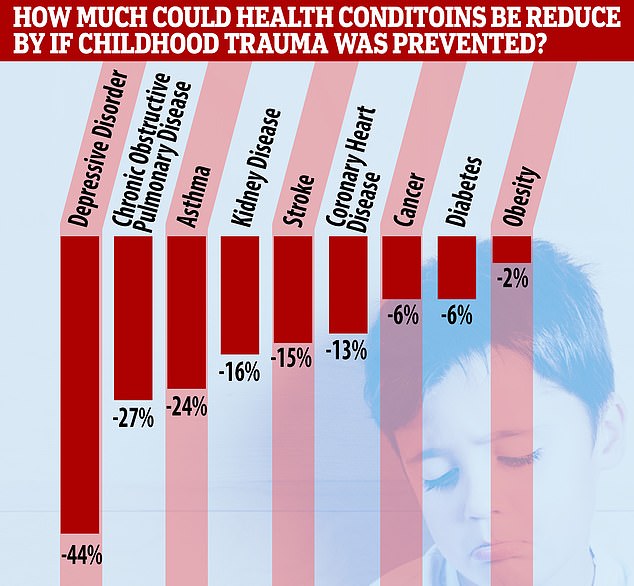
Intergenerational trauma has been scientifically traced back to the womb. In-utero exposure to maternal hardship, fear, and trauma can have long lasting impacts on how a person processes and perceives stress. We may even be primed to respond to certain triggers never directly experienced, but through a sort of pre-programmed warning system passed down from our ancestors.  When the first round of bombs fell on Ukraine February 24th and the sirens wailed once again, I felt like I was standing in the shoes of my grandmother. It felt personal. I couldn’t stop thinking about her…and now the people of Ukraine. The terror. The shock. They say history repeats itself, but maybe I hope that with the passage of time and human advancement, our morality might also advance… 

We are living in a world where vicarious and secondary trauma can be experienced en masse. Once upon a time, delayed war time reports were delivered on horseback. Now real-time footage is available one click away. We can bear witness to devastation 24/7. We have a proximity to trauma that can be both intoxicating and exhausting all at the same time. Hard to look and hard to look away. Layered with all other calamities of recent times, I find myself sitting with the paradox of how to reconcile deep concern and deep longings to help alongside deep cravings for escapism. I find myself clicking through the tabs on my laptop…CNN anxiously reading up on the Russian offensive…then to taxes…then to responding to emails…then some window shopping on Zillow…then on to the best beaches in Mexico…back to an anxious bout on the news…and reluctantly, back to taxes. A lingering sort of survivor’s guilt is often in the background. Who am I to deserve such ease? 

Meaningful action seems distant from my small town. It is hard not to get lost in existential dread, but then I reflect on my sincere belief that global transformation starts at the dinner table. Small gestures can have big consequences. 

While there is much to be concerned about in our world, what haunts me most at the end of the day, is the prevalence of unbridled entitlement. Unbridled entitlement is often matched with a deep sense of victimhood. When mixed with power, greed, and resources, the combination of entitlement and victimhood can become…well, very ugly.  

Power over others is weakness disguised as strength.

-Eckhart Tolle

We can all theorize the reasons behind Putin’s heartless wrath as he disregards global condemnation, but what is clear is that he demonstrates a profound sense of victimhood, of being historically wronged, of feeling entitled to reclaim the myth of his territory regardless of the cost. Putin has equated the global projection of his victimhood with power. And unfortunately, he has one of the world’s largest militaries and nuclear arsenals to fuel his tantrum. 

Unbridled entitlement that often blinds a person from self-responsibility is not just a Putin problem, it is a societal problem. We see entitlement projected through violence, manipulation, deceit, greed, abuse, and environmental destruction. Our society makes it easy to feel persistently aggrieved. In our quick fix, dopamine driven society we have labeled negative feeling states as bad or even unwarranted- feelings to distract away, numb away, or escape from. We can raise a big fuss around temporary discomfort or rally troops when life doesn’t quite go our way. Preserving our ego can override concern for consequences. We become territorial and assume that folks should see the world through our eyes. We become rigid, angry, and more prone to division.  

And now back to the dinner table and to our local communities…What we are exemplifying for future generations has global consequences. Putin’s road to rage was not predestined, but cultivated through a series perceived aggrievances, of losses, of insecurity, failures, and a culture that did little to demand self-reflection and accountability. When we can exemplify and teach self-responsibility and compassion (the antidotes to entitlement), we do the world a favor, and we fight the foundational ills that plague Ukraine and so many places in our world. 

“Entitlement is always bad, but never as bad as when those in power cry victim.”

-Jaco Strydom

How are we teaching our youth (and ourselves) to manage negative feeling states? How are we teaching resilience in the face of discomfort? What about sustaining kindness in the face of adversity? Are we able to discern between needs and wants? How are we teaching gratitude and perspective? Can we be brave enough to demand accountability? 

The world does not owe us much at all in the end. This may sound cold but can also be liberating. To have our emotional well-being tied to the whims of others or external circumstances, takes away from our internal sense of grounding. It tethers our stability to a volatile world. It is when we can take radical responsibility that we can better identify our own internal compass, afford more grace to others, and positively redirect the remnants of intergenerational trauma in our own lives. 

So, remember as big and scary as problems may seem, please remember the ripple effects that can emanate from within the walls of our own home, one dinner conversation at a time.

Thanks for listening everyone. Sending prayers and hope to the people of Ukraine.

To help Ukraine’s refugees, please consider donating to the UN Refugee Agency for Ukraine Refugees

With gratitude,

Audry Van Houweling, Owner, She Soars Psychiatry, LLC

Sisters & Silverton, Oregon
A New Year’s Wish for 2022: Civility

Feelings of powerlessness are insidious. While sometimes an opportunity for productive action, most often they plunge us into a state of primitive adrenaline: fight, flight, or freeze. These feelings may echo times of powerlessness from times past. They have a knack for triggering the shadows of our inner child, our greatest fears, and fortifying our defenses primed from traumas gone by. When faced with trauma, it is not simply the event itself per se that is damaging, but the surrounding feelings of powerlessness themselves leaving us feeling lost, unknowing, exposed, and shaken.  

Powerlessness has encircled the world the last two years. I could give you the (long) laundry list as to why, but I think we have all seen that list many times by now. It has left many of us looking for solutions, avenues to control, somebody to blame. The muddy waters and complexities surrounding circumstances of the past two years, have given us an unfinished narrative. How did this happen? Who is to blame? What is the best course of action? When does this end? Instead of being able to sit with a storyline that is very much “under construction”, we seek to fill the gaps with our own handywork. We create a story for ourselves that best provides a sense of safety, freedom, and control. We create our own enemies, our own protagonists, and our own plot twists. We each carry our own manuscript informed by layers of experience, culture, beliefs, opportunity, adversity, and relationships encompassing the multi-chapter, pre-COVID prologue unique to each of us. 

Civility costs nothing and buys everything.”

Mary Worley Montagu

Evolution has taught us that when most vulnerable and powerless, we are stronger with a tribe. Our relationship to others is central to our identity and consequent behavior. Prior to the digital age (and COVID), connections to a group were solidified face-face. Emotions, sentiment, tone, and body language could be appreciated. While opportunities for face-face engagement continue to exist, our social affiliations have become far more informed by algorithmic and superficial mechanisms that pave the way for hate and extremism as the ethics of civil engagement are stripped away. Our media feeds often hijack critical thinking skills and discernment. While many of us desire decency and common courtesy, we are also being manipulated into territorialism as our fears and vulnerabilities are exploited. Powerlessness and fear can be genuine but, can also be manufactured.  

With many of us triggered and primed to project our fears, we may find ourselves more skeptical, untrusting, skittish, withdrawn, and fearful of judgment. Civility seems riskier as it demands a loosening of our defenses in a time where self-preservation seems so critical. Finding a scapegoat gives us false reassurance that there is a target, a definable problem, some entity to be fixed or silenced. More than anything, finding a scapegoat allows us to bypass responsibility and escape vulnerability. 

When I see somebody overcome by anger or fear in my office, I often find myself envisioning them as a child. What happened? What informed such a reaction? What struggle is behind the emotion? We all have our dark places, our shadows. As unfair as it might be, we are not necessarily responsible for what happened to us, but inevitably most of us are responsible for how we respond to it. This is not always easy, is laced with privilege, and often cannot be done without help along the way.  

“The wound is not my fault, but the healing is my responsibility.”

Marianne Williamson

Our mind plays a lot of tricks on us. What might allow for fleeting feelings of safety or control, may not be productive and can sometimes be harmful. Having convictions can be admirable, but if we are too zealous, we back ourselves into our own corner. Rigid beliefs and behaviors lead to stagnation, the inability to grow, and lost opportunities for connection. Our world shrinks. Resourcefulness, openness, and flexibility become limited. Clutching tightly to certain labels, affiliations, and marking our territory on either side of the fence can have the allure of power. Perhaps, instead of having to choose a side of the fence, more applause should be given for those sitting on the fence thoughtfully observing either side, learning to be comfortable with ambivalence. 

As the natural transition of 2022 is upon us, my secret wish is that we can all have the courage to be introspective…to own our energy, our shadows, and our responses. When we find ourselves saddled with anger, fear, and resentment, let’s hope we can all do better at opening the door for self-compassion and reflection rather than sabotaging with projection and blame. We owe it to ourselves, we definitely owe it to our youth, and the world will thank us for it. 

Cheers to civility, cheers to kindness, cheers to responsibility. Happy New Year! 

With gratitude,

Audry Van Houweling, Owner, She Soars Psychiatry, LLC

Sisters & Silverton, Oregon
www.shesoarspsych.com

Prioritizing Resilience Over Stability

Life is HARD. 

There is no way around this fact. If you are lucky enough to have resources and privilege to bypass certain stressors and outcomes, some of life’s curveballs may be dodged, but ultimately, we will all experience our own versions of grief, heartache, trauma, and pain. 

The circumstances of our world the past two years have forced many of us to become far more intimate with our emotional fragility as the triggers and vulnerability to emotional distress have been vast. More isolated with fewer coping resources, many of us have felt overwhelmed with an emotional intensity we may have not encountered before. 

Seeking mental health support has become near trendy. Stigma has lessened and seeking counsel has generated more applause than perhaps ever before. The art of self-care is proudly featured throughout popular culture and social media platforms. Mental health professionals find themselves inundated with inquiries and waitlists are months long. While the interest in shameless self-improvement deserves an exuberant cheer, accommodating the “worried well” while also saving space for individuals in crisis is a struggle many mental health agencies and professionals are grappling with. Despite the boom of interest in mental health, the prevalence of crisis is not slowing. Studies throughout hospital systems demonstrate an overall decrease in total emergency room visits in general (this makes sense in the context of COVID), but a significant increase in the median number of total mental health emergencies. 

What is stability anyhow? 

Stability seems to be the elusive and highly sought-after goal throughout healthcare disciplines as treatment plans develop. Chart notes tracking a patient’s progress echo… 

“Patient presents as stable” 

“Patient reports overall stability” 

“Patient leaves the emergency room in stable condition” 

Stability seems to be the endgame for many health professions, but especially in regard to mental healthcare, what is “stability” anyhow? The very notion of stability is up for interpretation and rich with bias per the reporter. My version of stability may very likely differ from the next provider. While there are no true standards for what constitutes emotional stability, stability in mental healthcare is most generally noted as the absence of emotional distress. Of course, many of us are well accustomed to appearing “stable” while perhaps dealing with depths of distress internally and furthermore, what constitutes the presence or absence of emotional distress is also rich with interpretation and bias.  

Follow me if you will… 

If so-called stability is the absence of emotional distress and yet life is inevitably hard, creating inevitable emotional distress, then is the pedestal we place stability upon more predicated on avoidance than resilience? Are we haphazardly creating a mindset of emotional aversion than acceptance? There are certainly other definitions and theories of emotional stability out there, but ultimately, emotional wellness is not served by trying to run from what we cannot hide from.

Confronting Avoidance and Entitlement 

I do not seek to take away the pain of my clients, but rather to empower them to sit with the pain while developing more adaptive and constructive responses. I do not seek to make my clients “happy”, but to cultivate gratitude and lightness alongside the grief and heaviness. Do I prescribe medication? Yes. It is a cure-all? No. Is it a stepping-stone allowing clients to strengthen other aspects of resiliency? Hopefully.  

In our Westernized world rich with privilege, many of us are lucky enough to have access to primitive necessities keeping us away from the basic pursuits of survival. Internal struggles are less about where to find the next meal, but more so rife with comparison, insecurity, jealousy, purposelessness, anger, and existential fears. Underscored by the filtered and edited world of social media, we can be tricked into believing that if our lives are not rich with happiness and inspiration, we are somehow “not OK”. We are too quick to believe that such happiness is something we ought to be entitled to in our professional and personal lives, which often only enhances the discomfort felt during life’s inevitable hardships. We are a culture not so well equipped to handle pain. We are, however, very good at numbing, distracting, repressing, and avoiding what we perceive as uncomfortable feelings. I have said it before and will say it again, it is not the feelings of sadness, anxiety, loss, or shame that are problems in themselves, but often the avoidant responses that create greater suffering. 

Emotional wellness is not a destination, but a daily intentional process that demands radical responsibility. It is not something to be solved or “fixed”.  Alongside medication, treatment protocols, supplements, and lab testing, comes the willingness to acknowledge pain layer by layer, become more comfortable with discomfort, take ownership of our behaviors, and strive for more productive responses. 

Cultivating Emotional Resiliency 

Like stability, the concept of resiliency is also up for interpretation. Unlike the concept of stability however, implied within resiliency is the inevitability of hardship. At its core, resiliency acknowledges struggle and distress.  

Amid greater rhetoric around mental health and social-emotional learning, it is important not to enhance hypervigilance or skittishness around negative emotional states, but to enhance coping and responsiveness to the tough times that are part of being human. The conversation can’t stop at “its OK to not be OK”, but expanded to how can we continue to be decent and relatively healthy humans when we are not feeling “OK”? How can we better acknowledge and problem-solve so that we don’t project our distress on others? How can we create a lifestyle that enhances energy and compassion? How can we find meaning in a tough world? How can we limit distraction and numbing? How can we ask for help? 

The struggle is real y’all. There is no need for comparative suffering…it is not a competition. We have all had our dark days. Emotional distress will happen, stability is IMHO overrated, but resilience can be cultivated. In my version of resiliency, perhaps one of the greatest skills is learning to connect and ask for help. So do yourself a favor and reach out. You are not meant to ride out this rodeo called life alone. 

Thanks for listening.

With gratitude,

Audry Van Houweling, Owner, She Soars Psychiatry

Sisters & Silverton, Oregon

www.shesoarspsych.com

The Myth of the “True Self”

I went rummaging through my garage the other day. With every intention of finding my plastic pumpkin to put on my doorstep in a half-hearted effort to appear festive, I instead came upon one of those old keepsake boxes lodged somewhere between my camping supplies and rusted paint canisters. Needless to say, I forgot about my pumpkin for the next couple hours. 

I came across a report written when I was 15. It was my then (very serious) life plan. Always a planner, the 10-page timeline composed with typical adolescent invincibility and certainty, outlined with remarkable detail how life will proceed…I played basketball for the legendary Pat Summitt at the University of Tennessee, I became a veterinarian, I decided not to marry until I was exactly 27 years old, I married a fellow vet (apparently named Kevin) who as luck would have it, was a previous Abercrombie & Fitch model…we had 3 children illustrated by cut-outs from the JC Penney catalog, we moved to Jackson Hole, Wyoming, and magically had the means to buy a multi-million-dollar equine estate on 50 acres against the Tetons. Perhaps it was Kevin’s modeling royalties? Not sure. 

Not to delve too far into my life story, but my teenage self who was very married to her idea of authenticity did not have as functional a crystal ball as she thought. Fast forwarding, I got married at 22, settled for hooping it up during late night pick-up games…mostly schooling my future husband who while quite attractive, did not hail from Abercrombie & Fitch…we did live in Wyoming for a while in a very economical however structurally questionable apartment (one of our 10 post-marriage moves), and we are for now settled in Sisters, Oregon with four-legged children only.  

All this to say that as much as we might feel we are staying allegiant to our authenticity in the moment, life has a way of surprising us.  

Stop Seeking and Just Be 

The quest for the ‘true self’ has been touted in pop culture and psychology as something the enlightened human ought to uncover. It has inspired modalities of therapy, meditations, retreats, podcasts, and God only knows how many self-help books. There is some implication that with enough introspection and self-discovery, we ought to find our ‘true self’ at the end of some rainbow and then hope to hold on to him/her forever. It is all a bit overrated in my book.

If we are getting scientific, how we feel and perceive ourselves and those around us is so multifaceted around physiology, environment, and circumstance, that one could argue that we wake up a new animal each morning. The idea of unearthing our true self and remaining in perpetual alignment is simply, not aligned with the human experience. 

A lot of anxiety comes for folks in the perceived quest for happiness. We develop benchmarks for contentment. When I lose 10 pounds…when I own a house…when I advance my career…when I fall in love. We chase ideas of “reaching our full potential”, or finding our “purpose”, and yes, the perpetual and never fully fruitful quest of finding our “true self”. Problem is that while on that quest we can lose sight of the present. Perhaps we ought to change the narrative that the true self is found in simple acknowledgement of who we are in this moment. Goals are good, but postponing contentment erases purpose altogether. 

Social Incentives 

When we make a mistake or behave in a way we regret, we may often find ourselves saying, “that was just not like me” or “that’s not who I am”. It seems that a lot of our perception of what our true self ought to be is closely aligned with concepts of reputation and social acceptance. This makes good sense in the lens of evolutionary psychology that proposes we are ultimately more protected as an individual when we can make friends and have allies. Interestingly, research has suggested that our perceived authenticity is stronger when we are more aligned with external social structures.  

Depending on our routines, many of us may encounter multiple social settings within the course of our day…our work setting, our family setting, our friends setting, etc. How we show up in regard to personality, professionalism, and behavior is very likely to change a bit depending on the social setting. Does that mean we are foregoing our authenticity? Perhaps it just means we are adaptable and socially flexible humans. Kudos to us. 

While I am not advocating for being a doormat, we cannot separate the fact that our perception of identity is inextricably linked to our social and cultural landscape that will undoubtedly change overtime. Having a sense of our core values that help fortify our internal compass is important, but accepting these values may shift allows us the space to redefine meaning throughout our life. 

Finding Peace in the Dissonance 

Humans are strange creatures. If we were all strictly allegiant to authentically expressing our internal thoughts and feelings, we would all undoubtedly be locked up. We all have our shadows, our moments of scary thoughts, sometimes violent thoughts, sometimes just plain weird thoughts. While we will have our slip ups, many of us have learned through supportive social conditioning how to filter and redirect such moments. Much of the time we can play the role of a decent human without our moments of internal recklessness being found out. 

There will always be a degree of dissonance between our internal thought life and our external expressions of identity. Sometimes we can be too painfully aware of our inner insecurities, places of shame, and negative self-talk. Some of us become masters at masking our inner shadows, but nevertheless we can feel like imposters. We convince ourselves that the dissonance between the inside and the outside means we are fraudulent- not adhering to our “truth”. As we scroll through filtered, blissful images on social media we can furthermore become convinced that others have somehow figured out this game of inner and outer harmony that we are seemingly lacking. We are all fooling ourselves. 

How Can You Best Show Up Today? 

Many of us may be aware of the ways we can improve, our opportunities for growth, our goals. We may have convinced ourselves that in order to find our “truth” that such conditions need to be met. Have you ever asked yourself what happens in the meantime however? 

Forget about your true self. Let go of the quest. What about your best self—today? With everything that has culminated thus far, how can you best show up for yourself today and in this moment? How about for others? Something else may transpire tomorrow. Your best self may change. Trust that your best is simply enough. 

For now, my best self will return to the garage on the very important quest to find my adrift plastic pumpkin. 

Thanks for listening everyone.

With gratitude,

Audry Van Houweling, Owner, She Soars Psychiatry, LLC

Sisters & Silverton, Oregon

www.shesoarspsych.com