My grandmother was 15 when the Nazis invaded Poland. Able-bodied and raised Catholic, her life was spared, but she was nonetheless apprehended, abruptly stripped from family ties, and sent to a forced labor camp where she later escaped and joined the Jewish Underground Resistance. She was later recaptured and imprisoned in Germany where she lived out the final years of her adolescence and the remainder of the War.
At the cusp of adulthood, an orphan, and newly married to a handsome American Air Force captain stationed in Germany, my grandmother joined the wave of thousands upon thousands of post-war refugees setting foot on Ellis Island and laying eyes on Lady Liberty in 1949. I often wonder how my grandmother persisted through all of it. As I encounter my own trials that seem so trivial in comparison, I remind myself of the resolve that was passed on so clearly to my mother, and by luck and maybe a few genetic favors, to myself.
My grandmother was an immigrant. She landed in America by a mix of luck and sheer tenacity. She settled with my grandfather in Long Island, New York slowly gaining fluency in the English language. She raised my mother and uncle. All the way to her death bed, she was a mix of shocking resilience with a presence that could demand the attention of any room while also being inevitably haunted by her past leading to ways of coping that were both admirable and destructive.
The immigrant story is often complex. And yet, it speaks to one of the most basic and primal urges in evolution and humanity. We are build to move, and movement is part of our survival. Migration and nomadism are entrenched in our generational DNA and our heartbeat for the future. We are built to explore and if it were not fo the innate desires for greater safety, resources, and opportunity, the whole notion of progress is turned upside down. It is the story of indigenous peoples native to this country chasing the path of the buffalo, the virgin setters fleeing religious persecution across the Atlantic, the pioneers carving uncharted paths across the Rockies homesteading the American West, and the story of my home state of Oregon—the terminus for Lewis and Clark, and the promised land so many traveled so far to reach. Upwards of thirty percent of pioneers on the Oregon Trail were non-English speaking and most were low income.
“Nearly all Americans have ancestors who braved the oceans – liberty-loving risk takers in search of an ideal – the largest voluntary migrations in recorded history… Immigration is not just a link to America’s past; it’s also a bridge to America’s future.” -George H.W. Bush
As we reflect on immigration today- a topic laced with controversy and politics, it is wasy to stand on the platform of us (the lucky citizens) versus them (the not so lucky non-citizens). We can over-generalize fears of immigrants bringing crime and economic strain. We an slip into dehumanizing rhetoric or attitudes of pity. We can forget the fragility of our own circumstances and take for granted the ancestral grit and resolve that allowed us such comforts in the first place. Like it or not, our nation was build on the backs of immigrants- some here by choice, some here by force.
Accountability and grace can coexist. I so fervently want an end to drug and human trafficking. I support a stronger border. I do worry about the limits of our national resources. I want people removed who have brought crime and violence. I also don’t want families ripped apart. I want my friends and patients to feel comfortable going to church and the grocery store. I don’t want to strip the economy of skilled workers, and I do believe that the process to become “legal” is often daunting, cost prohibitive, and needs reforming. A human that happens to be an immigrant is not a monolith. Can we enforce black and white policies on something so very nuanced?
Our capacity for compassion is one of the greatest indicators of health on both a personal and societal level. When this capacity crumbles, we can revert to apathy, anger, or be quick to find a scapegoat for our discontent. My hope is that we can remember the value of decency for our fellow humans seeking something better, reject dehumanization, advocate for fair and humane policies, and take stock of the adversity and immigrant stories so deeply intertwined within our own heritage and greater nation.
Thank you for listening.
With gratitude,
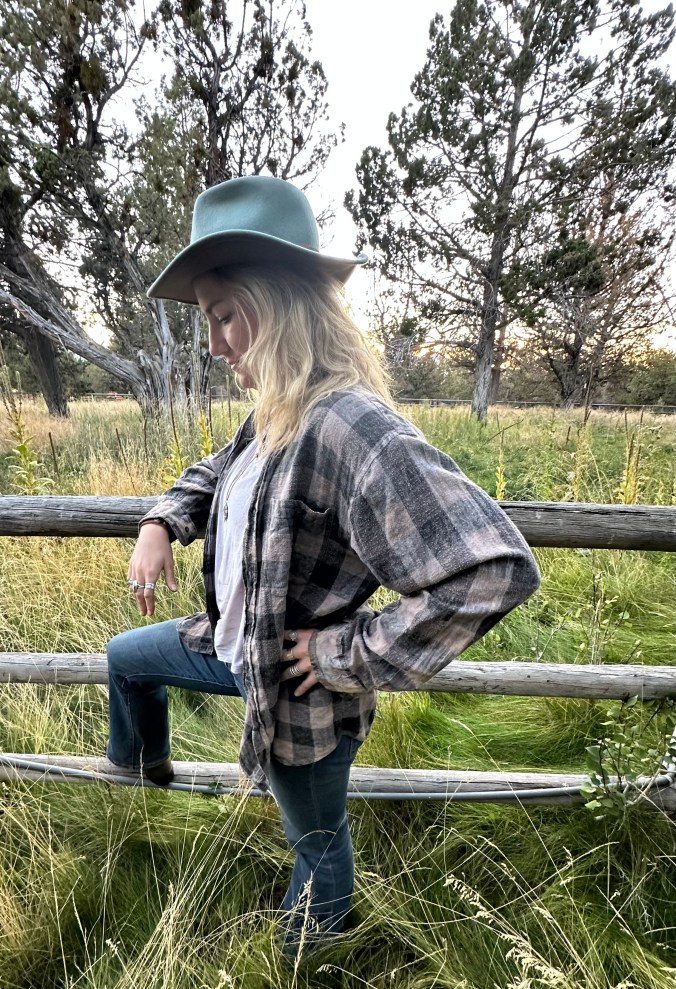
Audry Van Houweling, Owner & Founder, She Soars Psychiatry, LLC
Sisters & Silverton, Oregon
 She Soars psychiatry, LLC